Author’s Note: This is a continuation of the story last week, Rule 30 from the sequel to Beck’s Rules, When Walls Talk.
With ideas of green ink, government paper and presidential profiles swirling in my head, I’m ready to get to work uncovering Carrington’s plot.
I rush through the newsroom ignoring the wail of police and fire scanners and the tik tik tik sound of a dozen typewriters clicking their keys in melodious sequence. Normally, that sound is music to my ears. But today, all I can hear are three little words, Carrington, crime, and counterfeit.
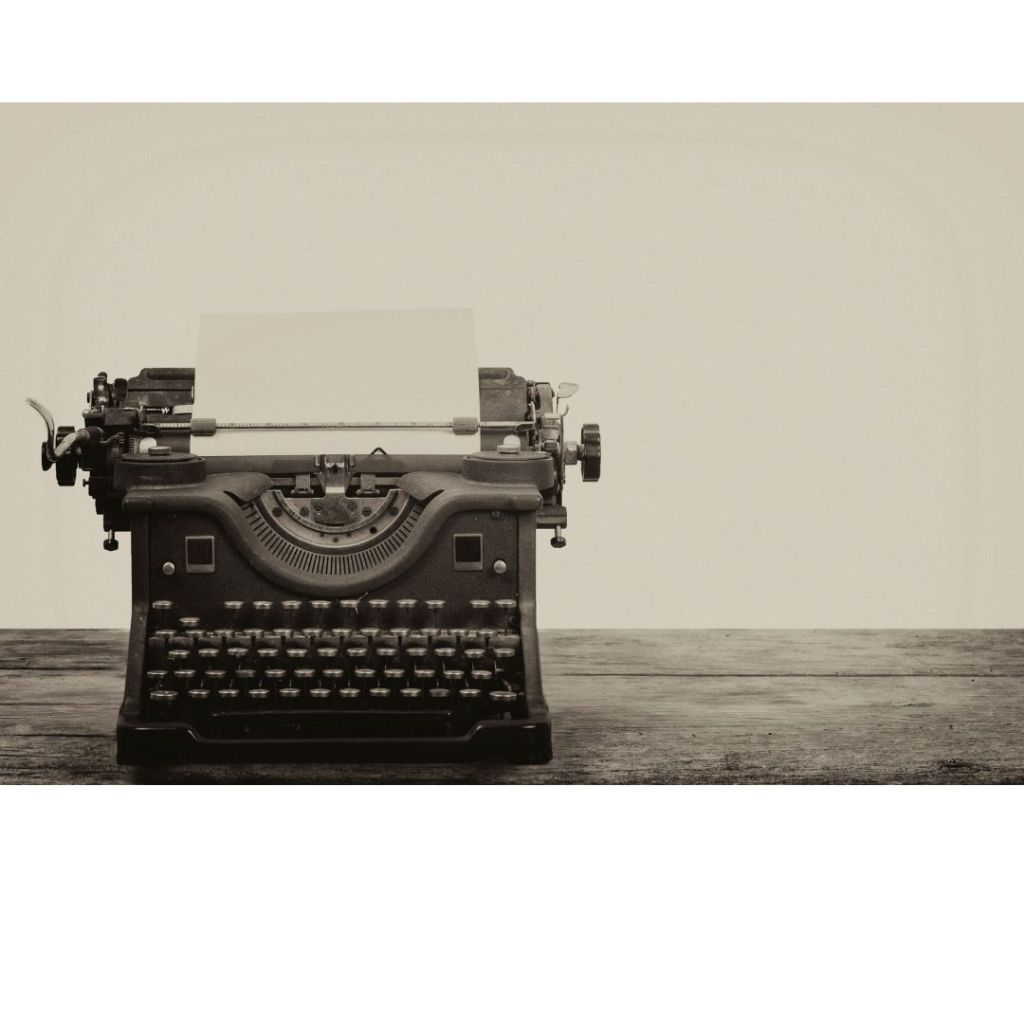
With anticipation nearly foaming from my mouth, I plop down on my wooded wheeled seat and nearly whirl all the way around from sheer momentum. But as soon as I place my fingers on the keyboard, I pause and catch my breath. Then I remember; I don’t have any evidence and then I notice my poor nails. I’m way overdue for a manicure.
My hunch combined with the muted tone of a poor perceived loon in the nuthouse would promptly get me booted out of my newsroom to the unemployment line or even the clink. The law frowns on accusing people in the press without a crime. But where would I get proof? And a quick nail appointment?
My dad always taught me motive, means and opportunity are the three elements of a crime. The motive is easy—money. And Carrington certainly has the means to do anything he wants and can easily use his “legitimate” dry cleaners and restaurant businesses to distribute the phony presidential flashcards of Washington and Lincoln. But the how eludes me. To pull off a counterfeit scheme, he would need the government paper, the printing press and the plates to ensure his bills didn’t reveal themselves as Monopoly money.
As my dad’s ink blood runs through my veins, I know I can solve this, catch them in the act, and then nab him. But how? Then I saw Scully out of the corner of my eye. He’s an old timer and always has his ear to the pavement for federal crimes. Maybe he caught a counterfeiter before or heard something now?
“Sully, I got a lead that there’s a counterfeit ring in the city. Have you heard anything about it?” I ask.
“Nah, I wish. I’d really like to sink my teeth into a funny money operation. I haven’t seen one in years,” he says.
“So you caught a counterfeiter in the past?” I ask.
“Oh that was years ago, probably before you were born,” he dismisses.
“Really, I’d like to hear about it.” I hold my breath waiting for the answer.
His eyes brighten like a new penny as he weaves a tale of intrigue and corruption narrating his path of tracking the theft of the plates and the paper from the mint to the local card maker who tried to reverse his fortunes by turning his press into a money making machine… literally.
“How did you catch him?” I ask impatiently.
He laughs and pulls a newspaper clipping from his bottom drawer, then looks around to see if anyone was listening.
“To be honest, I fell into it backwards. I got an anonymous lead, followed up and boom—there it was—easy pickins,” he laughs.
I know I won’t be as lucky. Unfortunately, my informant could only spit out one word at a time, not lead me to X marks the spot.
“Tell me this, where did they get the paper, ink and plates to make the bills?” I ask.
“They knocked over a few loot limos as it transported everything to the mint. It was a highly coordinated operation,” he says.
I thank him and slump back to my desk defeated. I doubt I’ll be able to track those types of armored truck heists. At that level, everything’s strictly hush hush.
Sitting at my desk, I grab my nail file out of the top drawer. Mindless tasks help me think better.
Let’s just say for argument sake, Carrington did get all the parts to make his money machine go. He’d keep it close to the vest for security. And to avoid suspiciously moving the money around, he’d have the presses where he distributes the money—so the dry cleaners, the Irish pub or the Italian restaurant. Carrington has his pot filled all over town. But they’re all in different locations around town. Which one can produce more money exchanges?
With my nails back up to par, I dash out to each place. The only way to know which one is passing funny money is to case the joints.
First, I went back to my house to grab a couple blouses. I don’t want to risk one of my Chanels in case they do a crappy job. But I could sacrifice two of my Marshall Fields’ tops for the greater good. My best friend Kate works there. If they get ruined, I can replace them with her discount.
The time it took the line of three people to get to me gave me a few minutes to unobtrusively look around. The dry cleaners is so small, just me and the other two customers nearly pack the room. And as the serpentine track of clothes moved for each person in front of me, I garnered a look in the back. It’s steamy and small, barely room for the laundry, presses and few workers I saw.
“You have a nice little operation here,” I ask, trying to snoop.
“It’s small alright. We can hardly breath,” he offers, pins a number to my blouse and gives me a receipt. The line’s forming in back of me, so I have to move along.
I leave and walk around the building to see if there could be a back room, but peeking through the open door, I see a mirror of what I noticed from the front. That’s it. There’s no place to put a printing press and stacks of cash.
That day and night I frequent the Italian restaurant and Irish pub and found the same conclusion. No space.
But the next day as I paid for a bagel and schmeer at the truck outside my office, I notice something on George Washington’s head, as I took the bill from my suit pocket. It was nearly invisible, but I see a small detail. The half bow in the back of George Washington’s collar is missing on one bill. I remember because I’ve always wondered what that was. It’s weird. I take out another dollar bill from my purse and it’s there. The one without the bow has to be counterfeit. Scully said the plates could be manufactured by a craftsman, instead of stolen. Maybe there’s little imperfections that most people won’t notice. But May Beck is not most people.
Gobbling up my bagel, I run inside and sit down at my typewriter again. But I froze, realizing I still have no evidence. But at least I know this time I’m right. I got the phony George from one of Carrington’s haunts. I change my purse everyday, but I’m wearing the same Chanel I had on yesterday. It’s new and I need to break it in. So the bill in my pocket is from yesterday.
This is infuriating. How can I get enough to nail him to the wall? He’s clever. I haven’t caught him yet. But this time, a young girl’s life hangs in the balance. This is more than just me or a story and time is of the essence.
Sitting there I think of the steamy dry cleaners and it hits me. I’ll smoke him out. It’s not incredibly ethical, but I’ll put a fake story about counterfeit bills surfacing in the city and cite some sources where they think they got them. It’s partially true and it’ll cover my tracks, but it may be enough to make them slip up. And then I’ll have him—game, set and match to me. And Meg can go free.
I may have to add the rule of three to Beck’s Rules. It came in handy this time.
(c) Suzanne Rudd Hamilton 2023
 SUZANNE RUDD HAMILTON