Featured

Rules of the Roadtrip

xr:d:DAFMCWykCMw:4,j:35139615596,t:22091217

While traversing the vast regions of the USA on a month long roadtrip in the 70s, my parents had a lot of rules of the road. 

You can only eat at McDonald’s, Howard Johnson’s or Burger King. My mom believed big corporations and franchises were always reliable. She had no interest in local flavor. 

We didn’t pay for tourist attractions and tours, but at big name amusement parks, spend away. No carnivals though, according to my Dad, they hire only drunks to put the rides together. 

Only stay adult brand-name hotels and never let them know you have kids-they charge per head. 

And the big one… we only stop 3 times a day for food, gas and bathroom breaks. Once in the morning, once at around midday and once in mid evening… no matter what.

We never questioned them. And even if we did, what could we do from the backseat?

If you were hungry or had to pee in between…go without and hold it. 

The goal was to rack up as many miles as possible and see as much of the country as we could. 

And despite the discomfort, we trained ourselves to comply. The car, however, did not get the message. 

In an old gas guzzler, miles to the gallon were barely in two digits. And in the 70s, gas stations were not on every corner or at each exit. Combine that with my Dad’s propensity to run to fumes, this is a clock ticking down to disaster. 

“When do you want to stop for lunch?” my Mom asked. 

Passing by the clock and only looking down at the gas gauge, my Dad nods and says with confidence. 

“We’re good for awhile.”

Many miles later, as we were in the desert area somewhere in the west, nevwyobraska or wherever. There were few opportunities for our trifecta of needs, but seeing that welcome blue road sign advertising an oasis of services ahead, my Mom asks again, just to be brushed off. 

Concerned, she leaned over to glance at the gas gauge. 

“Aren’t we close to empty?”

My Dad shook his head. “Naw, you can’t see from there. We have just enough.”

Enough was my Dad’s code for driving to the last drop in the tank. So we passed this oasis with the next one 30 miles away. 

According to her map navigation and the labyrinth of brochures she wrote gas, motel and food companies for, she plotted out possible stops en route and feared we missed an opportunity. 

I looked up from my book, squirming from holding the bathroom, when I heard the discussion. Glancing at my left, I see my brother and sister are moving about as well. Our gas tank may be nearing empty but our bladders are ready to explode. 

“How long until we stop, Mom?” I ask on behalf of the group. 

“Soon. About 15 minutes,” my Mom sympathized. 

Given the fact that our cruising speed was about 75 mph, somewhat over the speed limit, we still had approximately 20 miles to go. 

Ten more minutes later, I looked up from my book in horror. Our car was knocking, then clucking like a chicken and then slowing down. We were out of gas. 

When the car stopped, we were all silent. Of course, my father was likely embarrassed at his miscalculation. And my mother could have rightfully boasted. But no one said a word. There was no point. 

Staring out the window, there was nothing to see. No signs of life. None. 

“I’ll go get some gas,” my Dad said. 

“That’s more than five miles?” My Mom said concerned. 

“Stay in the car. There could be wildlife around.” He shrugged and started on his way. There was no other option. 

Then the next problem…. we all had to pee. 

“Mommy, I have to go,” my baby sister cried, squirming around ready to burst. 

“Me too,” my brother agreed. 

“Me three.” I chimed in. 

Looking around at the arid desert landscape of cacti, sand and absolutely nothing else,  my Mom remembered my father’s warning. 

“I’m not sure what’s out there, so one at a time, just pee on the ground right next to the car,” she said. 

First, she helped my sister, while my brother and I stared at each other both in shock thinking, “Is this really happening?”

Then after my brother powered through, it was my turn. There was no one around to worry about, but still I was uneasy and unnerved. Without any choice, I did the deed and hurried back into the car, relieved, but still full of worry. 

For the next hour, my Mom tried to keep us occupied with her tried and true game of I Spy. But I spy a cactus got old quick. It was clear we never said I spy a car. We were in a vast wasteland. 

My attempts to read were useless. It was hot and I couldn’t help toggling between my watch and the window, waiting and wondering. 

But soon after, we see a truck coming the opposite direction toward us. Excited we all held our breath. Then as the truck came closer, a wash of fear came over me. What if it was someone bad? We were sitting ducks. As if we shared ESP, my Mom must have felt my apprehension. 

“Everybody roll up your windows and lock your doors,” my mother said calmly. 

We did and my brother and I stared at each other again both thinking… 

“This is really scary.”

The truck stopped and the door opened.  We were all instantly relieved when we saw my Dad jump out of the truck laughing and carrying bags of burgers. 

“Hi, everyone. This is Joe. I met him on the road and he took me to the gas station and a burger place.”

We were thrilled, cheering him from the backseat. My Dad’s power of persuasion never failed. He could sell ice to eskimos. And although my Mom winced a little at the off name brand food, we were all good and soon on our way. 

But my Dad still pushed the limit of gas tanks, yet never let it go on enough again, on this trip. 

(C) Copyright 2025 Suzanne Rudd Hamilton

Featured

Movie Magic

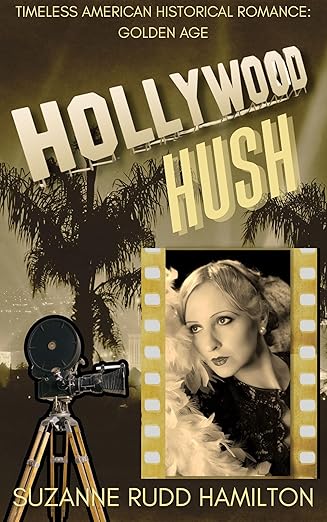
Author’s Note: This is a sneak peek of the new series, A Timeless American Historical Romance Golden Age. Hollywood Hush follows Greta as she is dropped in the beginning of the pioneering days of motion pictures. Click below for discount preorder – Coming in June.

Greta was terrified. For months she heard her boyfriend Harry spin yarns in all directions about all the wonderful movies she was going to star in. But she thought it was a pipe dream. It never seemed real. 

Since he enlisted her to be a screen actress, all she’d done at this point was stand in front of a blank wall dressed like a pixie and ballet dance for a nickelodeon reel. That was easy.

Now Harry sunk all his family’s fortune and even worse, money from a New York mobster into a full feature length production of forty-five minutes, starring her. 

Sitting in a makeup chair, she desperately tried not to shake, but her whole body was flinching in fear.

She memorized the lines, even though there was no sound.  It didn’t really matter what she said, as long as her lip movements matched. 

And for weeks, she worked with an acting coach from Broadway to perfect her facial expressions. She spent hours in front of the mirror, practicing every eye roll, leer and look of hopelessness. 

Harry kept telling her all she had to do was flash her big, beautiful baby doll eyes at the screen and everyone in the world would fall in love with her. 

Greta didn’t care if the world fell in love with her, as long as Harry stayed enamored. She was mesmerized with him. Ever since she served him in her parents’ German restaurant, she was entranced. 

She thought all she could do was serve wiener schnitzel to people, but he saw something else in her. He was exciting and had so many thrilling ideas for the future. She couldn’t help but be swept up in his wake. 

But now this is it. She will film her close ups today and her big blue baby doll eyes are covered in so much black eyeliner she looked like a raccoon. That was Harry’s idea. He said the camera needed to focus on them like a bullseye. 

So although frightened to her core, she trudged herself out of the tiny dressing and makeup tent Harry created and into the set, as he called it. 

The movie was about a young harem girl who falls in love with a handsome guard and tries to escape the clutches of the Shah. 

Harry and some interior designer he knew in Brooklyn constructed a makeshift tent covered in flowing chiffon fabric to resemble the Shah’s lair. 

She and five other girls stood there dressed in scandalous little harem costumes sewn by an old Jewish lady Harry knew from his old neighborhood in Queens. Throughout the entire fittings, she mumbled in Yiddish something about toucases and shameful outfits. She even sewed a sheer beige lining into the midriffs, so no one would see their bare stomachs.

But the costumes were beautiful and masterful. The silk fabric freely flowed with their movements and the beads sparkled in the hot lights blaring on the girls, blinding them like beacons of sunrays. 

Waiting to perform the choreographed belly dance number a Broadway dancer taught them, Greta watched Harry with admiration. He was in command of everything. Sitting in his wooden director’s chair, he barked orders at everyone as if he was conducting a symphony. 

Unfortunately, this movie was not going well. They began filming outdoor scenes a few days ago and it was challenging. So many things went wrong. The cameras didn’t always work. The hot lights melted part of the tent material, starting a small fire. And the desert sand he had trucked in from the beach swirled everywhere in all directions when he applied giant fans. Mimicking a violent desert storm, she and her leading man escaped amid the bowls of endless dust for eight hours straight, leaving them picking tiny grains of sand from their hair and clothes for days. 

Greta even had to use salve to soothe the burns from the grains of sand gritting against her pale alabaster skin. 

Every day seemed to be a trial of mammoth proportions, but Harry’s raw guts and determination transcended every problem. He was going to make movies and be rich and famous. That was his dream and she really believed it could happen. Harry would make it all come true.

As he walked toward her with a big smile on his face, she took a deep breath. All she had to do was trust his direction. 

“Are you ready to make magic baby,”  Harry said kissing her on the cheek. 

“Sure Harry, whatever you say,” she forced a smile and held her breath. 

Then Harry picked up this cone called a megaphone and yelled “Action.” 

This was it. It was happening. 

(C) Suzanne Rudd Hamilton 2025

Featured

Buried

Staring down at the four story staircase, we slowly descended… step by step. 

I didn’t think I was claustrophobic, but as we lowered further into the abyss, I stared at the walls in complete understanding of how someone could feel them closing in. 

When we reached the only remaining Edinburgh catacomb, appropriately called a close, my emotion was torn. I wondered how people could live everyday all day without fresh air or sunshine. It was depressing. 

I closed my eyes and tried to picture the bustle of people traveling the corridors, the marketplace and various workshops to satisfy daily needs, as the tour guide described. But when I opened my eyes, I saw only emptiness.

A few steps later was a small hovel that would house a family. There was a simulation of a small table and floor bedding to show how they lived.  It was bleak. The air seemed thin. The ceiling was very low and the small area had no measure of privacy. It was like bears hibernating in a cave. I couldn’t imagine living like that, especially for years. 

Remembering that during the bubonic plague, the catacombs often housed quarantined individuals, the last step on the tour was the hovel they called the chapel. As soon as I entered, I felt a cold chill of eeriness I couldn’t shake. Prominently displayed was the ragged doll of a little girl called Annie, who died in the plague. The guide told us that many feel her spirit captured there. I did. 

But then he explained that some catacombs were actually preferred by poor people for the security of living below ground. Astonished, I gasped in disbelief. To me it was like being buried alive, sad, hopeless and forgotten. 

Maybe I was reflecting my own bias or perhaps I channeled the echos of spirits left behind. But as we ascended the staircase, my mood lightened with each step as if I was reaching for warm sun and fresh air.

As we reached the top, I thrust open the door, ready to inhale salvation, yet while I spent an hour buried beneath the streets of Edinburgh, a thick Scottish moor enveloped the entire area. We walked back to our boat shrouded and perplexed by the mystery and past of its subterranean dwellers. 

Featured

A Whole New World

Caroline sat in front of her picture window with a steaming cup of coffee gazing out in the glowing amber ball of the morning sun rising as if it were ascending for the first time. 

The last eight hours much like the prior two months and even past 30 years had been a nightmare. 

Prisoned in an unhappy marriage, each day was filled with a gloom of unkindness at the least and a barrage of verbal torturous abuse at its peak, heightened with venom and belittling, which made every day seem like carrying 100 pounds of extra weight. 

Stricken with fatal illness and frightened of its result, her husband took every opportunity to saturate the house with misery and darken her every moment with a pain to match his own. 

Even in his final hours, she kneeled over him, trying to help comfort his last minutes. Collapsed and gasping for each breath, he grabbed her collar and with his last cruel word said. 

“You did this.”

But the fault was not a her feet, but written is the cosmos along with every other being. 

As the ambulance took him away, she closed the door and inhaled fully for the first time in years, trying to get her brain to compute what happened.  But the only thing she could muster was a blank expressionless shell roaming about the house in search of answer. 

Finally, as she stared silently at the same yellowed hues folding into a landscape of gradient burnt orange hues gently ebbing  into the swaying trees in the pocket of the horizon, she inhaled the crisping air and took stock of her senses. She felt nothing. No sorrow. No regret. No apprehension. Absolutely Nothing.

The blackened clouds which overcast her existence had cleared. It was a whole New World for her to explore unencumbered and unchained without compromise. 

“It’s going to be a new life. A better one. And it’s all mine.” 

She pulled a blanket around her, smiled and drifted off to sleep. Tomorrow would be a new day. 

(C) Suzanne Rudd Hamilton 2025

Featured

Different Eyes

Shopping at garage sales is my jam. I’m a handy crafter and relish making old things into new things. Somehow, I don’t see them as they are, but as what they can be.

Where someone would see an ugly old octagonal 70s end table with orange felt on the sides and a broken door, I see a little bed house for a small dog. 

Today this estate sale I’m at is filled with many wonderful pieces of jewelry, furniture, art, and vintage clothes… someone’s entire lifetime of possessions. 

I walk among the items determined to breathe the next chapter into something and make it reborn. But I can’t help but find it sad that no one in the family wanted this person‘s memories. 

So when I find this 1930s secretary desk in a darkened room, my wheels started turning. It’s not as ornate as other secretaries I’ve seen, but furniture was made to last back then, so while plain and simple, it’s just waiting for a new useful life. 

In my mind, I see a crafting table with hidden storage, something that looks nice in a room, but then when you’re ready to craft, you can open the doors, pull down the table and boom…instant crafting studio.
I can’t wait to get it into my garage workshop to make it new again. 

Once home, I open all the drawers and doors and look at it carefully, creating a blueprint in my mind of its new image and how to get it there. With the new plan, I pull out all the drawers and take off all the doors. But then behind each of the drawers, I find some old folded, black-and-white pictures.

“Hmm, what are you guys doing in there still?” I say to myself. I do that a lot.

By the faded ink, thin paper and crinkled edged borders, I recognize them as old-time photos I had seen in scrapbooks. 

I unfold and flatten them out and take a look. One is a group of smiling young women, sitting next to a soda fountain. From their hairstyles and dress, it appears to be from the 1940s.

“What a cute group. I bet they were having a good time when this was taken,” I notice. 

Another is a picture of a man in a sailor suit with a precocious crooked grin, standing on the deck of a ship with his arm around a gun. 

“I’m not sure I would smile with my hand around a gun, but he’s very nice looking. He has one of those superhero jaws.” I laugh.

The third one is a larger photo folded accordion style from being trapped behind the drawer. I carefully untwine it to reveal a picture of the handsome square-jawed sailor and a beautiful young woman. 

“With these big smiles on their faces they look overjoyed, like happiness is bursting right out of them,” I admire. 

Then I realize one of the girls at the lunch counter is the young woman with the cute guy in the photo. She has the biggest round, bright eyes-just like a doll. 

I sit for a little while, with the three pictures in front of me, weaving a tale in my mind with more questions than answers. 

“Maybe it was a whirlwind wartime romance. What if they locked eyes across a crowded room and instantly fell in love? What if they were star crossed lovers, never supposed to meet, but fate got in their way.”

I chuckle at my vivid imagination and put down the pictures. 

“Or maybe I just need to lay off the Hallmark movies.”

I get to work on the secretary, but while sanding and installing new hinges and drawer slides, my brain concocted a whole movie playing in my head. 

She worked at a jewelry store and he came to buy a locket for his sweet little old mother before he went off to war, so she’d remember him always. They gazed into each other’s eyes and were mesmerized, staring without stopping until the store closed. Then he proposed out of nowhere, and even though he she knew nothing about him, she said yes.

Before I know it, hours passed and I had done very little to this piece of furniture. All I can think about is these pictures and this couple. 

I have an insatiable need to find out what happened to them. I can’t help look into their eyes wondering what their story was. Their faces were so happy.

All night my mind raced. I had to know something, anything about them. So the next day I drive back to the estate sale to see what I could find out.

I show the pictures to the manager and ask about the people. 

“I know this is unusual, but I found these pictures in a piece of furniture I bought here yesterday. First, I want to return them, but second, I’m wondering if you know anything about these people.”

She shrugs her shoulders. 

“The only information I have is their names, Kate and George Barry,” she explains. 

Disappointed, I begin to walk away when she runs after me. 

“Wait! If it helps, the Barry’s are in living in the St. Francis home fairly close to here. I bet they would love to get these pictures back. They don’t have any family and I’m sure they’d love the company.”

Walking to my car, I start to feel like a stalker. 

“This obsession has gone too far. I need to get over this,” I tell myself. 

But before I know it, my car is driving itself right over to the Saint Francis nursing home on the other side of town. 

As I pull into the parking lot, I pause at my steering wheel. 

“I think you’re crazy. What are you going to say to these people?”

But apparently, I don’t listen to myself because before I know it I’m at the nurse’s desk asking for them by name. 

“I’m here to see Kate and George Barry, please?” I confidently declare.

And that was all it took. She points in the direction of a recreation room and I’m on my own. 

Within a minute, I’m staring into the faces of many old people looking into their eyes, trying to see a glimpse of the young people still alive inside of them. 

“Which ones are they?” I ask myself.

And then I see a gentleman with a square jaw, a little saggy, but still looking like a superhero drawn in a comic book. 

I approach the man. 

“George Barry?”

“Yes.” 

When he looks up at me, smiling, there is no doubt in my mind. It is George. I’d know that grin and chin anywhere.

“You don’t know me, but I just bought a secretary at your estate sale and found these pictures. I thought you’d like to have them back.”

I hand him the pictures and he lets out a big belly laugh. 

“Katie come here and look at these pictures.”

An old woman in a wheelchair turns around, and I can see that same young girl in the photos with the beautiful Cupie doll eyes. It’s her.

He hands her the pictures and she laughs too. 

“Can you ever believe that we were that young?”

A sudden wave of curiosity took hold of me and I couldn’t help myself. 

“I’ve been wondering about these pictures for the last day and a half. Please satisfy my curiosity. Did you have a wartime romance? Was it wonderful?”

The duo glance at each other and laugh heartily. 

“My dear, I’m so sorry. But neither of us ever married. We’re brother and sister,” George replies. 

With that one sentence, I feel like melting into a pool on the floor and seep into the pavement. But after the initial shock, I realize I still want to hear their story. The fact that they weren’t married, probably makes it even more interesting.

“If you’re willing, I’d love to hear about what went on in these pictures,” I ask. 

They smile at each other, offer me a seat and sweetly spin the tale of their close lifelong sibling relationship. An hour later I’m back in my car satisfied and grateful for what I learned.

“Sometimes you have to look at people and things in a different way to understand their journey. Everything old is new again.”

(C) Suzanne Rudd Hamilton

Featured

Ghost Light

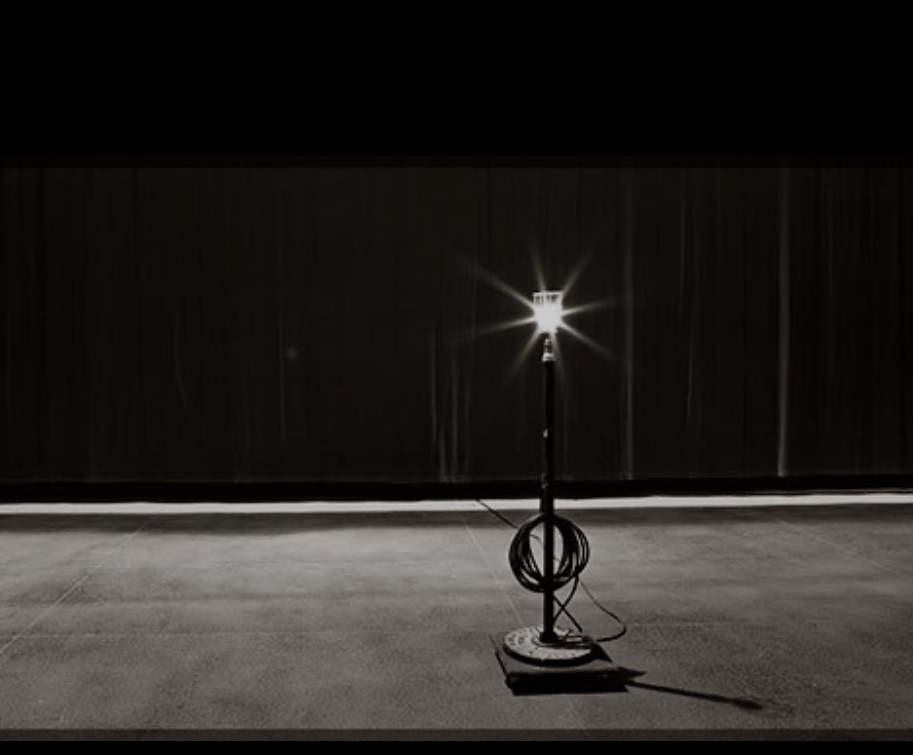
Stepping onto the darken stage, I feel the wood boards under my feet. The seeping glow of the single bulb ghost light provides very little light, but somehow I see everything clearly. 

There’s the full audience enthralled with every note and spoken word. Over there are the actors dancing on the stage in perfect rhythm in front of the glorious scenes. The stage is set. I finally made it to Broadway. But still, somehow I feel unworthy. 

“Can I make it here?” I hear the echo of my words ring out in the empty chasm. 

“Yes,” a faint whisper flew through the air. 

I look around, but couldn’t see anyone there and chalk it up to my vivid imagination.

“I guess the ghost light may be doing more than keeping me from falling off the stage.” I chuckle. 

With make up case in hand, I march to my assigned dressing room. It’s amazing. There are notices and playbills from productions that came before, signed by the many who just played in the background.

Staring at each poster, I could feel the excitement and nervous energy they left behind in the room. 

I place my case down on the counter and sit in front of the big mirror framed in bright bulbed lights. 

“This is it. It starts tonight.” I tell my reflection. 

Suddenly I hear a giggle wisp behind me. But when I turn around, there’s nothing there.

Shaking it off, I unpack my makeup, put up my hair and begin to create the face of an old women in the mirror, transforming myself before my own eyes.

Adding the last final touch, the gray wig, the deed is done.

Admiring my handiwork, a shadow in the corner of the mirror startles me. But I blink and then it’s gone. 

So when the door creaks open, I jump high out my seat. 

“Don’t be alarmed, ma’am, it’s just me, Barb, your dressing roommate,” a tall slender woman with dark hair utters. 

Embarrassed, I chuckle to release the tension. 

“I’m not a ma’am. This is just a wig and make up. My name is Sarah. I’ll be playing the old woman.” I extend my hand to shake hers. 

Barb laughs and places her make up case down and sits in the chair next to me. 

“This is my first Broadway show,” I confess. 

Barb barely looks at me while busily making up her own face.

“I stopped counting how many this is for me. But I never have any lines. I’m always in the background, like wallpaper. At least I’m on Broadway,” she shrugs. 

Studying her for a moment, I try to decide if I can confide in her. Then I quickly sum her up to be a good egg. I have no evidence to prove that. It’s just a feeling.

“Can I tell you something weird?” I ask. 

“Why not. I got a few minutes,” she says while continuing to apply her make up. 

Not sure if I should say anything, I hesitate. But then summon my courage and blurt it out.

“Is this theater haunted? I know it’s silly, but I keep feeling like something’s following me.”

Barbara lets out a laugh, almost mocking me. 

“Don’t worry about it. That’s Grace. She’s a good one, like our mascot,” She says and points to the poster on the wall.

Confused I go over to the wall and read the posters, but can’t figure out what she’s talking about. 

Obviously picking up on my confusion, Barb laughs again. 

“Don’t you know all theatres are haunted?The ghost light shines their way back to us. Grace was a young dancer in a musical 100 years or something ago, who turned her ankle and fell off the stage, breaking her neck. Ever since then, she hangs out in the theatre looking after us like a guardian angel.”

Somewhat relieved that I wasn’t going crazy or letting my nerves get to me, I gaze at the poster of a showgirl kickline, wondering which one she was.

“Thanks. If I’m going to get through this, I’m going to need a little grace. Please stick around.” I whisper into the void.

Then I feel a warm hand on my shoulder and smile. 

Now I know everything’s going to be OK. I have someone who’ll watch over me. 

(c) Suzanne Rudd Hamilton 2024

If you want to know more about the history of ghostlights in theatre, click here If you want to know the history of ghost lights in the theater, click here https://www.onstageblog.com/editorials/2020/3/25/the-history-of-the-ghost-light

Featured

I Left A Lot in San Francisco: Tales from the Backseat Episode 7

xr:d:DAFMCWykCMw:4,j:35139615596,t:22091217

The difference between being a preteen and a child on a family vacation is like the comparing Mount Everest to the dirt hill kids jump their bikes over. It’s a continental divide.

During my preteen years, I wanted to be cool and strived to seem grown-up. And I definitely did not want to act like a little kid. Unfortunately, touring around any city like the Von Traps with parents and little siblings in tow is the antithesis of all I held dear. 

On our month-long family trek across the country, embarrassment was as common as fast food and motels, making me want to distance myself to closely remain outside their bubble and keep my percieved coolness intact. But my family had their own agenda. 

My mom always wanted to keep us together and make sure everyone wiped their hands before and after they touched anything and ate. My dad often made inappropriate and all the time goofy jokes, while my brother tried to remain invisible and my little sister enthusiastically garnered attention. 

But our trip to San Francisco showed me a humility that I would never forget, no matter how hard I tried. 

As usual, plans for the day included tourist traps on our never ending quest to find any and every offbeat, strange and odd site that no one has ever seen. 

Case in point, a little known and nearly forgotten historical remnant called Fort Point, lying in the darkness beneath the Golden Gate bridge. 

And no one did know about it, as evidenced by the lack of any tourists. 

The National Park Service man, dressed in Civil War Union garb seemed elated to see us, making me wonder if we were the only ones he had seen that day, that week, or maybe even that month. 

He gave us a brief tour of the very small encampment and described its intended but never consummated use to guard the west coast. Then we all received a little certificate of our visit. As usual, bored and mortified, I watched the rest of my family seemingly enjoy what I considered torture. 

Not to be undone, we then visited the mysterious Winchester House. I didn’t know much about it, but standing in the gift shop listening to teasers of its eclectic owner Sarah Winchester and the tales of her curious house, I was intrigued. An avid, Nancy Drew reader, I was ready for something interesting to see and hear. 

But, while popular, the Winchester house was what my father considered a tourist ripoff, that charged exorbitant fees for a tour. A sentiment he loudly expressed in the gift shop.

“Can you believe what they’re charging. Do they want us to pay for a new addition to this place?”

Instead, we bought slides of the home and a book chronicling the mystery. Once again, I was annoyed that the one thing that interested me blew out in a puff of smoke. 

My mother sympathized and to placate my angst decided to buy us our favorite candy at a nearby store. Both notorious chocolate lovers, my parents rarely passed up a candy store. Unlike the rest of my family, chocolate was not my delicacy. Strawberry Twizzlers were my confection of choice. 

So as my father hilariously negotiated the treacherous ups and downs of the streets of San Francisco like a Hollywood stunt driver, I snuffed out my annoyance by rolling my eyes and chewing on licorice ropes. 

Finally, we arrived at Fisherman’s Wharf and its iconic ship’s wheel sign. My dad was charged in anticipation. It culminated many of his favorite things, boats, the open water and eating fish. 

All day he gushed about walking around the marina, seeing the boats and picking out his own fish to eat at the restaurant. 

Unfortunately, no one else shared his affinity for boats or fish. But as veterans of many boat shows, we knew we just had to find a perch or bench nearby and let him enjoy it. My brother always dutifully accompanied my father without complaint. The reward and burden of the only boy.

But as both my mother and I have bloodhound noses and are extremely sensitive to smells, very soon the pungent odors of the raw fish buffet on ice began to take effect. But oddly, it was my little sister who chimed in first.

“Mommy, this place is stinky,” she whined. 

Covering her mouth and nose with a scarf from her purse, my mother nodded in agreement and gave my sister, some crayons and a coloring book to distract her. 

However, despite holding my nose and trying to read from the Winchester book, I was lightheaded and my stomach felt queasy. 

“Mom, I don’t feel good,” I said. 

In a typical mother move, she placed her hands on my forehead. 

“You’re not hot. I’m sure it’s just the fishy smell. I know, it’s disgusting. Hopefully your father will be back soon and we will go into the restaurant. It shouldn’t smell bad in there.”

I learned a long time before that, waiting for my dad was an inevitable pastime. 

Yet try as I might to occupy my brain with the strange history of the Winchester Mansion, my stomach had different ideas. The combination of nearly an entire bag of licorice and the affrunting fish aroma was too much. I began to swoon and sweat. 

“I think it’s getting worse.” I told my mother. 

“You do look pale. Let’s find your father and get out of here,” my mother said and grabbed my sister’s hand as we scurried down the pier and quickly met my father and brother coming toward the restaurant. 

“Susie doesn’t feel well. I think we need to skip the restaurant and get back to the hotel,” she told him. 

I saw my father’s joyous demeanor instantly deflate. He’d been salivating over this fish all day only to be denied, but he didn’t even argue. He couldn’t miss my pale and perspiring face. 

“OK. But we need to take the trolley car to the hotel as we parked the car in an overnight parking area. I’ll get you guys settled and go back for the luggage.”

He kindly put his arm around me to prop me up as we walked past the ships wheel and left Fisherman‘s Wharf. 

The further we got from the smelly fish, I began to feel slightly better. And sitting at the window seat of the open trolley with the wind in my face, at first I was relieved, but it’s jolting movements made my stomach turn somersaults and it wasn’t long before I literally left my mark on the streets of San Francisco. 

No matter what my family did to embarrass me on this trip, it never reached the heights of my own gastrointestinal acrobatics. I was thoroughly embarrassed, but this time, at my own hand. 

Remarkably, my family didn’t say anything. They didn’t tease or cast any aspersions my way. We just moved on with the trip as though it didn’t happen. A hard but good lesson for an anxious teen. Families can be goofy, but they can also have your back in time of need. 

(c) Suzanne Rudd Hamilton 2024

Featured

Never Have I Ever

It was a cool and somewhat snowy Chicago weekend in early April. The point in winter when everybody felt listless and annoyed with one more month of gray days, cool temperatures, and intermittent snow that was supposed to be gone in March. So five friends decided to embark on a long weekend to sunny warm Jamaica.

Proudly wheeling one carry-on bag each they gleefully arrived in Montego Bay ready for some fun in the sun, an endless pool bar and good 5-star cuisine, all included.

Removing sweaters, jackets and anything else they could on the way to the bus, they inhale the sticky humidity and baking sun rays they desperately missed for the last seven months.

“Can you feel the warmth of the sun? It’s like a shot of vitamin D,” Anne said raising her hands to the sky.

“I am ready to get my margarita on. Let’s go,” Carl agreed.

An hour later the quintet was waist deep in chlorinated water within arms reach of the pool bar, toasting their weekend.

“Hey, check out the young skinny pale guy at the bar. He’s got no game,” Greg chuckled.

The others turned their heads to find the young man trying to strike up a conversation with a woman at the bar.

“Are from out of town? Rrr i’m from New York. Where are you from?” Carl mimicked, trying to simulate the out of earshot conversation.

“Oh, I’m from California,” Cindy laughed, anticipating the flippant non-engaging reply from the girl.

Then Greg began to give the play-by-play. “Never dissapointed, he goes in for another.”

“Um. I’m a graphic designer,” Carl continued, pretending to be a little too proud.

“That’s nice,” Ann imitated cooley.

“It’s a swing and a miss,” Greg chuckled. “And as soon as he goes up to the plate again…”

“Oh no, she’s getting up. Not good pale guy,” Cindy closed her eyes to avoid seeing the conclusion.

They all uttered a unanimous grown as the girl left the bar.

“Too bad pale guy. Crash and burn,” Greg laughed.

A little annoyed at the mocking play, Tanya eagerly changed topic.

“Now that that’s over, let’s play a drinking game. I saw it on television, it’s called. Never have I ever. Somebody says something and if you’ve done it, you drink, if you haven’t, you don’t,” Tanya suggested.

“OK, I’ll start. Never have I ever smoked a marijuana joint,” Cindy said, waiting for the others to reply.

“Just so everybody knows, I may drink whether I did it or not. I came here to drink and these margaritas are good,” Carl asserted while sipping his drink.

The four gazed at each other cautiously, like a high noon standoff wondering who would sip first.

Carl took a drink any others stared at him and surprise.

“It’s medicinal,” he yelled. “Why not?”

They all burst into laughter, while Tanya loudly announced to the pool goers

“Anyone selling any ganja? We got to taker here.”

“Or a toker,” Greg laughed and they all followed.

“Hey, what happens in the pool stays in the pool,” Cindy jokingly admonished her.

“OK, here’s one. Never have I ever had sex on the first date,” Tanya snapped with a satisfied grin.

Everyone looked at each other again, no one wanting to show their hand first. But this time nobody said anything.

Tanya became increasingly annoyed and then she drank from her cup.

Everyone dropped their jaws in shock and Tanya laughed.

“At least I’m honest,” she said.

The next day, they decided to move the party to the resort clothing-optional beach. Something foreign and in varying degrees of discomfort to most Americans.

Walking amid the partially clothed, Ann shielded her face.

“I didn’t think this would bother me, but I don’t know where to look,” Ann admitted.

“Well, I’m looking,” Carl smiled.

“You would,” Cindy chuckled.

“I’m intrigued, but personally I like my boobs in melon shapes not cucumbers,” Tanya said.

Everyone laughed and they found someplace to sit down when Ann noticed the armed guards with automatic rifles positioned on either end of the beach.

“I don’t know about you guys, but I’m a little uneasy with the heavy duty hardware all around us,” Ann said.

“What? Guns are more frightening than a fruit salad variety of naked breasts,” Greg kidded.

“I know they’re here for our protection, but I agree. It freaks me out a little bit,” Cindy added.

For the next two days they ate, they drink a lot and were merry with each other’s company.

Then on day three, they were all sitting in restaurant having breakfast when the manager came flanked by two armed guards, alarming everyone.

“Ladies and gentlemen, I am sorry but you must extend your stay a little longer. We just got word that a band of armed rebels have taken over the airport and no one can leave the island. We are doubling our security to keep you safe. There is no need to panic.”

The five friends glared at each other stunned into silence.

“I don’t like this at all,” Cindy said with concern.

“Don’t worry the airport is more than a half an hour away. They’re not gonna come over here. They’re just trying to make a point with the government.” Tanya tried to ease her fears.

“I hope so. That’s what I’m going to believe,” Ann said.

“As long as the food and drinks hold out, I’m OK.” Carl said jokingly, but his eyes defied him, revealing his worry.

For the first time in the weekend, Greg took a serious pose.

“Look guys. Let’s just promise to stick together and we’ll get out of this OK.”

They all shook their heads in agreement.

Four days later, the government took back the airport and the relieved five musketeers traveled back to Chicago vowing never to don Jamaica’s island again. But as time passed, they regaled many with their tale of the long, long Jamaican weekend. Something they would never do again.

Featured

Work To Live

Work was frantic in Stephanie’s real estate office. On one line she was talking a buyer with cold feet off the edge while on the other lines she had an attorney and another agent on the phone about problems with other pending deals. And in front of her, an assistant holding bunches of files trying to get up to speed before Stephanie could leave on her vacation.

After finally resolving all the calls, she looked at her assistant, Laura and sighed with exhaustion.

“Sometimes I wonder if it’s worth going on vacation. It seems like you have to work harder beforehand just so you can leave.”

Laura nodded while staring anxiously at Stephanie like a deer in the headlights, terrified to be left alone with mountains of work.

“But you’ll have your phone on, right? And you’ll be checking emails… daily? More than daily?”

Stephanie smiled and took the files out of Laura’s hands.

“Take a breath. You’ll be fine, but I’m not gonna leave you in the lurch. You’ll be able to reach me when you need to.”

With that, Stephanie grabbed her bag and exited the office getting into her car. On the way home, Laura only called her two times.

At the airport, she called her three times. And sitting on the tarmac, she was talking to Laura until the flight attendant made Stephanie turn off her phone.

Unplugged with nearly 7 hours time difference between her and the office, Stephanie caught up with emails on the way to the hotel, much to the irritation of her husband, Bruce.

“Steph, we’re on vacation. The world will not come to an end if somebody’s appraisal doesn’t come in on time.”

Deep down, Stephanie knew he was right, and she wanted to let go, but as someone who worked on commissions, she worried if deals didn’t go through and clients weren’t satisfied, she wouldn’t get paid.

“It’s easy for you to say. Somebody takes over for you when you leave. I own my own business. I’m all I’ve got.

Bruce shook his head and threw up his hands in frustration.

The next day on the tour bus to a 1000 year-old Spanish vineyard, Stephanie received two calls from Laura, trying to talk quietly as the tour guide explained about the region and the history of the vineyard that shockingly remained in one family handed down from parent to child for a millennium.

Sitting next to her at the window seat, Bruce’s annoyance was bubbling over.

“Steph, you’re not seeing any of this. Look at these olive trees? They’re amazing. Get off the phone. We’re on vacation.”

Smiling and holding up her finger at Bruce, indicating she’d be off in a minute, Stephanie wasn’t paying attention to anything outside of her phone.

As the bus drove deeper and deeper into the wine region, Bruce shook his head at her again and gazed out his window, marveling at the beautiful untouched scenery in his view.

An hour later, the bus stopped at the vineyard and everyone was greeted by the current owner, Carla, a bohemian looking Spanish lady with her somewhat graying hair pulled back in a ponytail and flowy clothing billowing in the warm soft breeze.

“Welcome to Serenity Vineyards. Please join me on the veranda for some wine and tapas.”

Stephanie, Bruce and the other eight people in their small tour group sat on the open veranda with views of grapevines as far as the eye could see. In front of them was a table full of wine, grapes, olives, bread, cheese and small cups of terra cotta colored soup called Gazpacho.

As the other eight drank and asked Carla questions, Stephanie kept looking at her phone. There was no service.

Carla smiled at Stephanie noticing her anxious reaction to the lack of bars on her phone.

“I’m sorry, but we get no cell service out here.”

Embarrassed, Stephanie quickly put her phone in her bag, but then stared at Carla, puzzled.

“How can you run a business if you have no service?” Stephanie asked.

Carla chuckled and sipped her glass of wine.

“I have a fax machine and of course a computer with email. And in a necessity, I have a landline.”

Stephanie smiled but shook her head in gentle defiance.

“I couldn’t do that. I’d be out of business in two minutes without my phone.”

Carla handed her another glass of wine and smirked.

“I was once like you. I didn’t think I could ever get by without my cell phone implanted into my ear. I was a successful financial planner when my brother asked me to come and help with the family business. And I never looked back. Looking around and breathing this fresh air every day. This is true peace, serenity.”

Stephanie gazed at her in surprise, then looked out at the vast landscape all around her, grinning.

“It really is astonishing here. I just don’t know how you can unplug like that.”

Carla poured her some more wine.

“I understand. But then someone told me something that I couldn’t shake. He told me I was living to work and that I should consider working to live. That one statement changed my life.”

Carla poured wine for her other guests, leaving Stephanie sitting drinking the wine and wondering.

Was she right? Had work taken over her entire life? Bruce thought so, anyway.

She glanced over at Bruce laughing and talking to the other group members. Maybe he’s right, she thought.

For the rest of the tour, Carla’s words haunted Stephanie… work to live or live to work. And for the first time on the tour she gazed out the window and saw olive trees, grapevines and a picturesque land that enveloped her senses.

Then her phone rang. Both she and Bruce glared at her bag and then each other. But Stephanie turned off her phone and smiled at Bruce.

“We’re on vacation. It can wait.”

Featured

A Dream is a Wish your Heart Makes

Episode 6 – Tales from the Backseat

xr:d:DAFMCWykCMw:4,j:35139615596,t:22091217

California here we are. After three weeks navigating most of the lower half of the US and a bit of Mexico, we finally made it to the golden west coast. And as any red-blooded American family, the first place we went was DISNEYLAND. 

It was the mecca of small children and parents wanting to please their small children. I’m not saying we were raised in a “Disney” world, but their universe was hard to avoid. We saw their movies, The Apple Dumpling Gang and Herbie, the Love Bug in their mostly live-action era. And we were veterans of two trips to Walt Disney World since its 1971 opening. So, we were interested to see what differences the original 1955 flagship Disneyland had to offer. 

At first glance, MainStreet USA was a carbon copy of the Florida version. And at the end of the turn of the century replica town, there was a castle. This one was a gleaming white Sleeping Beauty castle instead of the pale blue Cinderella version. 

Initially, there were a few different rides, a bumper boat ride in a big pond and some place called New Orleans Square where the haunted mansion was a white southern plantation. Those I liked. 

In this mansion, you walked the hallways and the paintings changed. My kid sister was scared and clung to my mom for dear life, but to me, finally there was some excitement. Although beyond that, it was another duplication. 

Needless to say, I was unimpressed. Ride after ride, I audibly sighed, rolled my eyes and folded my arms across my chest while trudging through the lines with as much pre-teenage angst as I could muster. 

I got the feeling my parents ignored a lot of my outward and annoying less than silent protests at being dragged through“kiddie world.” Finally, my dad had enough and gently redirected me to the side, while my brother and sister shopped for Mickey Mouse-eared hats.

“What’s the problem? Aren’t you having a good time?” He asked me with some frustration.

“It’s all kiddie stuff. I want exciting thrill rides. And it’s like we’ve been here before. Why did we come all the way to California for this?”  

My dad paused for a moment and momentarily looked around. In that moment, I think he saw what I saw. 

“OK. I get it.”

No more was said, but I appreciated that he understood my position.

When my mom, brother and sister came back from the store clad in Mickey Mouse ears, I rolled my eyes.

“We didn’t get you anything,” my little sister snidely remarked, as if verbally sticking her tongue out at me. 

But my Dad was on my side. 

“Let’s find a roller coaster. Didn’t the brochure say there was a roller coaster around here?”

My mom pulled out the guidebook and flipped through the pages. 

“Yes. The Matterhorn,” she said, pointing to the imitation snow-covered mountain in the distance. 

“Why don’t I take the older kids on that and you can go on the carousel?”

It was the perfect solution. Fun roller coaster for the pre-teens and mind-numbing horses turning to repetitively maddening calliope music for the little one. 

As we approached the coaster, it became larger and larger in our scope. According to the guidebook, the Matterhorn was fifteen stories high where you and your careening bobsled experienced a series of fast-speed hairpin turns to eventually splash into a stream water at the end. 

I could barely contain my excitement. Finally, a real ride. 

Waiting in line, we were joking and having a good time. I was amazed at how enthused my dad was to ride this roller coaster. Through the long serpentine cue, he raved about all the fun times he had as a kid on the thrill rides in this amusement park near where he grew up in Chicago called Riverview. 

My dad was a born storyteller. When he was enthusiastic about something, he’d weave interesting tales that would vie the movies Walt Disney made. While many times we were uncertain of his relationship with the truth, he’d spin tales and laugh at them, drawing us into his narrative. In the end, we didn’t care if they were true or false. They were stories, after all. 

The closer we got to the front of the line, the screams from the riders and anticipation of the sheer thrill enhanced. And at the moment, I glimpsed a bit of the coaster track, I climbed up on the railing and wriggled to get a better view. I could see the bobsleds twisting and turning at such a high pace, I thought I could hear a whooshing sound as they went by. I couldn’t wait.

But when I tried to get down, I found my knee was stuck in the railing. I wiggled and pulled while huffing and puffing in distress with my already heightened adrenaline level off the chart. 

“I’m stuck!” I shouted to my Dad in perilous panic. 

Confused at first, he came over and tried to lift me up and pull me out of the railing. But nothing worked. 

By now, quite a commotion developed among those in line, rubber-necking and gawking at the white-knee sock wearingyoung girl who was stuck like Winnie-the-Pooh in the honeypot. 

Someone told the ride operators who called the Disney cops. Soon they ran through the line to my aid as a fervor raised to the level of high interest with bystanders, much to my horror and embarrassment.

The Disney cops were perplexed, as they stood there whispering to themselves about how to proceed. 

My Dad, who was never at a loss for words, decided to lighten the mood with a joke. 

“Well, officers, we could always cut it off,” he laughed.

My eyes nearly popped out of their sockets. I knew he was kidding, but when the gathering crowd laughed too, I was mortified… and scared. How were they going to get me free?

By now, I was sweating bullets everywhere from fatigue and fright, as my other leg was still straddling the narrow rail. 

“I’m sure her leg swelled a little from trying to get it out.” One officer, I’d say, Captain Obvious stated as if he were giving the Gettysburg address, but saying nothing helpful. 

Then the other officer had an epiphany. 

“Do you think we could pull her knee sock up over her knee enough to ease the friction and she could slide out?”

Smiling and nodding at the brilliant idea, the officers and my dad got to work. My Dad held me up on his shoulder while the two officers shimmied and yanked on my cotton knee sock to get it up. Finally, eureka! I was free. 

Everyone cheered and applauded as my misshapen knee sockrevealed my redened knee, a little worse for the wear, but finally unshackled. 

Still heaving my breath from the stress and pain, my dad, ever the salesman, asked the officers. 

“What do you think fellas? Has she earned a trip to the head of the line?”

The officers smiled and escorted us through the line to the front where the ride operators ushered us into our own bobsled. 

The ride was fantastic, just as advertised. Our heads bobbed as the force of speed shifted us up, down and side to side with the movement of the coaster to the end, when we plunged into the water rooster tailing on either side of us. 

Laughing as we walked down the ramp at the ride’s exit, I saw my mother and sister waiting for us and a feeling of panic filled my body. My mother would be likely be mad and maybe never let me out of her sight again. Something a preteen did not relish. 

“How was the ride kids?” my mother innocently asked. 

But before we could answer, my Dad interjected. 

“It was a fun ride. Like the ones we used to go on in Riverview. Right kids?”

My brother and I mindlessly nodded our heads quickly like bobbleheads and I pulled up both of my knee socks to hide the stretchiness of the one and cover my knee until the redness subsided. 

And for the rest of our day in the park, I patiently waited in lines and rode the endless theme rides without the hint of complaint. Truth be told, it was a nice break… I’d had enough excitement for one day.

Featured

The Find

Gail’s favorite pastime is browsing through to estate sales. Each sale afforded an adventure into another time.

Besides the good deals on antiques, there was something insatiably exciting about exploring a stranger’s past. The anticipation of a new sale never waned for her. Strolling amid tables of jewelry, books, old toys, record collections, little figurines, racks of clothing and furniture, she believed you never know what you’re going to find.

Even on vacation in England, she looked online for local estate sales. Knowing she couldn’t purchase anything big, she can’t resist the temptation when she sees a sale listed in a castle. But Gail’s husband Dean is tiring of her obsession.

“You want to go to an estate sale on vacation? Never mind the money you spend and the storage it takes, this quirky little interest of yours has gone too far,” he angrily accused.

“It’s not an obsession,” Gail insists. “Didn’t I find that great deal on those golf clubs you love so much from that one estate sale? And where else would I have found that perfectly working 8 track player so you can listen to those old 8 tracks from high school?

Dean sighs, exasperated.

“OK, I’ll admit sometimes you find something useful. But we’re gonna have to move into a bigger house to keep all the stuff you get. And how are we gonna get anything home in our luggage?”

Gail grins, victorious. He’s caving.

“I probably won’t get anything. And aren’t you curious what an English castle looks like from the inside? Think of it as a free full access tour. Maybe we leave in find hidden rooms behind strange bookcases.”

Dean smiles and nods in agreement.

The estate is out in the countryside, but luckily there’s a train closeby. And when they arrive at the train station, Gail is able to get a ride on her Uber app to the castle in the middle of miles of rolling hills of English countryside.

The castle was built sometime in the 1500s, but it wasn’t a castle like they’d seen in movies. There’s no drawbridge or moat and the stone walls on the outside changed to plastered walled rooms with spectacular decor inside. With wood panel walls and soaring ceilings, it’s like nothing they’d ever seen before.

Gail is giddy in expectation. She can’t believe that she can take something home that could be hundreds of years old.

Unlike the American estate sales she frequented, there are no tables or racks. Everything is pristinely kept just as it was left by the last owner.

Her eyes expand to saucers as they travel from room to room looking at everything from old leather-bound books and jewelry to crystal, china, silver sets and swords. She looks over at Dean, expecting the face concern at the shopping bonanza, but instead, his eyes dance like a kid in a candy store.

“This place is amazing. Did you see the swords?” he gushes.

At that moment, she knows there will be no problem from him.

“Go ahead and explore. I’m gonna look upstairs,” she says.

In the main bedroom, she finds a giant mahogany canopy bed surrounded by open dresser drawers and wardrobes. But as she browses through the clothing, everything seemed pretty contemporary—nothing she hasn’t seen before. And the jewelry, while nice, only appears to be about 50 or 60 years old.

Exploring the other bedrooms, she’s slightly disappointed to find the same. Sluffing down the winding wood staircase, she feels a little melancholy. Her expectations were so great and now they’re dashed aside.

Then she sees Dean running at her with a look of glee on his face.

“Come, quick,” he whispers. “You can’t believe what I found.”

He quickly escorts her into a library, which housed wall-to-wall bookcases with leather-bound volumes, as far as I could see.

He pulls her to a corner bookcase.

“Remember when you said there could be secret passages behind these bookcases?”

Gail holds her breath with anticipation.

“You found a secret passage?” She asks.

“No.” He shakes his head, nearly busting with urgency.

“I was looking all around pulling books everywhere to see if I could find a trigger to open a bookcase and look what I found hidden behind these books.”
He stands with his back blocking the view of other patrons and carefully pulls two books from the bookcase, reaches in and grabbed some ancient-looking papers, rumpled and yellowed by age with tattered corners.

Seeing he was extremely excited; Gail tempers her enthusiasm recognizing an obvious rookie mistake.

“These look really old. And the writing even appears as though it was drawn with an ink quill. But they’re probably just old letters or papers from one of the owners. I guess we could frame them, but they don’t have any value.”

Dean thrust the papers in her hand, quietly urging her to look closer.

“You don’t understand. Look at the name on this.”

Gail takes the papers and peers at them. The name reads “William Shakespeare.”

She gasps and stares at him in shock.

“You don’t think?”

Dean smiles with a Cheshire grin.

“I don’t know what do you think? Should we ask someone?”

Gail immediately nodded no.

“The first rule of estate sales is never let on that you know something may be more valuable. Then the price goes up. They probably don’t even know this exists.”

She carefully examines the papers, trying to read the words.

“It’s like poetry, I guess. I don’t understand most of the words. Didn’t Shakespeare write a lot of sonnets?”

“Yes, I think so. And I remember studying it in college English. You had to have a dictionary just to know what all the Elizabethan words meant. What if this is an unpublished sonnet? It could be worth millions!” Dean whispers quietly but could barely contain his exhilaration.

Gail shook her head again.

“There’s no way this could be an unpublished Shakespeare sonnet. I think we’re getting carried away. It’s a common mistake with estate sales. I’ve seen it a lot of times. Let’s get a grip.”

Dean looks as though he’s going to explode.

“OK, what do we do now?”

Gail looked around and thought about it for a few minutes.

“OK, let me go find the agent and ask them the price for the old papers? I’ll feign mild interest and tell him I like the parchments. I won’t show them the writing or the name. A lot of times they’re so busy with people they just don’t realize.

Dean follows her to the cashier station. As Gail predicted, the agents are very busy and distracted dealing with multiple people at a time.

“How much for these old papers? I really like the old parchment.” Gail calmly asks.

Barely acknowledging her, the estate agent abruptly says.

“Give me ten quid.”

Trying to keep her cool, Gail smiles and hands her a ten-pound note and quickly puts the papers in her bag and they leave the castle like Bonnie and Clyde robbing a bank.

Recognizing the value of their prize, they reluctantly remain silent on the Uber ride and the train back to their hotel, fearing someone will overhear and rob them of their precious cargo.

With pent up anticipation, they spread the pages out on their hotel bed and Gail looks Shakespeare’s sonnets on her computer.

“It says he wrote over 154 sonnets and it shows a couple of samples. They look like the same kind of writing and the words seem similar too. But I still can’t believe we found something so valuable.”

“Me either,” Dean says, practically jumping up and down on the bed.

Then Dean pauses pensively and picks up the page with the name on it.

“Just out of curiosity, how does it say you spell Shakespeare?”

Gail glared at him with confusion and anxiety.

“S-h-a-k-e-s-p-e-a-r-e.” She slowly spelled out the letters.

Dean’s face instantly droops.

“Are you sure there’s an E at the end?”
An overwhelming sense of panic engulfs Gail.

“Yes, there’s definitely an E at the end. Is there not an E at the end on the page? I thought I saw an E.”

She runs over to the bed and closely inspects the document.

“I thought it looked like an E, but now it looks like a swoosh. Oh no!” Gail lifts her hands up and places them on head.

“And there’s no S either! This says William Shakepeer. The flowery writing and ink has so many swooshes. I think we just assumed. It’s a joke!”

She plops down on the chair.

“It’s worthless. How could we have made such a mistake?”

Dean chuckles and pats her on the back to comfort her.

“It’s not worthless, honey. We had a great adventure and we can frame it on the wall and see how many of our friends figure out the puzzle. 10 pounds is worth a great story.”

Featured

A Mother’s Day Perspective

Recently we celebrated Mother’s Day with various trappings of appreciation. Flowers, candy, dinner or some bonding event are annual events spotlighting gratitude with a 24 hour expiration. And yet it’s nice to take a breath and reflect on what it means to be a mother.

Perspective is often more illuminating about love than any gift.

Young mothers often feel overwhelmed by the job of motherhood, juggling numerous tasks, needs and personalities with little time and waning patience.

When I was a young mother in the thick of raising two boys and working full time, 18-hour days were not uncommon. I often would think of it as a treadmill where everything passed by you on all sides and you just needed to keep moving and grab whatever you could along the way.

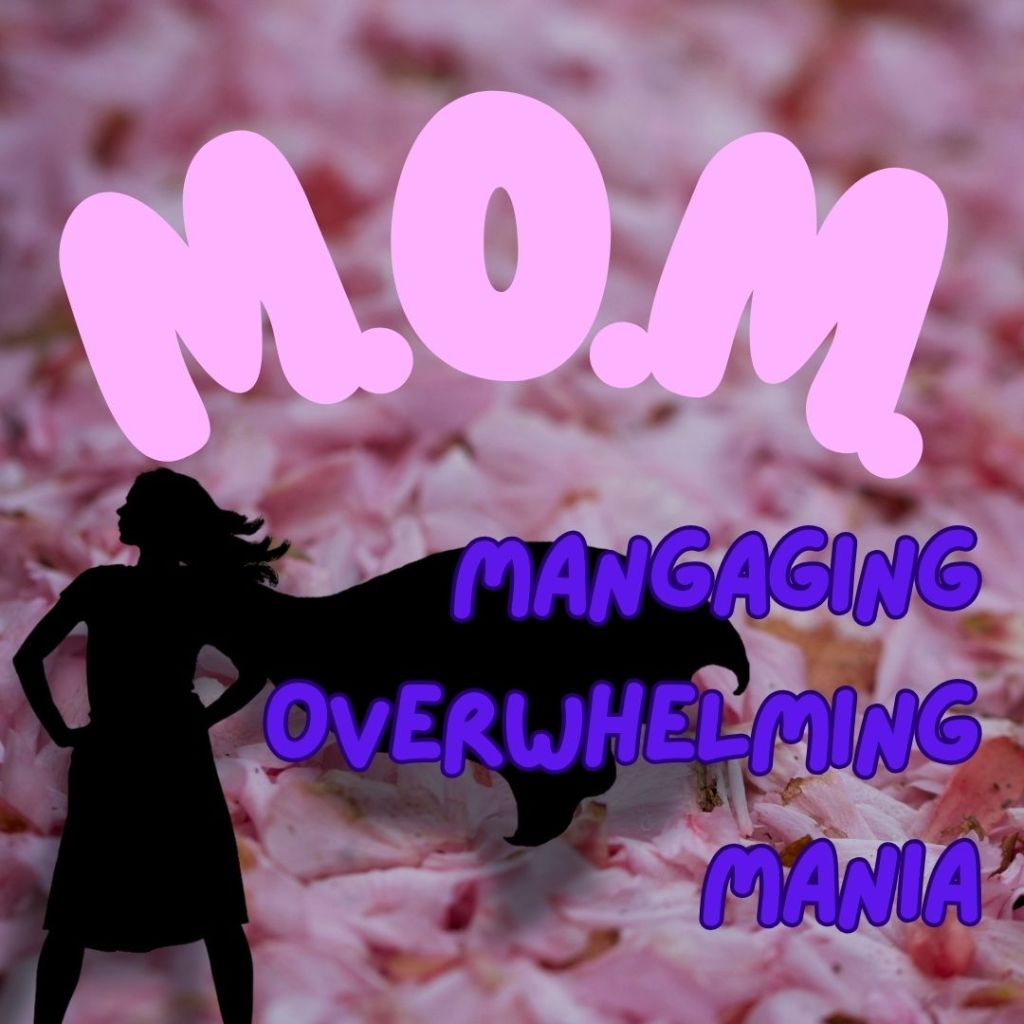
I imagined M.O.M. as job description with taunting acronyms like “managing overwhelming mania,” “maneuvering and overcoming mayhem or sometimes “manipulating overstimulated mongrels”

The times my husband would take the boys on an outing, even for a couple hours, I’d joyously dance around the living room doing what I called “the alone dance” for a few minutes and then make a list of all the things I could accomplish without interruption.

And yet as the mother of adult children, you’re grateful for a call, picture or message about their lives, always lamenting being benched in the motherhood game. On occasion, you’re put in for relief with a request for sage advice and wisdom from the oracle of MOM, but most of the time, you sit on the sidelines looking on.

Grandmotherhood offers a new opportunity to revel in the old days of being needed and wanted and sometimes adored in real time and then gratefully soaking up the peace and quiet along with your feet and back when they go home.

And for some, Mother’s Day can be painful memories of what could have been. People who have lost their mothers posthumously now realizing their value post pictures with loving tributes on Facebook to display a Cats in the Cradle type echo of things left undone or unsaid and regrets that will never be fulfilled.  

And for those who never had children, the day can be a painful reminder of the path untaken, by choice or circumstance. 

But its also an opportunity to recognize and appreciate all the people who mentor, guide and direct someone to help them achieve their best life. Biology doesn’t have an exclusive lock on maternity.

So it’s a wonder why this lovefest is relegated to only one day a year. In our hearts and souls is nice, but frequent remembrance of those who are important and recognition of their unique contribution can reap a new view of our own lives with regular outward expressions, instead of a sentiment on a mug.

Featured

Shockwave

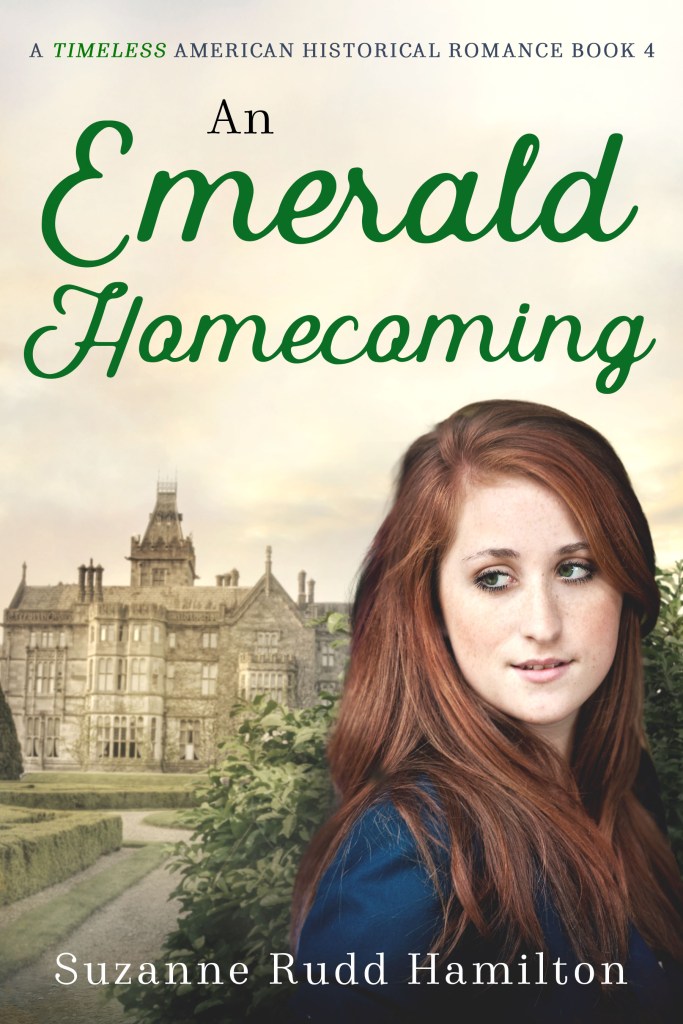
Author’s Note: Here is a mini sneak peek at a beginning scene from upcoming book 4 in the Timeless American Historical Romance series of books, scheduled to release May 30th. Click cover for preorder discount pricing.

Running around the house at lightning speed, Jackie searched every nook and cranny, but couldn’t find her homework. And she was late for school. When she reached the living room, she saw looks of terror on her grandparents’ faces.

“What’s going on?” she asked anxiously.

Her grandfather William stood up and ushered her to the couch.

“Something horrible happened, honey. A plane hit the north tower of the World Trade Center and it’s on fire. They’re trying to evacuate people in both towers now, but it’s pretty bad.”

Jackie felt numb all over. “Will my parents be able to get out?”

She gulped for breath not knowing what to believe. Every bad thought she could think of was racing through her mind.

Her grandparents grabbed her hands and squeezed tightly.

“The North Tower was hit, so they should be able to evacuate from the South Tower. All we can do is wait,” her grandmother Peggy said.

Jackie looked at the screen and saw dark black smoke billowing out of the building.

Then suddenly, the TV announcer screamed, “There’s a plane headed for the other tower.”

Right before their eyes, a flash of light filled the TV and they saw the South Tower explode with flames shooting from every angle.

“Oh my God!” William shouted and Peggy gasped, clutching him.

Jackie sat there paralyzed, staring at the TV without blinking or veering her gaze as the announcer spoke.

“NYPD and firefighters are trying to evacuate people down the stairs of the towers but have very little ability at this height to fight this kind of jet fuel explosion. Only God can help these people now.”

Sirens saturated the TV speakers as they watched firefighters, police and paramedics race to the scene as the blinding black smoke emanating like a geyser from the buildings turned to gray and then white.

Suddenly, the show whisked back to the announcer raising his voice in panic.

“We’ve just been informed that New York is not the only victim of this surgical attack on the United States. Flight 77 from Washington Dulles airport has crashed into the Pentagon.”

The television showed an aerial view of the collapsed section of the oddly shaped Pentagon smoking, on fire.

Her eyes fixated on the TV, Jackie was captive the announcer’s every word.

“We’re seeing more and more of the evacuees from the towers pouring out, but still so many are yelling out the windows begging to be rescued,” he said as the screen showed people wrapped in wool blankets stagger from the building covered in white dust.

But then they heard a loud startling sound, like the roar of a freight train. Dense white smoke surged from one tower as it plummeted to the ground as fast as an elevator plunging to zero.

They all jumped to their feet and exclaimed, “Oh, no!”

The TV announcer shouted with emotion. “The 110-story south tower has just collapsed to the ground. It’s mayhem. People on the street are running for their lives in horror. It’s absolutely incomprehensible!”

With the South Tower in ruins, they all knew chances were bleak.

“How can this be happening?” Peggy cried in disbelief.

She hugged Jackie and saw a single tear fall from her granddaughter’s eye.“They’ll never get out now,” Jackie said somberly.

But before they could catch their breath, the screen returned to the announcer.We’re getting breaking news that Flight 93 from Newark airport crashed into a field in Shanksville, Pennsylvania. Our affiliate is reporting that one of the passengers called his wife from the plane and told her that they were overtaking the hijackers and would crash the plane if they had to, so it didn’t hit the White House and kill the president. I’m stunned viewers. This is the worst assault on our country since Pearl Harbor.”

The smoldering ruins of the plane on the TV brought tears to each of them, holding each other close. But then the announcer abruptly yelled.

“Oh no! The North Tower has just collapsed. This is just horrendous. I have no words.”

Staring at the television in silence, hearing only the screams coming from the site, time stopped for Jackie.

For hours, they sat with their eyes locked on the screen, willing the phone to ring with news, but it didn’t. Then the fire chief appeared on the TV.

“Rescue workers are speaking via cell phone and radio to people trapped in the rubble.”

William perked up. “See, there are people still alive. They can get them out now. Have faith.”

But Jackie didn’t respond. All she could do was gaze intently at the TV.  

Hours later, as darkness blanketed the windows, more news trickled from the TV with government updates, scattered stories of escape, and endless experts doing their best to make sense of the senseless tragedy. But practically no stories of those who escaped the rubble as a reporter on TV stood in darkness.

“The scene is eerie in lower Manhattan tonight. The normal blare of city noise is strangely silent. Traffic and other lights are dim. All you can see is the beams of light from the thousands of emergency vehicles all looking for signs of life,” the reporter said.

The trio remained cemented in their positions with their eyes locked on the disturbing TV images. The search continued, but it was a race against time. They all knew the longer they didn’t hear anything, the worse the outcome would be.

As the morning light peeked through the tall linen living room curtains, the sunbeams shined on the three sleeping on the couch, their heads resting atop each other like dominos until the ring the phone jolted them from their slumber. Barely awake, Peggy fumbled to answer.

“Hello?” she said. After a few seconds, she nodded as she listened. “I understand. That sounds horrible.”

Jackie hung on every word, her eyes getting bigger and bigger wondering who was on the phone. Watching her grandmother’s concerned face, she could barely allow herself to hope.

“I’m so glad you got out,” she continued. “Thank you for letting me know”.”

As Peggy hung up the phone, it was obvious from her expression, the news was not good.

Jackie held her breath, trying not to cry. “That wasn’t Mom, was it?” she said.

Peggy took Jackie’s hands, trying to stifle the tsunami of tears in her own eyes. “That was Linda from your mother’s office, dear. She got out with some others, but they can’t find either of your parents.”

Jackie collapsed onto Peggy’s shoulder and tears rolled down her face.

William swept his arms around both and embraced them.

“We don’t know anything for sure yet. I’m sure it’s chaos down there. We need to have hope,” he said.

Jackie lifted her head and squeezed their hands. “You’re both so wonderful to reassure me, but somehow I know in my heart. They’re gone.”

(c) 2024 Suzanne Rudd Hamilton

Featured

You’ll Never Know

It’s a busy night. The Stage Door Canteen is packed with sailors, soldiers, Marines and airmen from nearby training bases. And in a big city like New York, there are an ample supply of young women, called junior hostesses, who are there to talk to and dance with the servicemen.

The USO service offered young women an opportunity to do their part for the war effort and volunteer to spend time with the men in uniform at the canteen, so they can forget about the war for a few hours and stay out of trouble. Between the free food, entertainment and the girls to dance with, the Canteen always had a long line right from the 5pm opening. 

But my friends Janie, Kate and I are singers in the USO show. We have a trio and sing onstage.

Janie likes the boys in uniform and loves to dance, so when we’re not on stage, she dances the night away with the best in the room.

People often part the crowd to see Janie and her better partners cut a rug on the dance floor. After our set, Kate and I are happy to dance with the men too.

But tonight for the first time, the band gave me a solo. Standing backstage, I nervously wring my handkerchief in my hands. I’m terrified. My mouth is dry, I can’t remember any of the words to the song and I think I’m going to throw up.

“I know you’re nervous, but don’t worry about it. Just find a guy at a table and sing to him,” our manager Eddie says, putting his hand on my shoulders to reassure me.

The music begins and the spotlight shines on the microphone. It’s time to sing. As I walk to the mic, I scan the tables up and down to find someone, anyone looking up at me.

In an instant I lock eyes with a sailor in the middle of the room. He was looking at me, really looking. So I shoot him a quick smile and taking Eddie’s advice, I sing my song directly to the sailor. It starts.. “You’ll Never Know…”

The song fades into the back of my mind as I sing to him. It’s working. My nervous energy dispells and I keep singing without thinking, as if I’m on autopilot.

I find myself staring at him too. He had a wave of bright auburn red hair and a cute almost sideways grin. I’m so intrigued by him, I don’t even realize I finished the song until the uproarious audience applause instantly snaps me back to reality.  

I take my bow, and everyone backstage congratulates me. I’m happy the song was good, but I can’t take my mind off the red-headed sailor. Why was he staring at me so intently? Did I remind him of someone, maybe a girlfriend? Maybe he just liked the way I sang?

I have to know why, so I step down onto the dance floor but it was so crowded, I can’t find him.

My eyes quickly wander around the room darting back and forth several times, trying to find him through the wall of dancing couples, but he’s no longer there.

I start to wonder if he was real or just in my imagination. Maybe I dreamed the whole encounter?

Suddenly, there’s an opening in the dancers and see him slowing walking to me. His emerald eyes sparkle. They’re the kind of eyes that mesmerize you and in an instant I’m lost, adrift in their endless fields of green.

 I can’t avert his gaze, but truthfully, I don’t think I want to.

Everything seems to stop around us. The dancers, musicians, everyone disappears from consciousness. It’s as if we’re all alone.

“Excuse me,” he says. “I really liked your song. It felt like you were singing only to me. But I guess that’s the idea.”

Suddenly the band plays a slow song and the dance floor is so packed; we’re pushed together.

“Guess this means we should dance.”

He laughs and puts his hand out for me to take. And I did.

The moment he put his hand around my waist, I feel a rush of warmth engulf me. It’s like a warm fire, a cup of hot cocoa and a cozy blanket, all at the same time.

One song turned into three, then four, then eight. As the band plays, we’re frozen in each other’s arms, linked in a rhythmic pattern, neither able to let go.

As the room began to slowly empty, we’re oblivious to the time and our surroundings until the band stops playing and we realize we really are nearly alone.

We both stand there not knowing what to say. I can’t stand the silence; I have to say something.

“Thank you for the dances,” I say earnestly.

“No, thank you, pretty lady,” he says and gently kisses my hand. “My name is Red.”

And then he’s ushered out the door with the rest of the men. I wonder if I’ll ever see him again. You never know.

(c) Suzanne Rudd Hamilton 2021,2024

Author’s Note: Sometimes the prompts in my writer’s club remind me of things I wrote before. Coincidentally, the prompt was You’ll Never Know, a popular song from the 1940s and the original title for this book. So I had to take my favorite excerpt from this book and make it into a short story for this prompt. Does she ever see him again? Spoiler alert… yes. But to see what happens to them, read the first chapter of this book by clicking the above cover image.

Featured

Cheating Time

I keep having this reoccurring dream that I’m running down an empty street. It’s darker than a midnight where the dim shadow of a sliver blue moon and the intermittent blink of a couple faulty streetlights cast cruel lonely silhouettes.

All I can hear is the haunting echo of my kitten-heeled slingbacks against the pavement and the heaving sighs of my own breathless lungs trying to gasp for air. Then I wake up… every time.

For most people, it would be a terrifying nightmare that abruptly wakes you on a restless night covered in sweat from the frightening images playing like a movie right in your head. But not me.

As a newspaper reporter, curiosity is my bread and butter. If I wasn’t blindly intrigued by nearly everything, I’d be covering dog shows and penning obituaries. The newspaper game isn’t friendly to dames.

But I’m not scared. Beck’s Rule #35, If you’re chicken, you better stay on the farm. Fear is a commodity you can’t afford in my business. But the dream tells me two things. I will not live to a ripe old age. I must die young or I wouldn’t be able to run in heels. And I likely make someone so mad, they want to off me. Good. That means I’m doing my job.

Still, I have a clock on me. Beck’s Rule #42, Time is something you can’t control and can’t worry about. So I don’t worry. I just move forward.

I often feel time running out. But then, I just turn the hourglass over and cheat a few more hours, days, weeks, minutes, years… whatever I need.

Maybe Carrington is feeling the squeeze too. At least I hope so. Even though he’s a few steps ahead of me, I’m catching up. I trust my infallible instincts. I always get my story, no matter what.

My article on counterfeit money definitely ruffled his overstuffed feathers and a few others. I’ve always suspected Carrington’s deep pockets lined some corrupt police wallets and now I know it’s true.

When I reach down for another smoke from my desk drawer, I look over the paper in my faithful Smith-Corona typewriter and see blue wool and gold buttons. Only one organization is old and stale enough to sport that same combination since there was a beat to walk.

“Hello officers, how’s tricks?” I light my cigarette and relax back in my chair, showing little disregard for their imposing presence.

“May, we want to know what evidence you have to prove your counterfeit ring,” Officer Brown orders.

Brown thinks and acts like a hardass, but I know he’s really a stoolie for the Chief, who’s a flunky for the police commissioner, who’s in the mayor’s back pocket. He even looks like someone who’s dumped on. His head is flat and his nose is pushed in like it’s pressed against too many things.

“Now Officer Brown, you know the rules. My sources are none of your business, until you read them in The News Bugle,” I say coyly. I like to play with him.

He huffs and puffs like the proverbial wolf at my house door.

“If that’s the way you want it, I’ll go talk to your editor.”

“Go ahead. You’ll find him less helpful than I am. Puff, Puff Brownie,” I chuckle and he stomps away to my bosses hovel on the other side of the newsroom.

My friend, Officer Ernie, stays behind. He’s a sweet, but a very young rookie with a boyish face and red cheeks when he’s upset, like now.

“May, you shouldn’t talk to him like that. Why make enemies?” Ernie urges.

“Ernie. Trust me. I made enemies with the police in this town the minute I inked my first byline. You’re a good egg, but that guy stinks of payoff and Carrington is footing the bill,” I say.

“You need to be careful. Carrington is a powerful man,” Ernie warns.

“Yeah. They all are. Until they’re not. But Ernie, meet me tonight at the laundry on Jefferson Street and I’ll clue you in on my scheme. But don’t bring that wet blanket and don’t mention it to anyone. Stick with me and you’ll make detective before your pimples dry up,” I tease.

I make Ernie nervous. He takes off his hat to cover his flushed cheeks and walks over to the editor’s office.

Carrington would never send his goons after me, so he sent in the stooge squad to intimidate me? He obviously doesn’t know me. But he will.

Ernie will meet me. I have faith in him. I’m just not sure he’s ready to trust himself.

That night, amid a deep mist reveled by the lone bulb in back of the laundry, Erie’s waiting for me, as directed. Dressed in my sneaking-around outfit, black ballet flats and black pants and coat, I sneak up from behind and scare him.

“Stick ‘em up.” I poke him in the back and he jumps three feet in the air.

“May, cut out the clowning. What are we doing here, anyway?” Ernie uncomfortably asked.

“Carrington is using the back of this room for his illegal printing presses. I saw it myself a few days ago,” I explain and take out my lock picking set.

“Turn around so you don’t see a crime being committed,” I order and he turns his back with a disagreeable sigh.

Then I go to work on the lock. It was a one pin tumbler, easy as pie. I’ve become as adept as a locksmith at getting into places no one wants me in.

I carefully push open the door and motion Ernie to follow.

“Come on, Ernie.”

He looks around, shrugs and follows me. If I could see his face, I’d bet it was red and pink all over.

But when I turn my flashlight on, all I see is steamers and wash machines. The area in the back is vacant. The presses are gone.

“May, there’s nothing here,” Ernie says, wondering why I led him on this goose chase.

“Darn that Carrington. He’s two steps ahead of me, alright.”

I wander around the blank space in frustration, wildly moving my flashlight around, hoping for a clue, anything.

“Come on May. We need to leave. I could get busted down to meter maid for this.” Ernie edges toward the door, nervously.

I turn toward him and my light hits a glimmer of something in the corner.

“Wait a second.” I move toward the object and motion him to join me.

Leaning down, I pick up a ball of white paper. It was a partial print of a $10 bill. Then I see a splotch of hunter green ink smeared on the floor.

“See, Ernie, check this out,” I show him the paper and the ink.

He takes the paper from my hand and gazes at it suspiciously.

“I was right. They were printing phony baloney money, here. I got under their skin and tipped their hand,” I say with a satisfactory grin.

Ernie quietly examined the paper and the ink-stained floor.

“Ok. You’re on to something here. But now they know you know, so you better watch your six. I’ll make some discreet inquiries on the street. Don’t do anything else,” Ernie warns.

Grabbing the paper from his hands, I stuff it in my pocket.

“I think you know me better than that. I’ll let you know when I find our next clue. Stick with me, kid. This will be the first big arrest of your career,” I smile.

“Yeah, either that or we’ll both end up six feet under. Just be careful,” Ernie says as we exit the room.

“Careful and curious are two opposite directions, Ernie. I’ll be in touch,” I say and disappear into the midst of the dark night.

(c) Suzanne Rudd Hamilton, 2024

Featured

A Not OK Corral

Episode 5: Tales from the Backseat

On my family’s continuing journey to map the United States with our brown Oldsmobile station wagon, I learned many things. It was more than just the names and places, but outside of the confines of our hometown, I realized lessons of life, people and my parents that echo through my daily life even today.

In the dry dusty desert of Arizona, we ventured to the legendary town of Tombstone, depicted in many movies and television shows as the heart of the old west and the site of an epic gunfight between the lawful Earp brothers and the criminal Clanton clan.  

A child of cowboy movies and serials in the 1950s, my dad was especially anxious to step back in time into a real 1880s western town, preserved for tourism. One of his favorites was Gunfight at the OK Corral with Burt Lancaster and Kirk Douglas. As we strolled through the dirt main street, he gave us a guided tour of the town, just as he remembered in the movie.

“Wow, look at this kids. It’s just like in the movies. You can even smell the atmosphere. Here’s the General Store and Doc Holliday’s dental office, the Sheriff’s office, that’s where Wyatt Earp worked, the Oriental Saloon and the Bird Cage Theater, that’s where the ladies danced for the cowboys and… “

“And nothing else,” my mother interrupted. “Ok, let’s go inside a building to get away from this horse stench out here.”

We walked along the railed wooden planks next to the storefronts and my dad’s eyes lit up like a kid in a candy store with every building.

“And here’s where the cowboys would park their horses and put their reins over the railing,” he said and demonstrated in pantomime how it would be done.

 In the general store window, he saw some hats and excitedly smiled and rushed to the door.

“That’s what we need to get us all in the mood. Let’s get some cowboy hats.”

We all picked out different hats. My dad’s was a black cowboy hat with a braided leather brim and my brother and sister and I picked from the more colorful red and blue kids’ hats.

“Dad, I want the red one,” I smiled.  

“Me too,” my little sister mimicked me. I rolled my eyes and sighed, tired of being copied by a little girl all the time.

“Why don’t you all get red, that way you’ll look like a cowboy gang,” my dad smiled and we walked out of the store with red hats and cap guns, ready for action.

Across from the General Store, there was a white building that stood out among the rest. It was the saloon. The sign in the window caught my dad’s eye. It read Real Sarsaparilla.

Again his eyes ignited with delight and he grabbed my little sister’s hand and led us into the saloon. The small space sported an ornately decorated mahogany-colored wooden bar with shiny brass rail and liquor bottles in all shapes and sizes gleaming against the mirrored back. In front was a man with a white shirt, red vest and a big curly mustache.

“What’s your pleasure, partner,” he said in a western accent.

Proudly my father stuck out his chest and leaned his arm against the bar, beaming at us as if he was being photographed.  

“Five sarsaparillas, partner,” he said in a simulated western accent and laughed.

A few minutes later we were sitting at an old wooden table with glass mugs in front of us. The reddish brown liquid inside looked familiar, like Coca-Cola, so we eagerly drank up. But the taste inside was definitely different.

My brother and I were the first to stare at each other with squished disapproving faces. It tasted like the strongest Dr. Pepper ever made. You could almost taste the pepper as if it were shaken into the cup. We didn’t like it.

I watched my father’s face. He winced a little but glued on a smile to cover. I don’t think he liked it either, but he wanted to put on a good front.

“Aaaah,” he put down his mug. “Tastes like the old west.”

Forever shadowing my father, my brother drank up some more, but I shook my head and sat back in my seat. I was done.

Old buildings, with their musky mix of old wood and aged interior were difficult for my mother’s allergies and sensitive nose. So, she began to hold a Kleenex over her nose, which was a sign we needed to move on. Seeing her signal, my dad rolled his eyes at her.

“Let’s get some fresh air, partners,” he told us in his pretend western swagger.

We walked along the dusty dirt and gravel street again until we reached tall wooden fence that said “O.K. Corral.”

My dad was almost giddy.

“This is it, kids. The very place where The Earp Brothers gunned down those Clantons nearly 100 years ago. It was one of the most famous old west gun battles in history. Are you ready?”

Then we saw another sign. To see the site of the greatest gun battle in history, there was a steep tourism fee. In that instant, I saw my father’s excitement swiftly transform to unbridled indignation and disgust.

“What? They have got to be kidding. I’m not going to pay that to see a patch of dirt and a fence that’s 100 years old. That’s ridiculous! How do they think they can get away with that?”

And in that moment, our trip into yesterday, reveling in the days of my dad’s youthful wonder hit smack up against rabid commercialism and my dad’s biggest pet peeve…

“Do they think I was born yesterday? I’m not their sucker.” He ranted but then glanced down at the little band of red hat and holster-clad kids with their cap guns at the ready, looking up at him with their big brown puppy eyes in confusion.

Then his eyes grew big and he crept toward a knothole in the fence.

“Kids. Let’s play I spy and peep through the secret hole.”

One at a time, he lifted us up to see through the hole, narrating the tale of the gunfight as though he were there with all the detail and drama, even providing the sound effects of the bullets and the victims falling to the ground.

When I stared through the hole, all I saw was a big empty open dirt space, but it was his storytelling that made it interesting.

Shortly afterward we piled into the brown Oldsmobile station wagon and made our way west.

Of all the tourist traps we visited on this trip and others; I’ll especially remember this one as our peek into my dad’s little boy cowboy fantasies coming to life and then meeting head on with his adult reality.

Author’s Note: Tales from the Backseat is a continuing serial of a a typical family American vacation.

(c) Suzanne Rudd Hamilton 2024

Featured

Innocent?

Rachel felt as though she were living in a sinkhole of absurdity, delving deeper and deeper into the ridiculous with every passing day. The problem was her husband Hal, but really what he morphed into… a giant ogre of idiosyncratic annoyance.
Trapped somewhere between the twilight zone and the worst fraternity house on campus, she was stuck in a time loop of constant frustration. In short, his personal conduct and habits were becoming infuriating.
Every morning he woke up and plopped himself in front of the TV snacking and munching all day, while watching nothing. He had to hold the record for the most clicks on the remote in a minute not viewing anything while audibly complaining how there was nothing good on TV anymore and at the same time turning it up to maximum volume so he could hear it. And when she complained that either her ears or the glassware were going to shatter from the volume, he turned on the closed caption.

“Please get a hearing aid,” she’d utter at regular frequency. But the irony is, he couldn’t hear it.
That’s even if she could stay in the room with the never ending flatulence assaulting her senses, leaving her running out of the room on many occasions. Yet seemingly providing a source of humor to him as he mindlessly giggled at the smells and sounds.

Sometimes she wondered if an alien replaced her husband with the most comedicly vile form of human imaginable to study her resolve or her breakdown into insanity.
Each night she began dreaming that she’d be driven to the edge of reason and kill him.
But instead of villainous murder, her fantasies were humorous, and innocent cartoonlike romps, like lighting a match near his flatulent posterior and poof he would be gone. Or shoving the TV remote in his mouth and smashing the TV over his head so drawings of stars would appear over his head with the letter x over his eyes.
In the morning she’d wake up and shake her head back to reality, somewhat amushed, but mostly frightened about what her subconscious mind concocted in her sleep.
is that really the way I feel?
No, she reasoned. But each day brought new struggles, like the Week he wore the same tv shirt and sweatpants every day.
“they’re comfortable and not even dirty,” he replied to her objections.
but the final straw was when he sat outside, watching TV and smoking his cigar while loudly laughing at the three stooges while her friends were visiting for a girls afternoon in the pool. it was two obnoxious offenses all in one.
“Please go inside you’re embarrassing me,” she begged.
“ok. Sure. after I finish this stogie it’s a Cuban and you won’t let me smoke inside. Can’t waste it.”
Soon after her fun afternoon ended abruptly with her friends pity as they all gladly left early, not being able to stand anymore.
with a full steam of anger, she went to confront him, but he got the first word in.
“oh, the girls left early what a shame,” he said nonchalantly.
She couldn’t believe it. He didn’t even realize that he drove them off.
Frustrated, she stomped into the house, and made a pot of coffee infused with a little Baileys to calm her down when he yelled from the patio.
“Hey, I smell the coffee. Could you bring me a cup? And don’t forget the sugar.”
as if she transformed into a cartoon drawing of her own, she could feel the steam coming out of her ears like blowing a factory whistle when the workday was over.
The next few minutes were a complete blur as she begrudgingly delivered his coffee and then retreated back to the kitchen to find two boxes sitting right next to each other. the sugar and rat poison.
“How did that get there?” She said in a panic. “oh my God, did I put the rat poison in his coffee? Could I have done that? I don’t even remember bringing it out.”
Slowly, she tiptoe toward the patio, watching and listening for any signs of her murderous intent, but there was nothing. There he was still laughing and puffing away.
“Whew she said in relief, but does that mean my dreams are coming to life? Do I really want this to happen? Am I innocent or guilty?”

Featured

The First Encounter

Author’s Note: This is an exerpt from An Emerald Homecoming, an upcoming novel from A Timeless American Historical Romance Series.

Each day Jackie biked to the beach alone. She sat on the sand, gazing into the infinite golden horizon, searching for the meaning of what happened with her parents’ death by looking into the clouds for answers or solace, she didn’t know which. The trip to Ireland offered a welcome distraction, but the gloom and ache in her gut remained.


Featured

Grateful For…

With the leftovers finally gone, we can reflect on the Thanksgiving holiday and the tradition of giving thanks.  

As we all learned in grade school,  the first Thanksgiving feast was celebrated by the Pilgrims with the Native American Wampanoag people after their initial harvest in the New World in November 1621. The feast lasted three days and was repeated in 1623 at another time of year, but afterward was held sporadically at different times during the harvest.

President George Washington was the first to proclaim the first public Thanksgiving in celebration of the new constitution on Thursday, November 26, 1789. But after that, Thanksgiving was only observed regionally and periodically. It still wasn’t an annual tradition, until in 1837, a ladies magazine called “Godey’s Lady’s Book” began publishing Thanksgiving menus and recipes, which sparked interest in the meal as an annual family tradition.

Finally on October 8 1863, in an effort to remind Americans of family gathering and tradition in the midst of the horrific American Civil War, President Abraham Lincoln issued a proclamation, passed by Congress, declaring… “I do therefore invite my fellow citizens in every part of the United States…to set apart and observe the last Thursday of November next, as a day of Thanksgiving.”

In the century and a half since, Thanksgiving has meant many things to many people, from family traditions and religious praise to football and parades. But all three historical milestones created Thanksgiving as an act of gratitude, giving thanks.

Gratitude is an interesting concept. It is the idea of being grateful for what has been bestowed on you. But can you be gracious for what you have and yet not satisfied?

You can be grateful for health and all the wonderful things in life and yet lament the ill health of those you love and hope for their swift improvement.

Thankfulness for warm sunshine and a beautiful place to live does not diminish or erase a desire for improvements to be encouraged.

And with a world in turmoil, those not in danger can appreciate immediate safety and in the same breath be outraged at the strife of others and demand change.

Some say true peace is being content with what you have, but others inspire you to strive for more. If you keep wanting more from life, will you achieve more? Where would we be if inventors were satisfied with the status quo? Not on this device, that is certain.

And isn’t it our responsibility as citizens to participate in our government and embolden our representatives to promote prosperity for all?

If the goal of humankind is to continue to evolve, we must improve, change and move forward. Can we do that if gratitude prevents us from craving more?

I think the answer is left to each individual person. No one fits into your shoes and shouldn’t try. So, maybe the goal of gratitude is to be grateful for what we have and the ability and desire to grow.

Featured

Mira filled another empty cardboard box, labeled it clothes and heaped it on the lowest pile among a forest of stacks.  

For a week, she had been cleaning out the home of a lonely woman who passed away without any family or friends.

Boxing up the kitchenware, clothing and personal belongings of this mystery woman, Mira felt a strange sense of loss for someone she never met. The loose items of life meaningless without the person they belong to.

“It’s so sad to leave this world without making even a footprint or leaving a fingerprint,” she thought.

Curious about the woman, Mira talked to a few neighbors when she saw them walking down the street. The answers were always the same.

“She was nice enough, but she really kept to herself,” one said.

“I didn’t know her very well; she never came out. I don’t think she had any family or friends,” another echoed.

“Without anybody who knew her, how will she be remembered? It’s as if she just passed through time?” Mira thought and continued with her work.

Coming from a large family, Mira could barely think of a time she was alone and treasured her family memories. She and her family often reminisced about their loved ones, past and present. Funny things they said, quirky personality traits and even the way they hugged. She recalled everything about them and knew they would do the same for her.

Saddened by the idea of this lonesome soul drifting from the world without anyone to remember her, Mira diligently tried to conjure a picture of this unknown woman in her mind.

Her clothing was modest and a little old-fashioned, but then again she was old. So was the furniture. It wasn’t thread born and the house generally was neat as a pin. So, Mira assumed she was a fastidious person. Everything had its place. She didn’t have to be Miss Marple to deduce the obvious, but other things were a true mystery.

Little doilies on the furniture in varying stages of cream and amber hues showed their march through time. And the many folded knit blankets lying around, along with the knitting needles and yarn placed next to the chair by the window clearly revealed she enjoyed knitting and crocheting.

But who were the blankets for and why so many? If she had no friends and family, did she make them for a worthy cause, like wheelchair-bound disabled veterans?

Mira assembled and packed the drab white plates and cups in the cupboard. But in one cabinet she found a small and delicate China tea set adorned with dainty pink and yellow roses. There was a kettle dressed in a yellow doilie with two small cups and plates similarly wrapped. They were obviously special as they were covered and treated with care. But the wear on the pattern exposed its age.

She carefully took each piece from its covering and marveled at its quaint beauty, recalling her own toy tea set as a child where she would pretend to serve high tea to her dolls. Mira wondered what special meaning it had.

The living room left no clues as to the interests of the woman of the house. A few record albums from the 40s and 50s, but no books, except for a couple of cookbooks in the kitchen. It was all very average.

Although there was a lone porcelain statuette of women in turn-of-the-century garb, sitting precariously on a wooden chair, gazing into the distance.

Mira searched for other figurines, as usually people don’t collect just one. But it was the only one. Mira stared at the detail of the gilded age porcelain woman, pondering why this meant something. Did it remind her of herself or someone else or did she just take a shine to it? It didn’t look like anything of intrinsic value, just a keepsake.

Her mother and grandmother both collected figurines, almost encompassing a ceramic village, so she didn’t understand why someone would only have just one. But there was a lone statue of the woman perched atop the credenza.

Even in her bedroom, Mira found typical clothing and several more doilies. However, on the dresser this small wooden heart-shaped music caught her eye. It was beautifully etched with small inter-tangled ribbons. Inside was a petite gold cross necklace, a slender gold watch and a tarnished gold necklace that said Gladys.

“At least now I know her name,” Mira thought.

She dug deeper to find out about Gladys. As she cleared each drawer and closet, room after room, she found no important papers. Birth certificates, marriage certificates… nothing. But then again, maybe the estate people already retrieved them, she thought.

Amid her vanilla world, it was very difficult to piece together who Gladys was.


Now Mira was on a quest. With these couple of hints, she thirsted for more information, refusing to believe that anyone’s life could be so devoid of flavor. Was she married? Did she have children? Maybe she outlived them? It was a puzzle.

Yearning for answers, Mira felt compelled to attend the funeral. She heard about it from one of the neighbors in town.

When she entered the small village chapel, she saw a few neighbors she had spoken to and  recognized a couple people from the village. They all said they didn’t know Gladys, but Mira appreciated they came out of respect or obligation.

As she sat down in one of the pews, the minister went up to the podium. He spoke of how frail and fragile life was, but nothing specifically about Gladys. Mira doubted he even knew her or anything about her.

Then the minister asked for anyone close to Gladys to come up and talk about her. Mira darted her eyes left and right, but everyone sat there in silence. Indignant that no one would say a word about her in this her final departure, she proudly raised her hand.

“I’d like to say something,” she said and walked up to the podium.

“I didn’t know Gladys but I’ve spent the last few days in her world. She was a simple woman who lived a modest life, not making much of a ripple. Yet the things that were important to her glared like a beacon in the night.

She only had a few pieces of jewelry, but they spoke volumes. Her faith was evident with her cross. Her pride was clear with the tarnished necklace, which bore her name. And the slender gold watch engraved with congratulations on her retirement some years ago showed she was appreciated. The jewelry was encased in an embossed heart music box, which played an unfamiliar, lovely and sweet melody. I don’t know, but I’ll believe it was treasured by her as a gift from someone she loved.

The carefully wrapped delicate bone China tea service with kettle and two little tea cups told me she must’ve cared greatly about this item. Everything else in her pantry was quite stark and white but this item of color and pattern obviously meant something to her. I imagine she had tea every day and delighted at her pretty cups.

And then there was the solitary statue of the woman staring longingly into the distance. I envision this was Gladys, looking out at the world each day, even though the world didn’t see her.

Maybe no one else will remember Gladys but I will. Everyone needs someone to tell their story. So many souls are forgotten, lost in the void of time where the impact of their lives is forgotten to the centuries.


To me, life is not about the things you owned, what you did or how successful you were, but it’s about how those around you remember you and who you were.”

The gathered group applauded Mira as she sat down, satisfied that she did the right thing by Gladys and hoping those in attendance would remember her too.

After the service she went back to her car. Sitting next to her was a small cardboard box containing the embossed heart music box, the statue of the lady and the tea set that Mira traded to the estate company in exchange for her services. Mira would remember Gladys through her most prized possessions and give them a home, so she could always tell Gladys’ tale. True or fiction, Gladys would not be forgotten.
(c) Suzanne Rudd Hamilton 2023


Featured

Day at the Beach

The beach is my favorite place to relax, breathe the fresh sea air in the warming comfort of the sun’s rays and hear a choir of sea birds underscored by the hum of boat engines.

I sit with my toes blanketed in cozy sand, clad in my protective straw hat and sunscreen and read a good book. But between my pages, I admit; I like to people watch. I find human nature interesting. Sweet and sometimes funny and strange, but never dull.

Seeing kids build sandcastles with such forethought and precision, I wonder if they have a future engineering skyscrapers.

Older kids surfing or bogey boarding astonishes me. They seem to pick it up so fast. But then again, watching adults try their hand is fodder for comic relief. I hate to snicker or laugh, but it’s hard to hold back when they spectacularly wipe out. I see one man walk backwards off the surfboard as if he thought it was longer and then fall backwards wielding his arms like a windmill until he splashes into the water.  

Witnessing the strangest collection of characters on the beach, I marvel at the families with a big tent set up, like they’re camping for days.

And then I notice the bronze gods who worship the sun laying out and sweating all day. Until some mischievous kids wait for the girls to remove their straps or pose concealed in the sand without a top, to avoid tan lines, only to be revealed when purposefully sprayed with water or sand. I glimpse some boys unobtrusively walking back and forth in the surf watching with eagle eyes for the moment when the pretty girls get exposed.

But the most shocking set are the northern Europeans with faint and pale skin. They come out the first day with their transparent outer coating and soak in all the sun, unseen in their homeland for months at a time.

Then on day two, the bright and cruel pinkish-red hue crawls all over them and they cover every body part from head to toe and awkwardly walk around seething in pain. And yet they continually seem surprised. I feel for them, but after all, they are self-inflicted wounds.

Tourists are often easy to spot. Besides the obvious burn routines, they either look lost and confused or deliberately ignorant. Disregarding signs that say “Private Beach,” they plop their belongings down and set up their station, until someone kicks them out and they claim they didn’t “see” the signs.

On rainy, windy or cooler weather days, when Floridians, whether native or transplanted, duck and cover, I observe from my beach condo balcony and notice the vacationers frolicking in the surf, regardless. Even sometimes ignoring the red and more dubious colored warning flags as if nothing bad can happen to them while they’re on holiday.

Leaving the beach, I’m rendered hostage by the looky-loos that are a constant source of frustration for drivers as they roam coastal highways in slow motion to take in all the scenery and subsequently block the roads.

And often, my neighbors and I tussle with these beach seekers illegally parked in our private parking lots, regularly overlooking the parking lot signs and despite the large public beach parking lot signage. Although, those who sleep too late will find another sign on those parking lots- Lot Full. Those encounters can be uncomfortable, but overhearing the seemingly genuine spur-of-the-moment excuses can be worth a chuckle or two.

Yes, the beach never disappoints. It’s a combination of a soap opera with a never-ending revolving door of characters and Jackass the Movie. I never know what will happen next. Turn the page.

Featured

Press for Human

I love online shopping. A world of goods are right at my fingertips and delivered to my door. But there’s another sharper side to that coin I discovered when I ordered a small futon online.

It arrived on schedule and I eagerly opened it up, read the directions and looked for the pieces to assemble. Except they were not included. So I looked all over the directions and finally found a customer service number.  

“Hello this is URF Furniture, how can I help you?” the friendly voice said.

“Yes, I have a question…” I asked, thinking it was a real person. Until I was cut off by the voice.   

“Press or say 1 for customer service, 2 for billing and 3 for sales. Para Espanol precino numero nueve.”

“No, I need to talk to someone about missing…”

Again, I the voice in the vacuum void demanded.

“Are you still there?”

“Yes. But I need to talk to someone…”

“Ok. Press 0 for operator.”

I pressed zero and finally thought I’d get to speak with a human being.

“This is the operator,” a different friendly voice said.  

“Great, finally, a person. I have a question…”

But I was interrupted by that ominous, faceless voice.

“Press or say 1 for customer service, 2 for billing and 3 for sales. Para Espanol precino numero nueve.”

So I pressed zero again, thinking maybe it didn’t take the first time.

“That menu is not available. Press or say 1 for customer service, 2 for billing and 3 for sales.”

In a desperate attempt to change my circumstances and reach a real person, I selected three for sales. Sales would have to be a real person, right?

“Hello Sales,” said a friendly male voice this time.  

“Yes, wonderful. I need some help with a missing….” I said confident that I was making progress, but then the same taunting voice resounded the same options.

“You have reached our sales department. Press 1 for customer service, 2 for billing.”

“Ugh!!” I cried in frustration.

“Are you still there? I did not get your selection.” It mocked.  

This was too much. I felt like I was pushing buttons that would lead me down the long and winding electronic road to madness. Didn’t Einstein say doing the same thing and expecting a different outcome was the sign of insanity. So I pressed a different number—one.

“Hello, customer service, billing.” Another friendly voice lulled me into a sense of hope.

“Great. Hi, I need some help…” I said, until…

“You have reached customer service. Your wait time is approximately 15 minutes. You are number 350 in our cue. If you can’t wait, press star to go back to the previous menu.”

“350! That will not take 15 minutes.”

So in a vain attempt, I pressed the star button and the voice said.

“If you would like customer service to call you back as soon as we are free, press 4.

“Yeah, you’ll get back to me when hell freezes over,” I said in frustration and pressed star again to go back to the previous menu.  

“Hello this is URF Furniture, how can I help you?” a pleasant voice answered.

“Yes, finally a human!” I said, but was thwarted again.  

“Press or say 1 for customer service, 2 for billing and 3 for sales.”

“Urgh!! What number do I press for human?” I screamed.

So I played my last card and pressed four for the call back.  

“Thank you. You will receive a call back in the next 48 to 72 hours. Goodbye.”

NO!!! That’s it. I tried to play fair, but I would not let the machine win. So I picked up the phone and dialed my credit card company.

“Hello, I want to report a fraudulent charge to my account.” I said.

That was my ace card. Let them try to collect their money from the mighty Visa. And I’ll hold their useless futon hostage until they finally call me back.

(c) Suzanne Rudd Hamilton 2023.

Featured

White Picket Fence

Sandy was tired of her world. Drudging to the overworked menial office job she hated left her little time for a life. And more and more her friends peeled off after getting married and having kids, leaving her alone on her hellish daily treadmill. 

The nightmare of dating became an endless game of Duck, Duck, Goose. She’d meet someone at work, in line at Starbucks or through a friend and continue on an endless cycle of first dates without a goose to chase. Only ducks in a bad rerun of one continuous bad date with interchangeable men boring her with their doldrum personalities.  

Repetitive explanation of job…blah, blah, blah. Read that book… blah, blah, blah. Watched this movie… blah, blah, blah. Live with mother… blah, blah, blah. 

Miserably sitting at yet another bridal shower, she confided in her friend Gail. 

“I’ve been dating for two decades. I figured it out. It’s been nearly 2,100 dates. At this rate, my chances of winning the lottery are better than finding a husband. Where is he? Where’s my happy ending?”

“You should try this new website. That’s where she found her husband,” Gail said showing the website on her phone.

“Whitepicketfence.com? Is this for real?” Sandy shot her a sideways glance. 

“Yes. It’s specifically designed for singles who want to settle down and not just hookup. She was only on it 1 month and look where we are now,” Gail nodded. 

“I hate these online matchmakers, but I guess it’s worth a try. Nothing else has worked.” 

That night Sandy spent hours perfecting her profile pictures in photoshop to show a happy, well-adjusted, well-rounded women looking for a home, family and white picket fence. 

By the next morning, her DM’s were filled with potential prospects waiting to connect. 

“Wow, I must have done a bang-up job on this profile. This can’t be real. It’s too good. There are some really good-looking guys on here with good jobs. And not one mother roommate in the bunch!” Sandy said elated. 

It was a whirlwind. For three weeks, Sandy went on a series of first dates until she met Bryan and immediately fell in love with his wit, humor and superhero good looks. 

Flying on air, she met Gail for happy hour to tell her over drinks. 

“He looks like he was crafted from a superhero mold. Wavy blond hair, square jaw, sparkling blue eyes and six-foot worth of muscles and abs. He sings, dances and the best part… he’s a veterinarian who believes in being at the dinner table every night. Oh and he cooks. It’s insane,” Sandy explained in glee. 

“That does good. Lock that down as soon as you can,” Gail urged.

Fast forward 10 years. Sandy and Gail meet again at Saturday brunch. 

“You look wonderful Sandy,” Gail said. “Seems like I never get to see you anymore. It’s been years.”

“I know. I’m sorry. But Gail, I’m so happy I can hardly stand it. I’m a busy mom taxi and I love it. Jaden is in soccer and band and Maya is playing basketball and joined a dance troupe. And Bryan took on a partner, so he’s home with us a lot. And here’s a picture of our house.” She held her phone to Gail showing pictures. 

“I see you opted for the traditional white picket fence,” Gail smiled. 

“Yes, it’s really a wonderful life,” Sandy said. 

“Too bad your time is up,” Gail said in a matter-of-fact voice. 

“What are you talking about silly. I feel great,” Sandy laughed.

“Huh, you did sign up for the ten-year plan, didn’t you?” Gailsaid.

“What?” Sandy asked.

“On whitepicketfence.com. They had five- and ten-year family plan options. You get your perfect family for ten years and then they go back,” Gail explained. 

“You’re putting me on. Where would they go back to?” Sandy laughed. 

Gail’s face turned sullen and she abruptly grabbed Sandy’s hand. 

“Sandy, didn’t you read the terms and conditions on the site?”

“Of course not. It’s just a bunch of legal mumbo jumbo – they all are,” Sandy said and her eyes grew big. “Right?”

Gail stared directly at Sandy. 

“I thought you understood. The deal is a decade of pure happiness in exchange for your soul.”

“Oh, you almost had me going. You bad girl. That only happens in movies,” Sandy laughed. 

Gail grabbed both her hands.

“No. It’s real. Look at the website. Natas is the name of the company. N.A.T.A.S is the reverse of SATAN!”

Sandy panicked, grabbing her phone to quickly bring up the website and began furiously reading. 

“Oh my God! How is this possible? I bore those children. They’re mine. I have the stretch marks to prove it.”

“The family plan. Ten years of happiness,” Gail said. 

“No. I’m not going to do it! I don’t care,” Sandy said running out of the restaurant. 

As Gail’s words echoed in her head, Sandy raced back to her home to find her children and husband in their home. 

“Oh good. You’re still here. That Gail is a cutup.” She sighed in relief. 

“Hi honey. We’ve been waiting for you. Here’s the receipt for the 10-year family plan. We have to go now,” Bryan kissed her on the cheek as he, Jaden and Maya walked past Sandy toward the door waving goodbye. 

“No, you can’t leave. No!” Sandy cried out and closed her eyes. Then she opened her eyes and lifted her head from her cubicle desk and saw her boss standing above her.

“Sandy. I’m not going anywhere, I’m just looking for that report on fence prices,” her boss asked. “Are you ok?”

“No. I’m definitely not ok. I was, but not anymore.” She plopped her head back on the desk. 

(c) Suzanne Rudd Hamilton 2023

Featured

Pineapple Means Welcome

I was in the bar in the new adult community I recently move to nursing my Jack Daniels and watching the game when I overheard the strangest conversation.

“Are you a pineapple?” the man said.

“I’m a green pineapple,” the lady smiled.

My interest piqued, I couldn’t help but glance in their direction.

“Green aye. Nice.” The man grinned and moved closer to her.

“I used to be a white pineapple, but now I’m green,” she said and shot him a come-hither look.

Trying to figure out what they were talking about, I listened intently, without giving away my interest.

“Do you fly the flag?” he asked.

“Proudly!” She stuck out her chest.

“Good, see ya tonight.” He handed her a card and left with a big grin.

I leaned over and looked at the card. It had a red pineapple on it that said “Welcome.”

Curious, I was tempted to ask her about the card, but couldn’t think of a way to approach it without giving my eavesdropping away. Then she put the card in her purse and left, so I lost my chance.

I don’t know why, but it bothered me for the rest of the day. What were they talking about? So I looked up “pineapple welcome.” One search said pineapples are used in decorating to make guests feel welcome because of their association with warmth and friendliness. But then I scrolled down and another entry said the pineapple emoji is used as a substitute for the word sex.

Then in the sunny daylight of the next morning, I noticed a few golf carts in the parking lot with a red pineapple flag. I’d never noticed one before and yet now there were several in the parking lot, as they discussed in the bar. Given my minimal research, my fascination was bubbling over. Which did it mean? And when I saw a lady flying a red pineapple flag, I blurted it out.

“Does your pineapple flag mean welcome?”

She paused and gazed at me for a very uncomfortable minute and smiled, raising her eyebrows.  

“Yes it does.” She handed me a card from her purse and left.

The card had a red pineapple with “welcome” on it, just like the other card. And when I flipped it over, it said 7pm tonight with an address.

All day I contemplated. Should I go? What will I find? It could be a game of canasta or an orgy. I’d heard of these swingers’ clubs in adult communities, but I didn’t want to believe it. I didn’t think “adult community” meant the same thing as an “adult film or bookstore.” But I just had to know.

So I went in completely blind, hoping curiosity didn’t kill me. When I reached the front door to the address on the card, a handwritten sign on the door says Come In. I grabbed the door handle and then hesitated a bit. What if I opened to the door to a bunch of wrinkly old naked people? I closed my eyes to be ready for anything and opened the door. I walked inside and was immediately confused. It looked like a normal cocktail party with people sitting around holding small plates of food and drinks. I scanned the room and found nothing suspicious.

Seeing the woman who gave me the card, I approached her.

“Thanks for the invite, just sit anywhere?”

“Yes, help yourself to a drink, we’re waiting for a couple more and then we’ll begin,” she smiled coyly at me, again making me uncomfortable.  

Still bathed in curiosity, I took some food, poured a much needed drink and sat down. The conversation around me was casual and ordinary, considering the circumstances. I was beginning to think this was some kind of mistaken Mahjong club. Then I saw my next-door neighbor. I met her after I moved in and she immediately caught my eye.

She was beautiful with long blonde hair and milk white skin… exactly my type. And a week after I moved in, I accidentally caught her moonlight skinny dipping in her pool. She was definitely a looker. I didn’t know if she was married or not as I never saw a husband or anything.

She walked in the door with a man, but I wasn’t sure they were together. When I made eye contact with her, I thought she’d be surprised, but she just shot me a knowing smile and took a seat across the room when a woman started speaking.

“We’re all adults here for the same reason, so no need to be nervous. We have some new people and some who are former players. The game is simple. There are colored cards in front of you. White is for beginners. Purple is for people who just want to watch. Pink is for those who want to do it with others in the room. So, purple and pink people go together. Blue is for those who are open to playing with anyone, but have limits. Black is for those who are open to anything and anyone, but only one partner of the opposite sex. Green is for those who are not specific about the gender or number of partners. So feel free to take the card that meets your needs and gather with others with the same card.”

I couldn’t believe her frank tone. She said it like she was explaining the rules of Monopoly, not an carnal ping pong. Afterward, everyone stood and took cards as casually as if they were picking scratch-off lottery cards. I got back in the line and observed. It’s a rainbow of colors all mixed up. I’m floored that there are so many adventurous people here.

Then I saw my neighbor take a black card and I took one too and gathered with the few with black cards. She walked up to me and took the card from my hand and pointed her finger to follow me out the door. From that moment, my interest in the group completely diminished. My focus was completely on her as she led me out the door and into her car.

Without a word, she drove down a couple streets and parked along the side of the road. I didn’t know what we were doing. Did she have a thing for doing it in a car. I was willing, but lamented that I didn’t have any time to stretch. I didn’t know how bendy I was anymore.

“What were you doing there?” she accused, catching me off guard.

“I could say the same thing to you,” I reply.

“If you’re here to swing, no judgement,” she said.

Now I was really confused. “Isn’t that was the group is about?” I asked.

“Yes, but I’m not one of them. I’m an undercover cop trying to bust senior sex rings,” she said.

“Let me get this straight. You’re undercover?” I said surprised. “Then why did you take the black card? I picked it because you did. Confidentially, I’m attracted to you too.”

“Thanks. I’m flattered and I admit interested, but let’s table that. I have no intention of partaking in this group, but I thought you may know something, so I picked the black card to be alone and keep up appearances. I don’t really know if I can trust you, but I could use some help.”

I didn’t know what to say.

“OK… I just want to know how far you have to go. I’m no prude, but I’m not looking for the Florida version of Gomorrah either.”

She laughed and lightly punched me in the arm.

“No, silly. Usually I try to talk to them at the getting to know you cocktail portion and then take the purple card and excuse myself with an emergency or conveniently get lost on the way. I could use some fresh eyes and ears. The stories and lines are pretty funny. It could be laughs.”

I can’t resist a mystery, so I nodded and she took me back to my car.

“I’ll be in touch.” She smiled and drove off.

Oh, the things you do when you’re in “like” with someone. I have no idea what I just got myself into.

Authors Note – This is based on a preview of Pandemonium at Peacock Perch, the latest in the Secret Senior Sleuth’s Society Mysteries available November 15th.

(c) 2023 Suzanne Rudd Hamilton

Featured

The Rule of Three

Author’s Note: This is a continuation of the story last week, Rule 30 from the sequel to Beck’s Rules, When Walls Talk.

With ideas of green ink, government paper and presidential profiles swirling in my head, I’m ready to get to work uncovering Carrington’s plot.

I rush through the newsroom ignoring the wail of police and fire scanners and the tik tik tik sound of a dozen typewriters clicking their keys in melodious sequence. Normally, that sound is music to my ears. But today, all I can hear are three little words, Carrington, crime, and counterfeit.

With anticipation nearly foaming from my mouth, I plop down on my wooded wheeled seat and nearly whirl all the way around from sheer momentum. But as soon as I place my fingers on the keyboard, I pause and catch my breath. Then I remember; I don’t have any evidence and then I notice my poor nails. I’m way overdue for a manicure.   

My hunch combined with the muted tone of a poor perceived loon in the nuthouse would promptly get me booted out of my newsroom to the unemployment line or even the clink. The law frowns on accusing people in the press without a crime. But where would I get proof? And a quick nail appointment?

My dad always taught me motive, means and opportunity are the three elements of a crime. The motive is easy—money. And Carrington certainly has the means to do anything he wants and can easily use his “legitimate” dry cleaners and restaurant businesses to distribute the phony presidential flashcards of Washington and Lincoln. But the how eludes me. To pull off a counterfeit scheme, he would need the government paper, the printing press and the plates to ensure his bills didn’t reveal themselves as Monopoly money.

As my dad’s ink blood runs through my veins, I know I can solve this, catch them in the act, and then nab him. But how? Then I saw Scully out of the corner of my eye. He’s an old timer and always has his ear to the pavement for federal crimes. Maybe he caught a counterfeiter before or heard something now?

“Sully, I got a lead that there’s a counterfeit ring in the city. Have you heard anything about it?” I ask.

“Nah, I wish. I’d really like to sink my teeth into a funny money operation. I haven’t seen one in years,” he says.

“So you caught a counterfeiter in the past?” I ask.

“Oh that was years ago, probably before you were born,” he dismisses.

“Really, I’d like to hear about it.” I hold my breath waiting for the answer.

His eyes brighten like a new penny as he weaves a tale of intrigue and corruption narrating his path of  tracking the theft of the plates and the paper from the mint to the local card maker who tried to reverse his fortunes by turning his press into a money making machine… literally.

“How did you catch him?” I ask impatiently.

He laughs and pulls a newspaper clipping from his bottom drawer, then looks around to see if anyone was listening.

“To be honest, I fell into it backwards. I got an anonymous lead, followed up and boom—there it was—easy pickins,” he laughs.

I know I won’t be as lucky. Unfortunately, my informant could only spit out one word at a time, not lead me to X marks the spot.

“Tell me this, where did they get the paper, ink and plates to make the bills?” I ask.

“They knocked over a few loot limos as it transported everything to the mint. It was a highly coordinated operation,” he says.

I thank him and slump back to my desk defeated. I doubt I’ll be able to track those types of armored truck heists. At that level, everything’s strictly hush hush.

Sitting at my desk, I grab my nail file out of the top drawer. Mindless tasks help me think better.

Let’s just say for argument sake, Carrington did get all the parts to make his money machine go. He’d keep it close to the vest for security. And to avoid suspiciously moving the money around, he’d have the presses where he distributes the money—so the dry cleaners, the Irish pub or the Italian restaurant. Carrington has his pot filled all over town. But they’re all in different locations around town. Which one can produce more money exchanges?

With my nails back up to par, I dash out to each place. The only way to know which one is passing funny money is to case the joints.

First, I went back to my house to grab a couple blouses. I don’t want to risk one of my Chanels in case they do a crappy job. But I could sacrifice two of my Marshall Fields’ tops for the greater good. My best friend Kate works there. If they get ruined, I can replace them with her discount.

The time it took the line of three people to get to me gave me a few minutes to unobtrusively look around. The dry cleaners is so small, just me and the other two customers nearly pack the room. And as the serpentine track of clothes moved for each person in front of me, I garnered a look in the back. It’s steamy and small, barely room for the laundry, presses and few workers I saw.

“You have a nice little operation here,” I ask, trying to snoop.

“It’s small alright. We can hardly breath,” he offers, pins a number to my blouse and gives me a receipt. The line’s forming in back of me, so I have to move along.

I leave and walk around the building to see if there could be a back room, but peeking through the open door, I see a mirror of what I noticed from the front. That’s it. There’s no place to put a printing press and stacks of cash.

That day and night I frequent the Italian restaurant and Irish pub and found the same conclusion. No space.

But the next day as I paid for a bagel and schmeer at the truck outside my office, I notice something on George Washington’s head, as I took the bill from my suit pocket. It was nearly invisible, but I see a small detail. The half bow in the back of George Washington’s collar is missing on one bill. I remember because I’ve always wondered what that was. It’s weird. I take out another dollar bill from my purse and it’s there. The one without the bow has to be counterfeit. Scully said the plates could be manufactured by a craftsman, instead of stolen. Maybe there’s little imperfections that most people won’t notice. But May Beck is not most people.

Gobbling up my bagel, I run inside and sit down at my typewriter again. But I froze, realizing I still have no evidence. But at least I know this time I’m right. I got the phony George from one of Carrington’s haunts. I change my purse everyday, but I’m wearing  the same Chanel I had on yesterday. It’s new and I need to break it in. So the bill in my pocket is from yesterday.

This is infuriating. How can I get enough to nail him to the wall? He’s clever. I haven’t caught him yet. But this time, a young girl’s life hangs in the balance. This is more than just me or a story and time is of the essence.

Sitting there I think of the steamy dry cleaners and it hits me. I’ll smoke him out. It’s not incredibly ethical, but I’ll put a fake story about counterfeit bills surfacing in the city and cite some sources where they think they got them. It’s partially true and it’ll cover my tracks, but it may be enough to make them slip up. And then I’ll have him—game, set and match to me. And Meg can go free.

I may have to add the rule of three to Beck’s Rules. It came in handy this time.

(c) Suzanne Rudd Hamilton 2023

Featured

Rule 30

Author’s Note: This is a sneak peek of the prequel to the cozy mystery novel Beck’s Rules where we discover the origin of hard-nosed reporter May Beck as she cuts her newspaper teeth and develops her skills on the streets of her urban city.

Sometimes being right is an overwhelming burden to bear. But I knew something about this case stunk like a bad fish and Limberger cheese sandwich. They sell those at the food cart down the block from my newspaper, the News Bugle. We call it the Bug for short.

My beat and some would say my obsession is the crusty under belly of the inner city. Gangsters have taken over and it’s my job to flush them out into the daylight of the black and white newspaper. My name is May Beck and I’m a reporter.

I follow the mob’s web of deceit like a black widow spider waiting for the kill. When they make a mistake, I draw it out in ink for my readers.

But one web constantly slips through my fingers, baffling me for years.

Then one of my less than scrupulous informants crawled out of the shadows to give me a hot tip on a crime family I’ve been investigating, the Carringtons.

Their filthy fingers are in every pot and bucket in my city. They own everything from dry cleaners and restaurants to the mayor’s office and I can trace their ill-gotten gains to every lowlife and scum bag who toil in the gutter to make the Carrington mansion in the clouds squeaky clean. That’s why it’s so hard to nail them. They weave their crime syndicate so tight like a loom, it’s impossible to break. Unless… I cut a strand. That’s what I was hoping for when I went to visit an anonymous lady in the nuthouse.

Darkness hung low all over the place in spite of the shiny white linoleum floors and sparkling milky metal cabinets that gleamed in reflection of blinding fluorescent lights. And a bleak sadness filled the air as thick as a London fog, making it hard to see reality.

My tip said this woman named, Meg worked for Carrington’s office and had some information that could give me a piece for my jigsaw puzzle on the big boss. That’s all he could tell me, so I went in blind.

I regrettably turned in my signature smart hat, Chanel suit and slingback heels for a the boring frock and sensible shoes. Add a pair of black hornrimmed glasses and with my hair tied in a bun and my masquerade was complete, perfect for a dowdy do gooder trying to spread a Little sunshine on their dreary day. A lame disguise, but it got me passed the stiffnosed nurses at the front desk.

The recreation room was full of white terry cloth robes and white pajamas so they almost blended with the background. I guess that was the point…if nobody sees them, nobody cares for them.

I carried a basket of little soft chew candies, and roamed around the room handing them out, smiling at the blank faces. Staring back at me were stone, looking through me as if I was a ghost, not even there.

My stool pigeon said Meg was petite and young with black hair and black glasses. Finally there, I saw her sitting in the corner with her head down. At first I thought she was asleep; she was still is a statue. But when I called her name, she looked up.

“Meg, a friend of yours sent me to see how you were doing,” I sat next to her and touched her hand. It was cold as ice.

She barely acknowledged me. I’m sure they had her hocked up on some cocktail of medication that numbed her scrambled brains. So I had to up the ante.

He’s wondering if there’s anything you need. You know him, Michael Carrington, I said, and she pulled her hand away quickly. She knew him all right.

He doesn’t care she mumbled.

So I guess our mutual friend is not on your Christmas list, but I can help you. Did he put you in here?

She paused a minute and moved her head in a slight nod.

Why? I asked not knowing if I was going to get an answer or anything for that matter.

Without looking at me, she took the candy I gave her before, and checked in in her mouth, then she took my hand and put the paper in it.

Paper she muttered.

She knew something, but it was locked tight in her mixed up noggin and I didn’t have the key to get it out.

As I looked down at the sticky paper in my hand, I realized that this was a her way of telling me something but I didn’t understand.

Walking into the midday sun back to the newspaper, I thought about the clue.

Meg worked in his office so she could’ve had access to files that’s paper.

Then I saw some poor sucker trading some George Washington’s for that stinky cheese sandwich and it hit me.

Money is made of paper. Counterfeit money. I suspected the Carrington’s of having a counterfeit operation for years, but had no evidence. Maybe Meg was the key. I needed to find out more of what she did for them.

In the years I followed this family I’ve seen them stomp over people and leave them in their wake for less, but to throw a young woman’s life away to cover misdeeds, that’s the true meaning of collateral damage. And I wasn’t gonna stand for it. I’m gonna get them and I’m gonna save her.

I live by a strict rule of conduct. Beck’s Rule 30, never leave anyone behind.

(c) Copyright 2023 Suzanne Rudd Hamilton

Click here to read the first/last installment Beck’s Rules

Featured

A Place Unlike Home

Author’s Note: What happens to the witch Elphaba when she flees Oz in the musical Wicked? This story developed from a prompt to find a different look at a fairytale story.

Elphaba walked on the dusty road for miles with only tumbleweeds crossing her path.

The dense monochromatic atmosphere made even her verdant skin look gray and lifeless, merging with her surroundings. After leaving Oz under the calculated cloak of her assumed demise, she a Fiyero were separated by a whirling dust storm, leaving her alone glaring into the desolate horizon. 

Opposed to the vibrant kaleidoscope vision of the technicolor land of Oz, the landscape was bleak and colorless, filling her with uncertainty and fear of a force that swept them away to this land.

Restless to find Fiyero and concerned for his welfare, she pulled out her spellbook, still hidden in her witch’s cloak.

“I have to find him right away. He could be hurt,” she said hurriedly flipping through the pages. “I’ll try a simple locator incantation. 123. Let me see, find the one who is most special to me.”

Nothing happened.

“What’s going on?” she said nervously, thumbing through the text for a stronger spell.

“I’ll use a lost love spell, it’s more powerful. My eyes are dark. I cannot see, by the powers I wield, reveal my love to me,” she chanted.

Still nothing happened, sending Elphaba into a panic.

“Is it the incantation or me? I do feel drained. What if my powers don’t work here? I know, I’ll do my first spell. If it doesn’t work, I’ll know something’s wrong.”

She quickly turned to the first page of her spellbook and read it in the origin text, to be sure it would work.

“Abracadabra and alacazam.” She yelled, raising her arms in the air. But again nothing happened.

Elphaba fell to ground and hung her head. “I’m powerless. This place has not only sucked the life out of itself, it’s rendered me useless. Without my magic, how am I going to find Fiyero? How am I gonna do anything?”

Lifting her head, she saw an old farmhouse in the distance. It was so pale it blended in with the cloudless vanilla sky, making it seem more like a painting than reality.

“Maybe none of this is reality. Maybe this is a punishment for falling in love with the wrong man or for just being different. This is my own personal hell and that’s why Fiyero‘s not here with me.”

She got up and walked toward the farmhouse. On the mailbox was one word… “Gale.”

“That sounds so familiar to me, but I can’t put my finger on it,” she said and took a deep breath and approached the front door.

Next to the porch, she saw three farmhands in the nearby pigsty feeding the pigs. She watched them cautiously, hiding behind the corner of the house, careful not to startle them with her appearance. All her life, people were frightened by her mere presence.

“Hey there, young girl, you lost?” one of the farm hands said.

Elphaba curiously looked around and realized he was speaking to her. No one ever called her a young girl before. Astonished by their calm reaction, she looked down at her hands again; they were nearly camouflaged by the opaque setting.

Maybe here I’m not scary, she thought to herself and moved toward the men.

 “Yes, I am,” she said politely. “If you please, could you tell me where we are.”

“You’re in Kansas young girl,” the farmhand said proudly with his hands on his suspenders.

“The greatest place on the plains,” the other echoed, puffing his chest out like a peacock.

Elphaba glanced around her sphere. Suddenly made sense. Plain is the best description for this area, she thought.


“What are you looking for?” the third one asked, throwing feed to the pigs.

She paused and thought to herself. What was she looking for? Other than Fiyero, she didn’t have an answer.

“I’m looking for my boyfriend. He’s a scarecrow,” she blurted out and the three men laughed heartily, taking her off guard.

“That’s a good one right there,” the man said with his hands on his suspenders again.

She looked at them puzzled. Why was that funny? He could badly hurt. What kind of sadistic people are these? she thought. She summoned her courage and asked.

“Don’t you have scarecrows here?”

“Sure we do,” chuckled the chest puffing farmhand as he pointed to the field.

Elphaba gasped at first from surprise and then took a second look and signed in relief. It wasn’t Fiyero.

Stuck to the top of a pole covered in black crows was a puppet stuffed with hay. Suddenly she realized that their scarecrow wasn’t real. Confused, she shook her head slightly, trying to make sense of everything.

This place is so foreign. Everything was opposite from Oz, she thought.

The kindly farmhand came up and put his arm around her with one hand still on his suspenders.

She shirked a little, then realized his genuine kindness was completely devoid of terror. No one except Glinda and Fiyero ever showed her any friendship. People either used her for her magic or reviled her appearance and feared her power.

This was different. This man didn’t know her, and yet he instantly gave her the consideration she never experienced before.

“Don’t fret, honey. We’ll help you in any way that we can. Why don’t you come inside and have some pie; that’ll brighten up your day. Then we can figure out what to do next.”

As they walked into the house, she looked around again and thought to herself. This land is strange and lackluster in its surroundings but its people are warm and kind. Oz was beautiful and vibrant, but its people were vile and judgmental. Maybe a bland world could be our salvation. If I can only find Fiyero, maybe we could be happy here in a place unlike home, she wondered.

(c) Copyright 2023 Suzanne Rudd Hamilton

Featured

Unhappily Ever After

You may be familiar with my story. I was a poor orphan forced into servitude, and then, with a twist of fate, fell in love with a prince to live happily ever after. That was the real story. The authors embellished it with fanciful inventions of fairy godmothers and pumpkins turning into carriages. That was all for show. I mean really, Bibbidi-Bobbidi-Boo? The fairytale sounded pretty good, but I’ve found life after happily ever after is a whole different story.

After the wedding, life in the castle was instantly foreign to me. I went from scrubbing floors to watching others like me scamper around, ensuring that my glass slippers never touched dirt. It was unnerving. I’ll never get used to having servants. Anytime I try to pick up a dish or even make something in the castle kitchen, I’m scoffed and rebuffed by my new family and the servants I’ve tried to befriend.

And my Prince Charming wasn’t much help. At first we were like a normal honeymoon couple enamored with each other’s constant attention. We walked through the palace gardens and spent hours of alone time wrapped in each other’s arms.

But that only lasted a few months, then he was often attending to affairs of state his father delegated in his preparation to become king someday.

The queen was kind and tried to acclimate me with how to lessons on becoming a queen. I l listened carefully to learn to perform my duties. But it was all so meaningless. This fork can only be placed here and that dish must be exclusively used for this… and not that. Despite its tedious drivel, I attentively studied it like a craft, but it left me feeling empty and shallow.

Clad and jewels and beautiful sweeping gowns, I was excited to attend court dinner parties and dances to mingle with the court aristocracy.

But the parties were full of needless intrigue and strife. It quickly revealed to be a chess game of calculated moves for people in the court to attempt to gain favor with the royal family with the goal of gaining power, money and lands. Most of them were fairly obvious and none were accepting of a poor orphan who hopscotched her way over their heads to a queen-in-waiting position.

They were cordial, of course, but as soon as the king, queen and prince were out of earshot or sightline, I felt their daggered eyes peering holes in my head.

Terribly lonely, I sought adulation beyond the palace walls. My fairytale story was the envy of all in the village and gave hope to the people that anyone could vault beyond their birth position to fortune and love. To the people, I was a hero. From the moment I waved out of my wedding carriage to our post-nuptial balcony appearance, I felt their warm admiration of my fairytale dream.

Yet when I tried to venture out into the village, it was a nightmare. Just walking through the market, I was mobbed. People pushed and shoved to get my autograph and pulled at my clothing to touch me or speak to me. It was horrifying, and soon again I was left in rags, forced to retreat to the safety of the palace. I could only look upon the villagers, who were once my peers, from the balcony or windows of my beautiful solitary prison.

Soon the prince’s duties frequently took him away from me and I began to withdraw and resent him. And I recently found out that the prince has been placing other women’s feet in glass slippers, if you know what I mean.

I’m trapped. My life is meaningless, my husband has been alienated and I’m filled with depression, self-doubt and loathing.

When I first met the prince, I dreamed up a fantasy that had nowhere to go but down. I jumped too quickly, not thinking about life after happily ever after.

And that brings me to you, doctor. I hope you can help me make sense of this. I’m miserable. What do I do now?

(c) Suzanne Rudd Hamilton, 2023

Featured

Failure to Communicate

A few hours into her rem cycle, Norah tossed and turned in her dream. It started with she and her husband sitting across the dinner table.

“Carol told me we can get together sometime next week. Can you talk to Bob and make arrangements when you golf today?” Norah asked.

He responded in a mumble which seemed affirmative.

Then she’s whisked to an old vaudeville stage. The placard on the easel said “Mumble and Co.” and she and her husband are dressed in matching suits with bowler hats.

“Did you talk to Bob?” she said.

“About what?” he said.

“Going out?” she said.

“Where?” he said.

“You were supposed to make the arrangements?” she said.

“With who?” he said.

“With Bob,” she said.

“For What?” he said.

She released a heavy sigh as the audience responded with booming laughter and applause at the absurdity.

Then Norah is taken to a new scene, her living room, as she and her husband watch a TV crime drama.

“Who do you think did it?” Norah asked.

Silence.

“I’m betting on the husband. He seems guilty,” Norah responded to herself.

Silence.

“That actor seems familiar, doesn’t she?”

Silence.

“I’ll look her up on IMDB,” Norah said.

Silence.

Then the scene changed and she saw a operating room and noted herself in surgical garb with her husband on the table.

“What’s going on here?” she asked, concerned.

“We’re giving him a brain transplant,” the surgeon explained. “He’s lost his attention and memory.”

And as soon as she understood what was going on, she was shown another familiar scene, when she and her husband were driving in their car the day before.

“I need to go to that place,” he said.

“What place?” Norah asked.

“You know, the place with the things,” he strongly asserted.

“What things?” Norah asked shaking her head.

“You know,” he shouted.

Then before she knew it, she was in a prison yard. She was the guard and her husband was in shackles. The warden wacked him with a nightstick.

“Do you understand the words that are coming from my mouth,” the warden said in a sadistic southern drawl.

Her husband was silent.

“If you don’t respond to me, how do I know you heard or understood me,” the warden shouted and knocked him to his knees.

Her husband mumbled.

“I can’t understand what you said. Use words,” the warden screamed and knocked him on the head with the nightstick.

“What words?”

“Now, I don’t appreciate your tone, funny man. That’s gonna cost you.” He slapped his back with the nightstick pushing her husband’s body to the ground.

 “You see here. What we have here is a failure to communicate. Some men you just can’t reach.”

Norah woke up abruptly sitting straight up. Wiping her eyes, she shook herself awake.

“That was a weird dream,” she said, answered by her husband’s indiscernible mumbles. 

“A likely response,” she smiled sarcastically.

“This is my life,” she sighed.

As she couldn’t get back to sleep, she picked up her book on the nightstand. “Men are from Venus and Women are from Mars,” Chapter 5, Translations.

(c) Suzanne Rudd Hamilton 2023

Featured

Compromise

Sarah and her friend Lauren sat in the backseat giggling while showing each other funny memes and fashion dos and don’ts on their phones. Sarah’s, brother Lucas sat next to them with his earbuds tuned to his favorite music, trying to avoid boredom on this long ride. Their moms, Chloe and Elise were perched in the front discussing the latest PTA meeting, a movie they saw and everything else to pass the time as the BMW SUV ticked down mile markers heading south on the highway.
Ironically, none of them wanted to be on this trip. Elise wanted her daughter Sarah to go to college closer to home. Sarah desperately wanted to break out of her family nest and go away to school, but she preferred an art school two states away.
Lauren didn’t even want to go to college. With dreams of becoming an actress, she wanted to move to New York and try her luck on the great white way. Chloe amplified Elise’s fear of losing her daughter to adulthood. As a young single parent, she and Lauren grew up together as a duo. Now she would be left alone. For the last 17 years living her life for her daughter and had no idea what her life would be solo.
And poor Lucas was stuck in the backseat, a reluctant hostage forced to accompany them. As a freshman, he barely tried on high school and college seemed miles away from him.
For quintet of passengers, Southern State University was a compromise none wanted to make.
In the hour and a half drive, the car traversed the suburban landscapes of shopping stop malls and chain theme restaurants with manicured intersections to the never-ending farm fields. But no one looked out the window to notice. This was not a pleasure cruise, but a destination.
The University campus was a modern oasis amid the vast plains of the area. The shining glass dormitory buildings stood tall amongst the variety of other buildings, academic buildings, and stadiums, at odd with their surroundings, just as the bland Dorothy did in the quirky and the colorful land of Oz.

The group arrive just in time to check in and begin the tour. The guides were two students and a university public relations person. The all-to-chipper trio instantly annoyed the frowned sullen faces of the compromising BMW passengers. They strode the halls of one pristine, modern building after another with arms crossed, barely acknowledging much, but each noticing one thing to fuel the conversation during their lunch break at the student union.
At their scheduled lunch, Elise broke the tension with her discovery.

“I liked the dormitories. They were larger than I thought.”

Chloe nodded in agreement.

“The campus is beautiful with all the trees,” Sarah said.

And the benign compromising conversation went on for a few minutes, until with his earbuds still in Lucas shouted,

“The stadium was off the hook.”

The moms turned to him glaring at his loud outburst, as Lauren cracked laugh at the absurdity, and the others joined. It was a relief valve that allowed them to enjoy their lunch.

“Mom, there’s an ice cream machine over there. Can I go get some?” Lucas asked and Elise gladly agreed.

Shortly after he left, the four heard a loud crash muffled in the distance. Everyone in the room was quiet, looking at each other puzzled.

A few students rush to the sound by the glass union doors and an enormous thud reverberated throughout the room, startling everyone to concern. Immediately afterward a man ran into the room and stood in the middle of the student union.

“I need everyone to remain calm. We’ve had a disturbance in the courtyard between two student groups, but the campus security is dispersing everyone. Please stay seated until we can rectify the problem. Thank you.”

A look of concern fired in Elise’s eyes. “Where is Lucas?”

“I think I see him over at those ice cream machines I’ll go get him,” Sarah said in the annoyed big sister voice she donned anytime she had to corral her little chick.

The trio sat in complete stillness, actively listening to the growing conflict well up outside, increasing the volume of the crowd, noise, police whistles and shouting. Everyone in their sphere of sight looked on in fear.

“Where did those kids go?” Elise tapped her fingernails on the table nervously. “I have to go find them.”

When Elise left, Chloe and Lauren looked at each other telepathically communicating their alarm as the outside noise rose to sound-breaking proportions.

As a student ran by their table, Chloe grabbed her arm.

“What’s going on?” Chloe asked.

“There were some students demonstrating over at the liberal arts building about the supreme court, affirmative, action case. I guess it got out of hand,” the student said and moved to the glass doors.


The duo glanced at each other in terror.

“We have to go after them,” Lauren said. “They could get hurt.”

“What can we do?” Chloe warned. “Best to hear and let the police handle it.”

“Mom,” Lauren whispered with urgency, “if this turns into a race riot. They’re in trouble. We need to help.”

Chloe looked at her daughter knowing she was right, admiring her bravery but grabbed her hand to hold her when she began to rise from the table and shook her head side to side.

Frustrated, Lauren desperately looked around, toggling her head back-and-forth, trying to find her friends.

Most of the students were standing inside the glass doors and windows, peering out the escalating unrest, trying to see what’s going on and shouting what they saw.

“The two groups are fighting.”

“They’re arresting some of the students.”

“Hey, they’re releasing teargas.”

Chloe closed her eyes touching her daughter’s hand, desperate to stay glued to their chairs when a girl thrust through the doors screaming.

“They’re beating a young kid.”

With that, Lauren struggled out of her mother’s grip and ran out the doors.

Chloe could no longer hope the incident away and ran after Lauren.

She stood outside, blinded by the billowing black smoke, waving her way in a masked premature night to see anything or anyone, terrified at the cries, screams, and shouts she heard in the blankness. She was helpless.

In the darkened path, she floundered through the crowd, frantic to find her friends in the chaotic revelry, but only saw shades of police with shields, trying to hold back students and police with nightsticks separating students clashing with each other. The sound was deafening and the screams and shouts indiscernible.

And then a loud metal clang clearly filled her ears like a Carillon and she heard a waning melody. “We shall overcome, we shall overcome.” As her legs fell under her, she crashed to the ground screaming “Why” into the abyss. Then everything went black.

(c) Copyright Suzanne Rudd Hamilton, 2023

Part II coming soon!

Featured

NEW RELEASE: Summer of Love – A Timeless American Historical Romance Book 3

DISCOUNTED PREORDER PRICING EXTENDED UNTIL JULY 31ST!

FIRST REVIEWS!!

5 STARS!! I thoroughly enjoyed this book. As a baby boomer who came of age in the 60s, this journey by the main character, Peggy McIntyre, brought back many memories for me. Besides Peggy McIntyre, almost all of the characters in the story, reminded me of people I knew in my past, or read about in my in my reading. So I have to complement the author for really doing a fantastic job with character construction. Also, the pacing of the story was terrific. It was easy to follow, and also very hard to put down. Again, kudos to the author. Overall, this is a spectacular book and one I think many people will enjoy, especially the baby boomers generation. 4.5 STARS!! A very evocative period, really got into it. A great read

Author Note: This American Historical Romance Series has allowed me to explore eras I’ve always enjoyed, like the turn of the century gilded age, 1940s and 1960s. Historical Romance is often in the regency periods in England or the old west in the US. It’s been fun bringing these times to life in the sphere of the relationships of the family members. And especially for this book, I was able to interview many people who lived in the times and told me their stories. The book is fiction, but I’d like to think there’s a lot of truth in many of the events. And for anyone who wants to subscribe to the blog or newsletter with their email, I will send you the two reader magnets that delve into characters the books could not address. But for right now, this is a small taste of one of the chapters which has the main characters Peggy and Liam in the middle of Woodstock in 1969. This is a brief synopsis of what they saw…

As the yellow sun ebbed into the horizon on the vast empty fields, 400,000 sets of eyes stared at the empty stage breathlessly waiting for something to wonderful happen. Richie Havens donned the stage with a lone guitar and a stool. Without hesitation, everyone stood up. It was a magical moment and they were willing to be part of every second.

It was the summer of 1969 and the largest and most anticipated event in music history was delayed. Besieged by overcrowding, record rainfall and every other problem after another, it was finally happening. Artist after artist played music for the wanting crowd. Rain or shine, no one moved and they kept playing music, never faltering.

As the rain ceased, the blue hue of the Smokey lights shone as the heavens’ few twinkling stars blanketed the sky above while the ascending glow spotlighted the singer’s sweet tones washing over them like a lullaby, rocking them all to sleep.

In the daylight it was as if hundreds of thousands of strangers were instantly one family. Food, jugs of wine and water seamlessly passed from person to person along with quilts, dry clothes, and some drugs. Selfless sharing became the order of the day.

Some roaming around in various stages of dress, blanketed in smoke, while others walked into the farm fields together in the practice of free love, coming out arm in arm with smiles on their faces.

Standing and sitting shoulder to shoulder, parents cradled and fed their children, suckling milk as other children sucked their thumbs and ran around, gleefully playing. A unique peaceful and harmonious vibe reverberated all around.

Day passed unceremoniously into night and the sun retreated into the clouds of darkness as the alchemy of musical genres fed the grateful crowd.

In the wee hours of the morning The Who performed their entire rock opera Tommy to anyone awake, until a frustrated Pete Townshend smashed his guitar on the stage to rouse the crowd into consciousness just in time to view the rose and purple-colored hues of the rising ball of the sun as Roger Daltrey sang “See me, feel me, touch me, heal me” as though he was beckoning and ordering the sun’s ascent.

When they finished, the glimpse of first light arose in purple blue haze shadowing the waining darkness into an amber and rust sun rising in a kaleidoscope of colors as everyone listened in awe as Jimi Hendrix stopped the world on its axis by shredding the national anthem on his guitar.

It was an experiment in the evocation of all the senses to offer peace thru music.

By dusk as the light dwindled again and every field of the 300 acres was devoid of people. Only mountains of garbage remained. Standing below a sign of the Woodstock Festival featuring a dove with a guitar neck, the promoters surveyed the landscape with the farm owner, Max Yasgur.

“Max, you’ve now proven to the world that a half million kids can get together for three days and just have fun and music and nothing else,” the promoter said.

It was the summer of peace, love and music that no one would ever forget.

Featured

Heads and Tails

Author’s Note: This is purely fictional and not about me.

Binary choices leave little room for error. So many options drill down to heads or tails, anyway. Turn left or right. Cheese or no cheese. Even a presidential vote has only two options… this one or that one.

The randomness of too many possibilities often fills me with terror. What if my chosen paths lead me in the wrong direction?

Uncertainty has plagued my existence as long as I can remember. As a tot, I battled whether or not to go in the potty or diaper until I was four. My mother was beside herself.

Riddled with indecision that one wrong step could spell ruin, I relived myself of that responsibility and adopted the coin flip initiative.

I started using the coin to determine many banal options in life. Who pays for happy hour drinks? What should I have for dinner? What t-shirt should I wear today?

It became routine. Anytime faced with a choice, I let George Washington decide. 1,864,921 times to be exact.

The twist of fate is a dubious partner, but even the start of the Super Bowl is determined by chance. And 50/50 odds are much better than you’d get from any bookmaker or lottery. It simply removes a lot of daily strife.

Then I began to rely on that divine providence to make bigger decisions. Which apartment to choose? Which job should I take? The liberation of fortune became addictive, so every outcome rode on the toss of a coin.

In my daunted defense, judgements made every day guide us through each moment of our lives. Why is this method so different?

But now a simple bet, and my life hangs in the balance. Staring at the quarter, I’m suddenly filled with overwhelming anxiety. I need to choose either Washington’s weird pony-tailed head or the majestic eagle to decide my fate. Devil or angel. Which is which?

I always pick Washington. He won a war and started the country, so he must know something, but after millions of tosses, now I’m questioning that, too. There’s too much at stake. I’m doubtful of everything.

Does the trajectory of the coin make a difference? Should I loft it up flat from my palm or flick it with my thumb to create an angle? If it travels farther with more circular motions, is that favorable or not? It’s times like this I wish I paid more attention in physics class.

Better not change things now. Oh well, stalling isn’t going to help. I flick the coin with my thumb and watch it float through the air, climbing, climbing and then slowly descending to the floor.

In a fit of panic, I close my eyes to avoid finality, but then realize prolonging destiny a few moments can only make it sting more.

I need to put on my big boy pants. It’s time.

And the coin says…. I’m getting married!

Wow, I thought I’d feel dread, but now I’m relieved. It’s decided. I’ll ask her tomorrow. Thanks, George, Washington.

© Suzanne Rudd Hamilton, 2023

Featured

Wolves vs. Sheep

Author’s Note: This story is an excerpt from a work in progress, Summer of Love, the 3rd book in the Timeless American Historical Romance Series of the saga of the McIntyre family as each of their members experience important historical events woven in with their story of love and discovery.

On their lunch half hour, Peggy and her friends, Cherry, short for Cheryl, Laurie and Shirley always went to the Automat across the street from their secretarial school.
At the Automat for just few nickels and dimes and in a very short time, they could get a full meal of main course and dessert, plus coffee from walls lined with human vending machines where armies of people insert freshly cooked food from behind the tiny individual glass doors. The variety of food offered the opportunity to eat different each day, depending on your mood.

Peg liked macaroni and cheese with chocolate cake. But somedays tuna salad and lemon meringue pie or pie ala mode were her fancy. Sometimes the girls would make different choices and trade, like a tasting smorgasbord.
But the other thing the automat served was a runway of men in uniform office suits on their lunch time. Tall ones, short ones, rich ones, poor ones, old ones and young ones all paraded by them each day like window shopping where they could pick their favorites, trying to guess what lies beneath their starched shirt and brill-creamed surface.
Cherry and Laurie loved man shopping and directed the daily selection by labeling each man a wolf or a sheep.
Queen Cherry definitely wanted wolves. She liked the excitement of a man who knew what he wanted and would take her long for a ride. But that ride better be in a limousine, or Rolls-Royce, dripping with diamonds and pearls. Cherry only went first class. She looked for the men who were gray in the temples and didn’t particularly care if they were married or not, as long as they kept her in the lap of luxury so she didn’t have to work.
Demure Laurie couldn’t care less if they were sheep or wolves. She’d even settle for a wolf in sheep‘s clothing, but she looked for wedding rings with exacting precision. No married men for her.
Describing her perfect man she said, “Handsome is a bonus, but I’d trade looks and personality for a decent bank account. I just want to be taken care of.” She saw her life as wife and mother, but with a housekeeper, so she could be a lady who lunches.
Shy Shirley looked for young men with pale rosy cheeks and sweet smiles. In other words.. a sheep…an easy-going man who will follow along with her or fall in with the pack. Cherry and Laurie helped her spot them by making a “baaaa” sheep noise and laughing when a likely candidate walked by. Shirley bashfully lowered her chin when any man passed but when she heard the sheep sound, she’d perk up and find a way to look. “I just want someone who I can go on picnics and long drives with and bring to church and home for Sunday dinners. Someone I can make a home with,” she explained of her Prince Charming. She didn’t have the highest expectations for a whirlwind romance…just a nice guy.
Peggy was different. Unlike her friends, to her marriage meant restraint just like straightjacketed suits the men wore. She didn’t want to be put in a pretty blue box with tissue paper and a bow like something with sweetness, fragility or beauty to behold. And she didn’t see a life cooped up in an office either. Peggy craved freedom. A life where she could persue her music for fun or for a job, letting her hair long auburn hair down to wave in the breeze, free from the stiff ponytail and bow she had to wear in the office. Somewhere she could walk in her bare feet through a field of flowers and never have to worry about tight skirts, heels and hose or being locked in the pretension of a life that would imprison her, like her parents wanted.
But, she knew the life she wanted may be beyond her reach. She was trapped in a societal situation that forced her to pick a door. She could have a respectable office job or she could have a husband.
While she enjoyed their lunchtime game, soon she realized she had to pick one door. Every day she thought again, married men were for Cherry, not her, but she liked the idea of danger and excitement. Older men however, she felt would be less dangerous. She didn’t care about money so Laurie’s ideal didn’t check her box either. The image of endless martini lunches complaining about their housekeepers and husbands was not appealing.
Then she thought maybe Shirley had the right answer. A sheep. He would be easy-going enough to let her pursue her music and maybe could be a friend. But the picture of a white picket fence and PTA meetings left her screaming in her head. No, her man would not be in a suit. But no matter how hard she tried, she couldn’t make herself choose that life.
She had to find door number three. Then as if on cue, looking out the window she saw him. A street musician with long blonde hair and fringe leather vest over a tie-dye shirt. He was playing a guitar and had a harmonica stand around his neck. Because of the noise in the Automat, she couldn’t hear what he was singing, but she was entranced by his aura. She found her door. She would choose a husband but not one in a suit or in an office, she’d marry a musician. A sheep, but hopefully in wolf’s clothing.

(c) Suzanne Rudd Hamilton 2023

Featured

Celebrate Women’s History with .99 Kindle Sale and launch

I had a dream two years ago about a mall of women owned businesses who care about each other and help in their mutual success.

I saw the Germanic architecture of the castle-like building with turrets in each corner and felt the devotion and friendship of the women shop owners…and The Little Shoppes series of women’s friendship was born. Many days later, their world came clearly into my lens and a year ago, Book 1 Cupcakes, etc. was published.

This year I’m celebrating women’s history month by offering the first book at .99 Kindle deal through March 8th preceding the March 15th launch of Book 2, Butterfly Bridal Boutique.

Women’s Fiction is a bit of a mottled catch-all genre of anything that women want to read whether it be mystery or romance, etc. I disagree. I think women’s fiction are books about women for women. And I especially like to write these books about friendships between women.

Recently actress Jane Fonda explained in an interview her vision of women’s friendships.

“Men’s friends face each other in life. Women’s friends stand side by side.”

I agree. Women embrace their friendships as the people who will walk beside you and hold your hand through everything. Women confide and share every aspect of their lives with each other.

The Little Shoppes books feature the life story of individual women through trials and tribulations and how they help lift each other up, especially when their livelihoods are threatened. That’s enough to celebrate in March and everyday.

Featured

The Phone Number

Cleaning out someone’s house after they pass is filled with memories, regrets and sometimes surprises. After their mother’s passing at the ripe old age of 99, Carolyn and Mike agreed to stay in his childhood house and help his sister Erin and her husband Steve sort through the house before the sale closing.

“It’s really sad to reduce a person’s lifetime into piles of yours, mine, sell and donate,” Carolyn said as they sifted through the kitchen cabinets.

“Yeah. I’m just hoping to avoid as much drama as possible, so whatever Erin wants, just let her have it. I don’t want this to devolve into squabbles over who gets this momento, the good china or the silver. She’s so emotional, I get the feeling she’s teetering on the edge,” Mike whispered.

Erin was the baby of the family and the only girl. But even at 65, she was still prone to passive aggressive huffs and sighs, sprinkled with sniffles and tsunami bursts of tears without warning, dampening the air with disagreement and disappointment. It made the daunting task even more difficult.

“What pile does the around the world spoon collection go in?” Carolyn asked.

“As far as I’m concerned, it can go in the junk pile with my dad’s Roy Rogers wagon wheel coffee table in the den. But I think we’re going to have to sneak some things out. She doesn’t wanna put anything in the donate or throw away piles. Every time I ask her, she cries,” Mike muttered in frustration.

“I don’t know if even charity will take some of these things,” Carolyn laughs just as Erin enters the room and hearing the joke, immediately cries and hastily runs out. Steve shrugs at them with his hands up and follows her.

“I feel bad for her, but between her outbursts and stubbornness, nothing’s getting done,” Carolyn said in a soft voice and Mike nodded.

“I know I feel like we’re walking on eggshells all the time. I don’t think she believed the house would sell so fast. She probably thought she had more time,” Mike whispered.

“I even took Steve aside to see if he wanted to just rent a storage unit so she can have as much time as she wants, but he looked at me with dagger eyes. So I guess that’s out,” Carolyn said.

“She already has two storage units full of stuff. She has a real hard time letting go of things. Let’s go into the den and go through the desk and file cabinet. We should be OK with a bunch of old papers,” Mike answered and moved to the other room.

They started stacking papers from the file cabinet on the wagon wheel coffee table, looking for important papers.

“Looks like Erin may have learned keeping things from your mom. Here’s a receipt for a dinner from 50 years ago. All it has is a phone number on it,” Carolyn chuckled.

“A phone number? Let me see that.” Mike reached for the faded receipt, looked at it with disbelief and laughed.

“I thought she was making this up the whole time,” Mike shook his head and Carolyn gazed at him confused. “When we were little, my mother always told us that she had the number of a hitman in her drawer. Anytime anybody crossed her, she threatened to make one phone call and that would be it. I always thought she was kidding,”

“Where do you think she got it?” Caroline asked curiously.

“I don’t know, she said it was given to her by someone in the mafia who she did a favor for,” he answered.

“Wow what was the favor?” Carolyn leaned forward with interest.

“It’s so ridiculous. She said that she gave a ganster the last piece of apple pie in a diner one day and he gave her the number. I never believed it. It’s like something from the Godfather. One day I will call on you for a favor,” he stood up with his lip over his top teeth mimicking Marlon Brando.

“I thought she made it up so if we were bad, we’d be scared she would use it.” He laughed and put the paper down.

Caroline smiled with a Cheshire grin. “Let’s call the number.”

“That’s silly. She made it up. It’s probably the number for her butcher,” Mike laughed and started sorting through the papers again.

Carolyn shrugged and put the receipt in the middle of the wagon wheel and picked up another pile of papers. But every time she looked down, her eyes darted to the number. It was like it was calling to her.

“This is crazy,” she shouted and then chuckled. “Can’t we just call it? I have to know.”

“What? That’s crazy. Even if someone was there 50 years ago, no one’s there now. What do you think a hitman has an answering service? Dial one for assassinations, dial two for breaking body parts. I’m getting some water,” he snickered and left the room. Carolyn picked up the receipt and went to the chair to get her phone out of her purse.

“I know this is stupid, but I can’t help myself.” She said aloud to herself and dialed the number just as Mike came in the door.

“Are you seriously calling that number?” Mike rolled his eyes.

“Yes, now shush, it’s ringing.”

Carolyn put the phone on speaker and the two stood over the phone in anticipation, while the phone kept ringing. Five rings. seven rings.

“See nobody’s there. It’s just gonna keep ringing,” Mike sighed.

“If it wasn’t a real number anymore, it would’ve gone directly to an error message from the phone company. It’s ringing. This is still someone’s number!” she said excited.

After 10 rings, Carolyn looked disappointed, but just as she was about to press the end button, someone answered.

“Hello?” a man’s voice said.

“Oh, my God!” Carolyn giggled and quickly hit the end button, hanging up.

“Why did you do that?” Mike asked frustrated.

“I don’t know,” she grinned. “I wanted to see if it was real, but I guess I didn’t want to know whose on the other end of the phone. But just in case, I’m keeping it,” she said and stuffed the receipt in her purse.

“Oh great. Now I have this number hanging over my head, again,” Mike said.

“Well, just so you know I have it. And you better behave yourself,” Carolyn laughed.

“Hey let’s tell my sister the number is real and they told us we need to donate everything… or else,” Mike said and they both laughed.

(c) Suzanne Rudd Hamilton 2023

Featured

Valentine’s Day in Wartime

Author’s Note: This is an excerpt from The Sailor and The Songbird: A Timeless American Historical Romance. THIS WEEK .99 KINDLE.

February 2, 1944

Dear Julie:

How is my little Sis? Valentine’s Day is coming up. I bet you’re looking forward to the school dance. Do you have a date? With your pretty long blonde hair and bright smile, you probably have boys asking you all the time. They will probably decorate the gymnasium with red and pink balloons and streamers, just like always. I really wish I was there to see it. Make sure to write and tell me everything.  

I’m doing a lot of dancing these days, too. Don’t tell Mommy and Daddy, but Kate, Janie and I are dancing with men for a dime a dance. I told them we were waiting tables. I didn’t think they would approve of us dancing with men for money.

It’s not too bad. My feet get stepped on a lot. Sometimes we get some servicemen, but they are almost all at the USO. We get a lot of older men. Some men are smelly and some don’t even speak English. That’s difficult. And they’re all sweaty, even though it’s cold and snowing outside. It’s hot in there with all the people. It’s so unpleasant. I have to take a shower every night and scrub just to get the odor of smoke and sweat out of my hair. Thank goodness there’s a bouncer named Bruce who makes sure they don’t get fresh.

Well, got to go—almost time to go to work. I dread it. I hate wearing this heavy blue eye makeup, mascara and extra rouge. You wouldn’t even recognize me. But Eddie says it makes us look older and prettier, like sophisticated city women and not Midwestern farm girls. We told him we’re not farm girls—we don’t live on farms. But if you’re a New Yorker, you think everyone from the Midwest is a farm girl.

At least we get to sing a song or two each night before the main act goes on. That is, when anyone can hear us. The sound in the steakhouse is horrible and people are eating and making a lot of clatter with the plates and silverware. It’s not like the concerts we saw at the ice cream socials at home where everyone appreciated the singers. They don’t even listen to us most of the time. I keep hoping one day someone will come in who will recognize our talent.

Please tell Mommy and Daddy I love them and you too. Just keep these things between us girls. I don’t want Mommy and Daddy to worry. I’m fine.

Luv, your big Sis

****************************************

For Valentine’s Day, they tried to transform the steakhouse into a palace for Cupid and his arrow to draw in lonely men without sweethearts. They hung red streamers and big red and silver glitter hearts and banners all over the room that said “Be My Valentine.”

“Come on, girls, we’re going to have a big crowd of men for Valentine’s Day,” Eddie said. “Let’s get this place looking cute. I want to see hearts and a lot of red.”

“Yes, red rouge, red dresses, red lips and red feet from getting stepped on by these oafs,” Kate chided, while they decorated the steakhouse. “This is like putting red lipstick on a pig. This place is still a sty.”

“It’s not all bad,” Janie added. “We’re making some lonely sad guys happy today by being their Valentine,” she laughed and put her head through one of the big paper hearts.

“Your face is going to stick that way, Janie, and then no boys will want to dance with you,” Kate joked.

“There’s hope,” Suzy said. “Maybe we’ll get a great crowd for our set today.”

A few hours later, the room went from laughing girls to billows of cigar smoke with sweaty hacking and cackling men. The place was full of men looking for solace and company on the saddest holiday of the year for someone who’s alone.

“The lonelier they are, the homelier they seem to look,” Janie said. “Looking out from our set, they seemed dazed. The pickings are slim today, girls.”

“Get out there and mingle, girls…” Eddie barked. “There are men out there waiting to have their Valentine dream come and dance with them.”

“Dream or nightmare… you be the judge.” Suzy smiled. “Depends on where you’re standing.”

The girls danced for hours with many men, who were all having a good time, but at the end of the evening, the crowd was a little drunk on the Valentine’s Day champagne special and got rowdy.

“That’s it.” Kate slapped a tall, dark man and stormed into the employee room at the back of the steakhouse. “I’ve had it with this stuff. I’m not going to take it anymore.”

Bruce, the bouncer, saw the guy grab Kate’s backside and hurried the guy outside. Eddie didn’t want anyone to harm or manhandle the girls, but he didn’t want anyone to disrupt the paying customers, either.

Bruce was good at his job. He was very large, very Italian and very nice. The rumor was that he worked for the mob, but who knew. They were all glad he was there to watch over them.

The girls tried to calm Kate down, but couldn’t stop her from confronting Eddie. “We’re singers, not pin cushions for every pinching Tom, Dick and Harry. You know we’re better than your main act. We packed the place. We want at least three songs a night or we walk.”

“Are you crazy?” Janie and Suzy asked when she came back into the room. “This is our only way to pay Mrs. Arnold for our room and board. We need this job, no matter what.” 

(c) Suzanne Rudd Hamilton 2021

Featured

Match Up

Note: Here is an abridged excerpt from my collection of love stories. For Valentine’s Day … share love through romantic tales.

After my divorce and a year of listlessness and whining, my friend Mary signed me up for an online matchmaking service…as a valentine’s day present. 

At first, I didn’t want a faceless, heartless computer deciding who was right for me. But Mary finally wore me down and I agreed to look at the profiles and go on one date. How bad could that be?

After a few emails came in, Mary and I… and two bottles of wine, spent our Valentine’s Day trying to find me a date. 

I admit I went into it with a bad attitude, and the choices didn’t prove me wrong. Man #1467 had this cheesy 70s mustache and stood in front of a flashy red car with a creepy grin that made me cringe. 

“I think I saw this guy on a VHS cover in the back section of the video store,” I said, laughing. 

“What were you doing at the back of the video store?” Mary joked.

Then there were the boring twins, #5981 and #3465. One was an accountant who was “obsessed with puzzles of all kinds” and the other was a tax lawyer who wanted to spend all day birdwatching. Delete and delete. 

Some were just plain scary. #9636 said his hobbies were guns and taxidermy. He actually posed with a bunch of positioned stuffed dead animals and two AK-47s. 

“Yikes. That says ‘killed in a horror movie’ all over it,” Mary said and quickly deleted his message. 

And #2579 believed his mother was his best friend. He included that caption under his profile picture of him and his mother smiling cheek to cheek. 

“Norman Bates much?” I said and laughed.

“Delete!” Mary agreed. 

At this point, the second bottle of wine was emptying and as the silly laughter got louder; the picks got worse. Even Mary was losing faith. That’s when we opened the last invite, #3421.

“This says he’s widowed; that’s good. That means he’s not the problem,” Mary said. 

“Sure, he probably killed his wife, chopped her up into little pieces and put her out with the garbage,” I said, discouraged, and plopped on the couch.

“No, it says he owns a vineyard,” Mary continued.

“A vineyard? In Illinois? I bet he owns the moon and the Golden Gate Bridge too,” I said, giggling sarcastically. The wine was definitely talking.

“Just come here and look at this one,” Mary insisted.

So I poured the last drops of wine and dragged my glass with me over to the computer and braced myself. 

“Give me a break. How fake can you get? A widower who owns a vineyard? Even the picture looks phony. And it’s thirty miles away. Seriously? I’m done. Experiment failed,” I said and buried my head in the couch. 

“No, really—look. Here’s the website. He’s not going to create a bogus website just for a date,” Mary said. “I’m emailing him. You promised me one date and this is it.”

“Even if he is for real, that’s almost an hour with traffic. Completely unrealistic,” I strongly objected, but she already sent the reply. 

A few days went by and I completely forgot about it. Then I got a reply. 

“I would be happy to meet you. You live about an hour away from me, so I’ll come to you. Please choose a restaurant you like and we can meet there,” the message read.

To be honest, I nearly deleted it, but I did promise Mary, so I agreed to meet him. I chose a restaurant near my house, so at least I’d get home fast. 

It was raining cats and dogs, and I was ten minutes late. But when I got there, he wasn’t there. I sat at the bar so I could see the entrance and ordered a full glass of wine…for courage. 

By the time I finished the glass, I realized I had been stood up. I was almost relieved I didn’t have to go through with the pretense of talking to someone and feigning interest until the check came. But I was upset that he didn’t want to meet me enough to just show up. 

As I was getting my coat on, a man entered, soaking wet and covered in mud. He staggered over to the bar.

“Was there a woman here tonight looking for me?” he asked. 

The bartender nodded and pointed in my direction.

He dripped over to me and apologized abundantly. 

“I’m Jay and so sorry I’m late. You must think I’m a horrible guy, but my truck got a flat tire and I had to change it in the rain. Please stay,” he explained.

The rain soaked him to the skin and he still wanted to talk to me? How could I say no?

He told me his unfortunate tale of pulling over on a back road with no lights, swishing and sloshing through the mud and puddles, falling down a few times and then the jack slowly sinking into the mud. 

Every word captured me, like a book I couldn’t put down. He told the story so well, it almost seemed made up. But as he sat in front of me with pieces of mud hardening on him like a ruined piece of pottery on a wheel, I knew it was real. And so was he. 

When I got home, I reported back to Mary that the date was a success, but anything more was doomed to failure. He couldn’t move away from his vineyard, and I couldn’t move that far from work. It was impossible. 

But Jay was persuasive. He agreed to come to my area for dates. And the more I saw him, the more I liked him—really liked him. If only the geographic gap wasn’t like the Continental Divide. 

Then he asked me to come to the vineyard, so he could cook for me. Curiosity got the best of me about the vineyard…and his cooking…so I agreed. 

A small meandering drive led me to a charming river rock stone and redwood two-story ranch home with a giant wrap-around veranda. The sign said Oak Valley Vineyard established 1921. It was real. 

Jay smiled and greeted me with a glass of wine. We sat on the veranda in silence, gazing at the sunset. It was a beautiful painting of yellows, oranges and pink hues. 

Just as the sun set, glittering twinkle lights illuminated the area and Jay served a wonderful meal.

After dinner, we walked hand in hand onto the flagstone path covered by a wooden pergola with flowered vines all over it. It was magical. 

Then he leaned over and kissed me. The kiss tasted just like the wine, especially the sweetness. I even felt a little spark, almost like static electricity. He was a good kisser and I was captivated. Everything about the place, and Jay, enveloped me with a feeling of home all around me, and I wanted that to last forever. And it did. We were married a year later on Valentine’s Day in the vineyard. Turns out the computer did know more than I did.

(c) Suzanne Rudd Hamilton 2023

Featured

Queens of Cruisin’

It was 1 AM at night, but the sun was still out. At least it was in my mind. That night, the sun,
moon and stars converged and reflected in the shine of my silver metallic 1978 Camaro
Berlinetta while I was cruisin’.
The first time I went cruisin’, I thought it was stupid. All night teens drove up and down a half
mile stretch of road in the more populated next town over, stopping at pre-determined locations,
the McDonald’s and the grocery store parking lots. That is, until the police came and kicked
everyone out at one spot, only for the hordes of teens in used cars to travel like nomads to the
next point. It was a strange ritual. Most people got out of their cars and spent the night walking
around talking to others, flirting and posturing to see who was the coolest, while admiring each
other’s ride.
After all, growing up in a small suburban area in the shadow of the city of Chicago, since the
mall and the arcade we’re closed, night out options for adolescent underage teenagers were
twofold… a movie or eating at some fast food establishment, nursing the same Coke for two
hours and sharing some french fries or ice cream with friends. But both of those events required
dipping into hard-earned dollars and spending less money on clothes and shoes. Cruisin’ was
free.
But despite my initial disinterest in this tame and strange rite of passage, my perspective
changed drastically when I got my first car. It was a slightly used, as my dad joked, driven only
by an old lady who drove her to church on Sundays. While I sincerely doubted that an old lady
would drive a hot Camaro coupe with low bucket seats, I didn’t care. In an area without public
transportation where you must drive everywhere, wheels were freedom and mine was
particularly pretty. It was metallic silver, with a tiny red pinstripe along each side and around the
windows, sporting whitish gray bucket seats. I loved that car and couldn’t resist taking the
opportunity to show her off cruisin’ in West Jeff.
So my girlfriends, and I piled into Bernie, as I called her, and joined our peers. New cars were
like fresh meat, and we made the most of every minute of it, driving up and down with the
windows open, strutting like peacocks, flouncing our feathers. And when it was time to park, we
stayed in the car thinking we were too cool to go to anybody else… they would come to us. And
they did, like moths to the flame. The boys would saunter up, eyeing the car and looking inside
to see a bunch of girls mustering our best bravado poses, seeming like we didn’t care.
Knowing nothing about cars I figured I had to be on my game so I read the manual cover to
cover for the first and only time in my life and memorized every mechanical specification of the
car, ready to effortlessly answer any questions like a pro.
I would boast, “It has a V8 405 engine with 185 horsepower at 4,000 rpm’s and a top speed of
125 mph, which I did verify in a drag strip on another occasion.”
When they inevitably asked whose car it was, I happily and succinctly said it was mine, with a
sharp matter-of-fact earnestness.
The boys thought it was cool and by mere relationship, maybe I was too. My friends loved the
attention by every boy in school. And gaggles of girls ran up to us, admiring the car as a
breakthrough of the glass ceiling. Girls could own cool cars too.
We felt like rock stars all night, driving back-and-forth, the focus of every rumor, innuendo,
question and desire that evening. It was awesome and I thoroughly enjoyed it enough to repeat the exercise every Saturday night that summer. But the first night was the best for that night,
Bernie, I and my friends ruled as the queens of cruisin’.

(c) Suzanne Rudd Hamilton, 2023

Featured

Life is a Salad Bar

The salad bar is the quintessential object lesson for life. Seems weird, but follow me on this.

Life is full of choices. This or that. Do I stay or should I go. Each decision impacts other options made both before and after.

Maybe you like rabbit food and always belly up to the salad bar and imbibe generously, carefully avoiding and shunning any of the sweet perpetrators that lure people under the guise of balanced diets and rewards. Heathy eating is never gluttonous, right? But can it be borderline obsessive?

Or you take the things that are good for you even if you don’t like them. Lesson: Responsibility?

But admittedly, you often indulge or overindulge the Jell-O and the pudding. After all, you did eat a healthy salad and deserve a treat. Lesson: Moderation?

There are different kinds of cheeses, beans, sometimes even multiple varieties of lettuce and vegetables all equally presented on the salad bar open for all who pay the price of admission. And no overlord stands there and dictates that you can’t take both kidney beans and pinto beans or not to mix the cheddar cheese with the mozzarella, despite the cringe of your onlooking neighbor. Lesson: Freedom?

People may gag at the different stroke of blending the blue cheese dressing with the thousand island dressing, it’s a matter of personal taste. Lesson: Tolerance?

For vegetarians and vegans, it’s the bastion of the holy food land. Instead of constantly improvising on limited menus, picking, and settling for what they they can have, often everything is finally within reach without restriction. Lesson: Equality?

But while you may freely go back to your table and regale your group with the faux pas tale of the person who mixed the two dressings, you are free to laugh, but they are free to enjoy it.

And the conduct at the salad bar can offer unspoken behavior rules of the road. You don’t cross your reach in front of anyone or push and shove people out of the way, no matter if you wasted most of your lunch hour waiting at the Apple store or how close it is to your movie time or theater curtain. You politely wait your turn. Lesson: Manners?

Proper decorum dictates use of the utensils provided, instead of plunging your grubby hands into the food. After all no one would break a social norm and risk, making others sick for their own indulgence. Lesson: Respect?

But just in case you get careless or have an accident, there is a sneeze guard installed by the management to prevent you from spewing the contents of your nasal passages all over the heathy food. Lesson: Avoidance of lawsuits?

Oh, and there’s often soup. That’s just warm comfort food. Maybe it’s all a lesson that life is full of everything you need an want for yourself and others, if you just look.

Featured

Exclusive Santa Sighting

Like Superman and Clark Kent, my father and Santa Claus were never seen on Christmas Eve at the same time.

Every year the drill was the same. At our annual Christmas Eve extended family gathering, my dad would announce to all that he ran out of film and needed to go the store.

About 20 minutes later there was a rumbling on the roof and my uncle would loudly declare Santa’s reindeer up there. Then my mother would herd all the kids to peer out the window to see Santa’s sleigh. A minute or two later, the sound of jingling bells, along with a hearty “HoHoHo,” enveloped the room and the kids excitedly scurried to the man in the red suit.

Everyone sat on his lap as he asked what each wanted for Christmas and offered a candy cane as a deposit, promising he would be back later the same night with their wish.
Then he told us to look out the window and watch for Santa’s reindeer again as he mysteriously slipped out of the room.

Twenty or so minutes later, my dad would come back and my uncle will tell him he just missed Santa. He would loudly exclaim his disappointment, and everyone resumed the festivities.

The clever ruse was complete. It was masterful, but there were clues left behind. After running out of film one year, wouldn’t he be prepared the next? And if he was going out for film, why did he never have a bag or the film when he returned?

Luckily kids are not Sherlock Holmes. We were grateful for the candy cane and the exclusive opportunity to ensure our wish list was fulfilled. But one year as I ventured into middle grades, I wondered why Santa was visiting individual holiday parties prior to his big delivery event and posed that and the other questions to my uncomfortable mother.

So, when Christmas Eve came around again, to throw me off the scent, suddenly it was my uncle who ran out of film, and all the roles were reversed. My doubts were quashed, until the next year when I learned in the oracle of all information, the school bus, that Santa was not real. Shortly after reporting this information to my mother, she confessed, while asking me not to ruin it for the little kids.

The next Christmas I was in on the secret. I smirked satisfied at my grown-up deception, playing a leading part in the charade by participating in the distraction to conceal Santa’s entrance and exit. I watched the hoax unfold, amazed at the obvious clues I previously missed.

Years later, various people substituted when suspicions arose. And eventually the film had to be changed out to another last-minute purchase.

When my children were small, my father donned the cap once again for his grandchildren, until my very clever five-year-old son immediately recognized his voice and quickly unmasked him. The next generation must be smarter, as he could not be fooled.

Although until this day, I’ll never know how they made the rumbling sound on the roof. Some secrets are best left unsolved.

(c) Suzanne Rudd Hamilton 2022

Featured

You’re My Density

As a movie buff, I’ve always been enchanted by the meet-cute, that’s filmspeak for when two star-crossed lovers meet for the first time. The formulas are tried-and-true giving romance movie lovers a treasure trove of meaningful hopes and dreams wrapped up in a bow.

In one instance, the couple find themselves in an unusual circumstance and sometimes don’t like each other, but later kiss and fall in love. Like The Backup Plan, when a would-be duo fight over a cab, she calls him a stupid head and the will they, won’t they romance tango begins. Or the meet cute ride to New York in When Harry Met Sally where he tells her men and women can never be friends because the idea of sex always gets in the way. They eventually fall in love, decades later.

Then there’s the meet-cute where one or both of them see each other across a crowded room, lock eyes and immediately know they will fall in love. In Serendipity, they both grab for the same gloves, electricity ignites and each take one glove for a future fateful meeting. And in the heartwarming scene in Sleepless in Seattle, corresponding lovers finally meet and instantly sparks arise with knowing eyes and glowing smiles.

And don’t forget the hook line, where one of them gathers courage and captivates the other with the best or worst line in history.

In Working Girl, she states “I’ve got a head for business and a bod for sin,” empowering many single women to come from the societal male-dominant shadows and approach men first. While the cheesiest introduction line ever uttered “You’ve Lost that Loving Feeling,” from Top Gun, made some women in the 80s swoon and others gag when throngs of men tried to re-create the movie pick up in bars for months after its debut.

The worst lines evoke awkward encounters when someone horribly stumbles over their words, leaving you feel very sorry for them and waiting with bated breath in the hopes that they don’t get shut down, crash and burn. In Bridget Jones’ Diary she tells the object of her affection, “You like me just the way I am.” And the most pitiful line spoken by anyone in any movie, “You are my density” from Back to the Future makes us cringe at the verbal diarrhea start. But in each case, it worked and they fall in love in the end.

Movie meet-cutes are sappy, but reliable. And for many that’s a welcome opposition to the real world where very little is certain.

Sometimes I think the fantasy of movie romance gives a false representation and unrealistic expectations of love, allowing some hopefuls to look for their meet cute every day. But life isn’t a movie and love doesn’t go from nothing to something in 90 minutes.

Yet people fall in love all the time and sometimes life does reflect art. So, despite the odds, the true romantics cling to the faith that their love destiny is only one special moment away.

And despite the warning in Moonstruck when he professes his love, and she replies “Snap out of it,” those seeking love will keep anticipating a life-changing “density” event just around the corner.

(C) Suzanne Rudd Hamilton, 2022

FOR MORE MEET-CUTE ROMANCE STORIES ABOUT LOVE AT FIRST SIGHT…. click the cover. Now available on Amazon paperback, Kindle and Kindle Unlimited

Featured

Friendsgiving

As much as the native Americans and pilgrims came together to peacefully feast, the modern Thanksgiving table often becomes the dividing line in every family between political and generational feuds and sometimes great food wars. Sore points of who’s turkey or stuffing was too dry or who wants cranberry from a can or a stovetop, often engender bruised feelings and egos from passive-aggressive kitchen comments. And the endless debate over the superiority of pies from scratch or store bought that will never be surrendered.

         But when you live more than 1,000 miles away from family, choosing holidays to spend together becomes a much less impactful Sophie’s choice decision between two holidays that are only four weeks apart. We chose Christmas to spend as a family and that leaves the question of what do you do for Thanksgiving…and Friendsgiving was born.

  A few years ago, several of our Florida friends, who equally opt for Christmas gatherings elected to get together with each other. It was a happy revelation and could be a blueprint for others.

Instead of fights, criticism and debates, the holiday was refreshingly jovial and entirely pleasant. Everyone contributed a dish, which produced a wonderful smorgasbord of different Thanksgiving delicacies from traditionalists, regionalists and some who followed an eclectic path.

Of course, they was still football and wine, a lot of wine, but there were also friendly discussions and games. This year, someone recommended a dinner party game while eating. There was, of course, the tongue-in-cheek suggestion of playing “never have I ever” which almost gained traction until someone else proposed another game called “who would play me in the movie”.

You play by going around the table and everyone weighs in on what actor, living or dead, could play you in the movie of your life. Ideas are thrown out for each person and discussion ensues, based on what characteristics, personality, likeness and prior roles would garner that actor the job. Then each person gets to decide which actor they prefer, or by popular vote…majority wins.

It’s an interesting test of how different people view their counterparts and what makes a good biopic. Of course, there are cases for similarity in likenesses of the same facial structure, eyes, nose, etc. And, of course, with a group of seniors, the likeness test sometimes would degrade to… “You look like this Ryan Gosling, if he was older or you could be Drew Barrymore, but with blond hair and if you were thinner with a shorter, nose,” leaving the question of why they thought that actor resembled them in the first place.  

Other people made arguments for comparable personalities or like a similar character they played in a movie, which reminds them of you. In some cases, each perception of personality had the same response as likeness. “You would be like Rodney Dangerfield, if you were funnier. Or maybe Meryl Streep, or if you were smarter or more serious. Which begs the question…if you have to change everything, why did you pick this person in the first place?

It’s a fun game, though can be an odd way to peer through the looking glass at yourself, through a friend’s eyes. What other people see sometimes is not the way you view yourself.

  But I found the most fascinating proposal was one without any reason. For each person at the table, one friend said they wanted a particular actor to play them… just because. He would not defend his selections and they all seemed to have no rhyme or reason. No one looked like the other person and personalities or even age weren’t the same.

Their choices were eliminated immediately by the group. So, after the game ended with a lot of laughs and a few revelations, I asked this person…

“Why did you pick those people?”

“Because in my mind, that’s who I want them to be,” he said.

  And that’s the perfect encapsulation of the entire Thanksgiving table. Who thinks they can convert their crazy uncle to embrace their lifestyle or even hairstyle over one meal? Your aunts will never ever agree on the exact temperature of turkey or moisture level of stuffing. And the homemade group will never concede that store-bought is just as good. So is the table an arena to air grievances or a place where we can hope those sitting across from us are all we want them to be?


Featured

Friday Fright

Excited about Halloween, siblings Chris, Sarah and Nathan honored their annual haunted house tradition. Since childhood, they visited one haunted house to start the season off with a bang.

Each year they choose a haunted house to fit their mood. As youngsters, they liked ones similar to a Disney theme park with bright lights and a little spooky music, but nothing too scary. But later into teen years, they looked for more challenging adventures that left them anticipating each fright and scream until the exhilarating conclusion of relief.

“Let’s really get into it this year,” Nathan wrote on their group text.  “I want a haunted house that’s gonna make me wet my pants.”

As a psychologist, little sister Sarah briefly questioned his extreme need for excitement, but she knew her brother loved the adrenaline rush from a good scare and reveled in the challenge to frighten others. As a child, he’d set up elaborate Halloween pranks in order to catch others off guard.

 And as a teen, he enjoyed working at haunted houses each Halloween. At a towering seven feet tall, he was always placed in the role of the scary monster or the doorman with the intimidating voice to give people a taste of what they were about to experience.

With his insatiable appetite for a thrill, Nathan found a new haunted house that promised to be a truly horrifying experience.

As haunted house experts, it was difficult to not only achieve but exceed their level of excitement. So while they always went into it with open minds and hearts excitedly anticipating to be fulfilled, their bar raised high.

Upon entering, Chris, the artist of the trio, admired the level or intricate cobwebs poised atop the fake castle stones, crafted from Styrofoam and painted to show pitting and age. Big wooden doors that creaked when opened and sounds of the eerie music emanated from the speakers to set the mood.

“Welcome to Gregory Mansion said the booming announcement. Good luck.”

They all looked at each other with smiles and big eyes believing this could be something unique.

The first room set a dining room scene with a long table fully appointed with dripping wet wax candles and dull antique silver plates. The live zombies actors moved slowly with robotic repetition under a strobe light.

Sarah’s heart beat a little faster as she noticed mannequin heads spinning on plates in front of each person with the tops cut out and worms spilling out.

“Not bad,” Chris said. “They even sprayed the gummy worms to look like real worms, respect.”

“Yeah, but the lighting’s too bright,” Nathan sadly complained.


As they walked along a dark hallway, the eyes of the creepy portraits in the wall seemed to follow them.

“That’s the oldest trick in the book,” Nathan quipped with disappointment.

“Now that you’ve been fed. We invite you to join us for some entertainment,” the disembodied voice bellowed, and they stopped in a blackened room, looking into the darkness.

“Where do we go?” Sarah asked in a somewhat uncertain and frightened tone.

As if on cue, floating neon instruments played a baritone dirge.

“I can see the strings,” Nathan criticized.

“Our shy netherworld musicians will only appear if they feel welcome,” the voice scolded.

“Wow, this is strangely responsive,” Chris commented and began clapping, followed by the others.

The illumination sparked as a translucent ghostly band appeared before them.

“Your kind reception is welcome,” the voice said. “You have been invited to our main stage.”

The three glanced at each other with confusion and walked through the open door into a spooky laboratory. Clad in surgical garb, a masked audience silently watched a cloaked operating table. A surgeon entered and stood near the body as the sound of violins quickly screeched chilling notes. As the only girl, Sarah never exhibited fear in front of her brothers, but she felt uneasy.

The surgeon mumbled as he clinked shiny metal tools together, pretending to perform the operation, when the music abruptly ceased and a sudden shriek came from the lifeless covered lump on the table. The masked audience gasped and the lights flickered on and off. The surgeon ripped off his surgical gown, mask and cap to reveal a skeletal clown face and curly black and red wig.

A spotlight beamed on him as he cackled. “Aha. He’s alive.”

When the lights came back, they noticed the cloaked patient disappeared.  They quickly turned their heads back and forth looking for the missing person when Sarah let out a bloodcurdling scream.

Nathan and Chris unconsciously jerked back and saw the formerly lifeless patient holding a knife over their sister. The brothers grabbed Sarah’s hands and ran toward the glowing red exit sign. Once through the door, they found themselves in a small gray room, completely devoid of any décor.

“That was a close call,” Chris huffed from lost breath.

Sarah nodded, too upset to speak.

Smiling ear to ear, Nathan uttered a loud enthusiastic laugh. “That was great!”

The other two glared at him in disagreement.

“Sorry, not into the near-death experience performance, thanks.” Sarah said soundly.

“Really? I loved it.” Nathan gleamed.

“I agree,” the booming voice said. “We all need a little scare once in a while. Happy Halloween.”

And the outside door mysteriously opened on cue.

(c) Suzanne Rudd Hamilton 2022

Featured

Everyone needs a Peter Pan in their life. Just as he opened up a new world to Wendy, in her own magical way, my aunt showed me a completely different way to live.

When I was about 10-years-old, I started to rebel against my mother. If she said the sky was blue, I said it was green. Clothes, music, attitude, we agreed on nothing. So for the first of what would be repeated many summers, my mother decided I needed a change of pace, and probably so did she, and she sent me to visit my aunt and uncle for two months.

My aunt and uncle were upscale bohemian hippies in the early 70s. They went to college in the 60s and protested everything. As a white-hat prosecutor, he fought for victims and her patience as a former special needs teacher benefited a new stay at home mom of two babies under three.

From the moment I got there, I knew it was going to be special. While my uncle went to work, my Aunt and I played. In the little tiny Volkswagen bug, she and I, along with two babies and a very large disabled German Shepherd dog, embarked on new adventures.

We visited estate sales for antique furniture or jewelry, picking up a few baubles here and there. And whatever didn’t fit in the small overcrowded car, we would come back to get later. 
With her babies in hiking backpacks, we daily walked around the University of Illinois campus Quad, stopping at Baskin Robbins for an ice cream or a milkshake afterward.

When my uncle got home, he often brought the same Baskin Robbins ice cream home for dessert. I ate a lot of ice cream those summers.

And after dinner the music blasted through the house at maximum volume while everyone danced around to Peter, Paul and Mary, Judy Collins, and The Eagles. All music I never heard before and have love to this day.

While folding the endless cloth diapers and clothes from two babies, she introduced me to a strange but compelling daytime TV phenomenon, soap operas or as I nicknamed them, soda poppers. She explained the labyrinth of complex character relationships with fervor, so I could keep up with the storyline.

And after the kids went to sleep, we would play cards and talk about everything…school, boys, parents, growing up.

But more than that, in the turbulent social and political climate of the times, I learned a completely different way of thinking. Without saying anything out loud, I learned by seeing through their eyes that people need to be put over property. That money isn’t everything. And that justice applies to everyone and the power of the people can affect change. Another lifelong habit I embraced.

And just like that, a few years in their presence and I became a lifelong liberal in a staunchly conservative family. Looking back, I’m not really certain how it happened, but I’m glad it did. It made for many oppositions to my parents to this day, but gave me a different view of the world I celebrate.

I remember those summers fondly and credit them not only as a great time, but the bare threads that wove the fabric of my existence.

I truly believe it’s the exposure I had in these two different worlds that gave me the unique and observational perspective that allowed me to choose my own path. Seeing and experiencing different ways of life can have a profound and beneficial effect on young people or people of any age, as long as they’re watching and listening.

(c) Suzanne Rudd Hamilton, 2022

Featured

Queen Sighting

As the airwaves are filled with stories and tidbits about Queen Elizabeth II, I’d like to add one of my own. 

On a 2014 London visit, I stood on a bright sunny Summer day at the gates of Buckingham Palace to see the changing of the guard. As an American, this was a must, to experience the unique pomp and regiment of centuries old monarchal traditions.

Luckily, I got a wonderful front-row view on the flank of the guard, right up against the gates. As I stood there waiting for the time of the change, I took in the entire view. As a fan of architecture, I looked up and down admiring the palace and its opulence. Then I noticed the Royal Standard of the United Kingdom flag flying above the building. In my research, and by watching the movie National Treasure, I knew when that flag is raised, the queen is in residence. I smiled and felt rather satisfied knowing that when I was here to see her house, she was in there, maybe glancing out at the crowd…maybe even at me. 

Royal Standard Flag of the United Kingdom

Just then a car drove through the gates and pulled up to the side portico entrance. Some people got in and it turned around and stopped right in front of us while the gate reopened. 

 Out of curiosity, I couldn’t help peeking into the car.  No more than 20 feet away from me were the queen and Prince Philip in the flesh. I was sure if it. To the naked eye, it was an older man and elderly lady with a hat. But then as the car passed through the gates to leave the palace, I noticed the Royal Standard flag lower and immediately the union jack raise to fly above the palace. That confirmed it! The queen had left the building.

Union Jack Official Flag of the United Kingdom

Seeing the queen may be a semi-typical experience for Brits, but as an American visiting Britain, it was a highlight for my tourist list. 

An outsider looking in, I’ve always been fascinated by British history and have made it a mission to learn as much as possible about the intricacies and peculiarities of the British crown throughout the two millennia. Filled with many kinds of intrigue such as divorce, adultery, overthrows, feuds, abdications, strife, sorrow and several beheadings, the annals of their history read like an interesting soap opera. 

Now that she’s passed, I feel extra proud that I was able to glimpse the lady to match the myth and the memory of her Majesty.

But after nearly a century of her image on film, one question still remains – a secret that may go with her. What was in the purse she always carried?

(c) Suzanne Rudd Hamilton, 2022

Featured

Give a Little, Get a Little

Sandy credited her superb organization skills for the planning of her wedding to her longtime boyfriend, Dan.

With her wedding binder in hand, she had everything from the flowers and banquet hall labeled, tabbed and categorized to tackle any question or mishap that would arise.

Dan went along with all the planning and decisions with complete agreement due to some sage fatherly advice.

“The girls always care about the wedding more. So just act interested and agree to everything. You better learn now—happy wife, happy life,” his father said.

Everything was running smoothly and a week before the wedding, she held a family meeting to go over the details of the wedding.

Sandy proudly ran the meeting with the efficiency of a corporate board presentation with handouts for everyone and a PowerPoint presentation of timelines, table assignments and room layout. But she wasn’t 5 minutes in before the first objections arose.

“Why are the parents seated at the bridal table? That’s only for the bridal party,” Dan’s mother said with stern disagreement.

Before Sandy could answer, her mother countered.

“The parents are part of the bridal party. They are in the processional and should be seated at the front,” Sandy’s mother explained.

“That’s not how it’s done,” Dan’s mother folded her arms in a huff. 

“After all, we’re paying for it, we belong at the head table,” Sandy’s mother folded her arms and glared at Dan’s mother.

“Oh, is that why my family has their tables by the kitchen and on the dance floor?” Dan’s mother strongly accused.

Sandy didn’t know what to do. Changing everything at this point would be difficult. She shot Dan a panicked look, as if asking him what to do. He nodded his head and smiled, so she ignored the quibbling mothers and continued. This was their wedding and she wasn’t going to change things.

As the wedding day approached, she emailed everyone in the bridal party, the caterer, the driver, the florist, the photographer and the DJ company detailed itineraries and lists of duties to ensure everything would go off like clockwork. She thought meticulous planning would lead to no mistakes and nothing would go wrong.

At the wedding rehearsal, the first mistake happened. Different candelabras were at the church and there weren’t enough candles. But Sandy had a backup plan and had more candles at home for the next morning.

“Crisis averted,” she sighed in relief.

On the morning of the wedding, the temperature rose to 92 degrees. Sandy smiled as she heard the weather.

“Good thing I insisted on an indoor air-conditioned banquet hall and church.”

But when the bridal SUV broke down and instead they drove up with an open air trolley, decorated for the wedding, Sandy took a deep breath.

“No problem.” She said and texted a friend to bring a few cases of cold drinks on ice for the bridal party. “Crisis averted.”

Things were back on track. They successfully got to the church and met the photographer. Sandy gasped when she saw him. He was nineteen years old, the son of the photographer she met with.

“I have your list of every shot you wanted and will follow your directions, exactly. I know I’m young, but I grew up in this business and I promise you’ll be pleased,” he said.

Sandy was taken aback, but his cooperative nature and adherence to her lists made her a little more comfortable, so she took a deep breath and moved on.

It was time to go down the aisle. Standing in a long line behind her bridesmaids, she looked down as she approached the door. The white runner was not down the aisle.

Sandy was annoyed.

“Those dingus friends of Dan’s were supposed to put the white runner down,” she said to herself.

She took a deep breath and sighed. It would be fine, she thought.

After a beautiful ceremony, the wedding party gathered in the vestibule to receive the guests as they exited. But soon Sandy noticed no one was coming to the end of the line, where she was. She looked around perplexed when her eyes finally fixed on the problem. Dan’s mother was at the head of the line talking at great length to each person and holding up the endless cue of people.

“Who put her at the front of the line? This is going to take forever. Do something!” she told Dan.

Dan just shrugged.  Sandy was frustrated, but what could she do. So, she rolled her eyes, sighed a lot and took a breath.

“Whatever,” she said.

A few hours and a few glasses of champagne later, a more relaxed Sandy and Dan were being announced into the reception banquet room. When Sandy entered and heard a crackling voice, she immediately turned her head to the DJ and was shocked. Instead of the vibrant young DJ they hired, a thin, pasty old, gray-haired, tales from the crypt, DJ was standing there holding the microphone.

Keeping in the character of the happy bride, Sandy pasted on a smile and walked to head table, waving to her cheering guests.  A few minutes later, the DJ came up to her.

“I’m sorry, but Jerry, the DJ you hired got sick and I’m his last-minute replacement. But don’t worry, I have your complete instructions and song list and will stick to it like glue to ensure your party is wonderful,” he said with a reassuring smile.

Sandy held her breath and nodded. It would be fine, she told herself.

After dinner, it was going all right. Despite the litany of old man DJ jokes from their friends, their exuberance and the DJ’s attention to the list made the party soar. Sandy was finally enjoying her reception.

“See I told you everything would work out,” Dan smiled.

Then a loud pulsating blare overtook the music and everyone froze.

“Everyone please evacuate the hall quickly and safely. We have a fire alarm,” a man’s voice yelled.

Looking at each other with concern, the guests filed out of the reception into the dimly lit parking lot waiting in hushed worry. It was a warm summer night, but luckily the bare arms of some of the girls were aided by the few gentleman who still had their suitcoats on.

Sandy was numb. Dan had his arms around her while they awaited the news. Was there a fire?

As fire engine pulled into the parking lot, everyone’s fears worsened.

“It’s going to be fine, honey,” Dan told Sandy as she stood silently watching the reception hall with laser focus.

Twenty-five minutes after the fire siren sounded, the fire fighters came out.

“All clear. Someone just pulled the fire alarm for a joke,” they announced.

Astonished, the crowd was mum when Sandy let out a big boisterous laugh…and kept laughing.

Dan’s eyes opened wide as he glared at her, stunned at her response.

“Are you ok honey?”

“Yes I am. It’s just too ridiculous to believe. I’d like to wring the neck of whoever thought that was funny, but what can you do. If you try to control everything, you don’t enjoy anything,” she laughed.

“You should have your picture taken with the fire fighters,” someone shouted.

“That’s a great idea,” Sandy laughed. “Not that we’ll ever forget this, but we need evidence so people will believe us.”

(c) Suzanne Rudd Hamilton 2022

Featured

A Doll Without

Author Note: There are those in this world who believe they’re entitled to see beauty all around them. The problem is beauty is in the eye of the beholder and sometimes its a person. We should see beauty within and without as one. A doll is not real and it shouldn’t be wished so by others.

People envy my life. I travel to exotic locations, meet interesting people and see the world.

My image is on billboards, magazines and all over the internet. But it’s not me; it’s a doll living a false fantasy in a fake sphere.

Just like the plastic Barbie doll I used to play with, I wear the clothes they give me and my hair and makeup is styled the way they want. Poseable in any direction, my arms, legs, head, eyes, smile and body are commanded and controlled by whoever is pointing a camera or shouting orders.

“Turn that way, look this way, feel it” they say.

It’s a job I chose, but it’s not who I am.

When people call me beautiful and applaud my outward façade, I cringe. I’m supposed to be gratified that they’re complimenting me. But it’s not real. It’s not me. That doll is only alive in the picture.

Beauty is an artificial image no one can uphold. And it’s a box that constrains and labels to fit neatly into societal reflections seen thru the lens of subjective perfection. It may be in the eye of the beholder, but it’s often unseen by the person within and can never live up to the taste of each person within its view.

I’ve seen vitriol thrown at fellow models who don’t fit the mold some people conjure in their mind. But they look like everyday people on the streets who buy the clothes and products. People don’t see us, only a doll.

No one really sees me. They see what they want in the pages of the magazine. A realized vision of their own making put on a pedestal to objectify and revere.

My outside doll. An empty shell.

But beyond the airbrush, makeup, clothes, hair and all the trappings, inside it’s just me. When I wake in the morning and go to bed at night, when everything is scraped off and removed – in the mirror, I see me.

For years, I struggled to find who I am, separate from the doll they see. But now each day I look at me. I’m full of thoughts, emotions and faults clear of the restraints of my physical form.

I’m not a tool to embody unrequited desires not achieved. And it doesn’t matter what anyone thinks I should be.

The doll is a casing that I discard when the job is done. Afterward, without the doll, I can be me. The me inside. And I’m enough.

(c) Suzanne Rudd Hamilton 2022

Featured

Phone Panic

I remember a time when making a phone call took a dime and a search for a phone booth. But now, the convenience of having a phone, address book, email, internet, camera, calendar, photo album, stopwatch, clock, flashlight, and all the information that makes up your entire world in your hands has made us dependent on our phones. I know I am.

If my phone isn’t right at my fingertips, I panic, running all over to retrace my steps to find it. I often think if they invented some way for it to be physically connected to me, I’d be the first to sign up. And the incident that solidifies the importance of our phones is its demise.

I’ll admit. I’m hard on phones. There was the time I dropped one on the ground and a little tiny insignificant pebble broke the screen glass like a fantastic web that I couldn’t see through. That’s when I got a protector case and glass for the next phone.

The time it was in the sun too long and the LED screen went out, I lost all my contacts for the prior two years, all my memos and texts. From then on, I put in some backup systems.  

Each time I learned something to prevent the problem in the future or make it easier. And it was working, I was on four years with this phone.

But one day at my office, my phone was in my pocket when I went to the bathroom. Without getting graphic, let’s just say it slipped out of my pocket and into the toilet bowl just as it was flushing down.

All I heard was a plop sound, then I panicked, turned and looked down.

“Noooo,” I yelled and grabbed it out of the water quickly, as if saving a drowning person.

I ran to the sink and quickly pulled out the paper towels and dried it off. Then I held my breath and looked at the screen.

It was black.

Like a crazy person, I yelled no, no, no and pushed every button on the screen to get any signs of life, like an emergency room doctor employing defibrillator paddles to resurrect. I turned it on and off a bunch of times. Nothing.

By this time, a couple ladies in the restroom came to my aid with advice.

“Put it in rice,” one said.

“Use the hand blow dryer,” another offered.

“Take out the battery,” a third added.

Since I was at work, I didn’t have any rice, so I ran to the IT person’s desk and begged for help, as if I was asking Zeus to take pity on me and bring it back to life.

After she stopped snickering at the phone’s drowning, she took the battery out and gave me back the lifeless components. She liked the hand dryer idea, so I ran back to the bathroom to dry it out.

As I stood there switching my all too warm hands back and forth, I wracked my memory for the last time it backed up and then despaired at all the data on the phone I couldn’t do without.

I’m going to lose all my pictures and videos.

If I lose my contacts, I don’t know anyone’s phone numbers.

There was information on my texts that I needed. Many of my younger clients used it exclusively.

My memos and all my reminders and what about my appointments? I won’t know where to go or when?

That phone was my lifeline. I couldn’t live without it.

After standing there for a half hour, drying the phone and nearly scalding my hands, I took it back to the IT lady.

She put the battery back in as I stood there breathlessly wishing and watching as she performed some magical surgery on the buttons.

When I saw the look on her face, I knew the truth. The phone was dead.

“You can try some rice when you get home, but that’s a few hours away, so it may be too late,” she said.

I thanked her and took the phone back to my office, slowly and sadly, walking the last mile.

I knew I had to go to the phone place after work and replace it, hoping my backup app worked.

My work email was also on my computer and I optimistically reasoned that anyone important would call me on my landline, if it was urgent.

After work, I drove directly to the cell phone place and waited and waited and waited. Finally. I told my embarrassing tale to the guy. I could tell he was holding back laughter, as he asked me.

“Did you back up your data on the app?”

I looked down and shrugged my shoulders. “I hope so.”

For an hour, he diligently worked on his computer to retrieve my data and put it into a new phone as I sat there nearly numb from fear at what his prognosis would be.

“Well, I was able to retrieve the contacts that backed up to the app and your calendar, photos and videos were backed up to Google, so they are there,” he said and handed me the new phone with a matter-of-fact grimness.

He wasn’t saying it. My texts and memos were gone. They either can’t or didn’t back up. I was so despondent at the point, I don’t even know what he said.

The phone insurance protection money I paid monthly for the last four years covered most of the cost, with a $100 deductible, and I left. When I did the sum in my head, I realized the $500 I paid for the insurance over the past few years only saved me $100, but at least I got it back. I felt a little better.

But I was still upset about the lost data and what a hassle it was going to be to reload all my apps on the phone. That’s if I remember the passwords and usernames and which apps I had.

I dreaded the next few days of mourning and reconstructing the information lost without knowing how I was going to do it. But I needed to move on.

I guess next time I’ll make sure my backups are full proof and definitely take my phone out of my pocket when I enter the bathroom.

© Suzanne Rudd Hamilton, 2022

Featured

The Light of the Moon

It was late one night and I took my dog out for her final business of the day. I waited as she did her usual search for the perfect blade of grass to drench.

It was pitch dark everywhere. The only light was the blue hued glow of the nearly full moon out that night. My dog kept venturing toward the neighbors’ house and I followed. Then I saw an amber light radiating from their lanai.

I don’t know if my dog was attracted by the light, but as she got closer, I heard a low tone of music, laughing and splashes of water.

I smiled and chuckled a little that my new neighbors were going for a little late night swim. Finally my dog picked a spot and assumed her position. I turned my back and first and blankly looked into the dark abyss, but I admit, I was a little curious. So, I took a peek at the neighbors and then quickly averted my eyes in shock. They were skinny dipping.

It was so unexpected a host of thoughts were swirling around my head. I was embarrassed and ashamed that I invaded their privacy. That soon translated to curious confusion – why were they skinny dipping? Not wanting to think about the answers to that question, I shook my head, picked up my dog and quickly moved back to my house.

When I told my wife, she laughed.  But I wasn’t sure whether she was laughing at them or at my somewhat indignant surprise.

For the next few days, my dog kept going back to the same sweet spot between the two properties. Hoping to avoid peeping and nervous for another encounter, I turned my back and faced the golf course and then went back into the house, gratefully without incident.

I usually take her for a walk during the day, but I was taking a break from the heat in our pool and just took her out the back.  I wasn’t thinking and started looking around. And there before my eyes was my neighbor lady, watering her plants with nothing on. The full moon was out even during the day.

Embarrassed again, I immediately looked down and began coaxing my dog to finish, when I heard a voice.

“Oh hi neighbor. I was hoping to meet you,” she said.

I didn’t know what to do. I wanted to be neighborly, so I pasted a smile on my red-blushed face and walked toward her.  

“Hi. I’m glad to see you…uh..meet you too. I’m Brad,” I muddled.

“My name is Inga,” she said.

She went on to tell me that she and her husband Lars are from Sweden and bought this as a winter vacation home. As she talked, I barely heard what she said. I mostly just nodded. I didn’t know what to do with my eyes. If I look down, I could offend her and if I look up and down, I could offend me and her. I probably looked like a crazy person as focused directly on her face the entire time.

But let’s face it. I saw. Inga was an older women in her 70’s, mildly slender with white hair and very pale skin.

As she continued with her friendly patter, I started to be aware of my own nakedness, as I was only wearing my swim trunks. I started to squirm a bit and folded my arms across my chest in a few different ways.

In all the confusion, I didn’t see my dog finish and go over to our lanai door. Suddenly, she barked in command for me to let her in. I was saved by the bark.

“Sorry, I have to let her majesty in the door,” I laughed. “Nice to meet you.”

Walking back to my house, I sighed with relief, but I felt stupid.

The rest of the day I kept going over it in my mind. Should I have done something different? Was I being childish?

When my wife came home I told her what happened and I felt better. She was equally shocked by the awkward encounter.

I know it’s silly, but from that point on, I took our dog to the front of the yard for her business. I was really uncomfortable and didn’t want a repeat occurrence.

A week or so later, we got an invitation in our mailbox. Our next door neighbor was having a housewarming party.

When my wife showed me the invite, I was starkly against going.

“How can I possibly face that lady when I have seen too much of her,” I protested.

“Come on. We have to go. She’s our neighbor. How would it look if we didn’t go,” she reasoned. “And don’t worry, I’m sure they’ll have clothes on.”

Logic and wives rule. So, we went. When we arrived, the house was full of the people on our street. I was relieved. I could just give a casual hello and avoid talking to her the rest of the time.

They greeted us and we came in the door and I introduced my wife Sarah.

“This is Lars,” she said. “Please enjoy, we have some wonderful wine and smårätt.”

“That’s Swedish for snacks,” Lars smiled.

I sighed in relief. I was in the clear.

As we walked into the kitchen, my mind conjured all the Swedish food I knew in anticipation of a familiar international cuisine. Meatballs, Swedish fish and those great crepe like pancakes they have at Ikea. They had a big spread of wonderful appetizers, but no meatballs. Actually, most everything looked fairly common for a party here. I was a bit disappointed, but hungry, so I made a plate.  

I walked around a bit to find a place to sit, but meanwhile, I was ogling and admiring their art and furniture. It was so different and interesting. I found myself gazing at an abstract painting with a lot of colors and shapes. I stared at it trying to make sense of the subject matter when Lars startled me.

“You like my work?” he said proudly.

“You did this? It’s intriguing. I love abstract art,” I said.

“Then you’ll love this,” he said and led me to the other room.

I nearly choked on my food. There was a painting of Inga, in the nude. It was abstract but I had no problem recognizing the subject.

“Yes, I’ve seen it before…uh her…uh you’re very talented,” I stuttered out.

I was sure my face was once again blush red or pink at my awkward foible.

He looked at me and let out the biggest belly laugh you’ll ever hear.

“Don’t fret, my friend. Inga told me she met you before.”

I didn’t know what to say, so I just nodded.

“Please don’t be uncomfortable. This is not our first trip to America. In Europe, people feel more open about their bodies. There’s no need for awkwardness. It’s fine,” he assured.

Later when we got home, I pondered the idea of nudity. It’s just their way; no big deal. And why do Americans feel differently? Why did I feel awkward? I thought of myself as a pretty progressive person, but I just couldn’t reconcile it in my mind.

I appreciate their free thinking and wish I could feel easier about it. But just the same, I think I’ll stay away from their lanai.

(c) Suzanne Rudd Hamilton 2022

Featured

I Remember It Well

Suzy and Red sat together on the couch of their family’s home, surveying the “keep” pile, deciding what to take to their new condo in an assisted living center. 

At the age of 88, they were both healthy but needed a facility that could take care of any medical issues that arose. But they were melancholy about leaving the home that had been in their family for decades.

Their great-granddaughter Jackie spent days sifting through the boxes, furniture, keepsakes and junk in the attic and marked everything keep, donate, sell or garbage before she and her mother moved into the house.

The “keep pile” mostly consisted of scrapbooks, photo albums and other mementos. Suzy took one of the scrapbooks from the boxes and thumbed through it, fondly looking through each page.

She was a meticulous scrapbooker, chronicling every aspect of their 70 years together with programs from fairs, ballgame and amusement park tickets, postcards and posters from her life in the USO, dried flowers Red gave her, along with albums of pictures and piles of letters they wrote to each other during the war, carefully wrapped in ribbons.  

Suzy even pieced together remnants of the lives of Red’s family with relics and tokens left in the dusty old attic, including programs dating back to the 1893 and 1933 Chicago world’s fairs.

“Hey, I remember that. It’s in New York where we first met,” Red said glancing over her shoulder at the pictures in the scrapbook.

“Actually dear, that was the Hollywood Cantina where the girls and I performed. We met at the New York Cantina,” Suzy smiled, gently correcting him.

“Oh yes, you’re right, I think the bar and the stage in New York were switched,” he laughed.

“No, they weren’t,” she said under her breath, so he wouldn’t hear.

Red and Suzy met when he was a young sailor in WWII and she was a USO singer. While he navigated the Pacific on an aircraft carrier, she traveled the USA, singing a single night or two for the troops in USO cantinas from New York to Miami and all the way to Hollywood.

“Look, here are the pictures from our wedding. It was such a beautiful hotel. I still can’t believe all those nice people put it together for us in just a few hours,” Suzy smiled as she closed her eyes remembering the wedding in her mind, just like it was yesterday.

“Yeah, good thing that tourist at the hotel had a camera to photographed it for us,” Red said.

“Well, it was a newspaper reporter,” Suzy said sweetly and tapped his hand lightly.

“Oh, that’s right,” he laughed.

“Here’s a picture at Peg’s christening. I was so glad we could put her in the christening dress your grandma Maggie made for your father,” she said admiring it. “Jackie left the heirloom box in the attic. Maybe someday her children will wear it.”

“Yep, Maggie made it good enough to last and bring all the McIntyres into the world in stylish Irish lace. Look at Father Murphy, he looks so young there,” Red said.

“He does look young, but that’s Father O’Malley. Remember he left when Peg was a little girl. I think he went to Africa on a mission or something,” Suzy said gritting her teeth with a little annoyance, shaking her head at his forgetfulness.

“And here’s the first TV we got for the house,” Suzy said looking at the writing on the back of the picture. “This says it was 1950.”

Oh yeah, that old trusty Admiral. It was a lot of money for $250 but a great deal. We got the 12.5” picture tube, plus the Dynamagic, AM/FM radio with rotoscope antenna and the phonograph turntable. And it had great sound with the quad hi-fi stereo speakers and 20 watt amplifier,” Red said.

Suzy widened her eyes and looked at him puzzled in astonishment of the detail in which he remembered the television components.

“Wow, there’s a locket picture of Grandma Maggie,” he said.

Suzy took an irritated deep breath and looked at him. “That’s your daughter Peg, not your grandmother,” she said.

He chuckled. “Wow, I always said there was an amazing family resemblance. They look like twins.”

“Well, at least you’re right about that. The black and white picture doesn’t show the red hair or green eyes, but yes, even their faces were amazingly similar. And their Irish temper,” Suzy remarked.

After going through all the photo albums and scrapbooks, Suzy sealed the boxes to go to the new condo. She sighed, looking around the house for one of the last times.

“We’re leaving our family home, but will take all the memories with us.”

“Yes, I lived in this grand old house my whole life. I think my grandpop paid $2,025 for the Sears Honor Bilt homes kit and built it himself. But I’ll be glad to hand it over to our granddaughter, so it stays in the family. We had some great times here,” he smiled and pinched Suzy on her bottom.

She shook her head and kissed him.

“Well at least you remembered where that was.” Suzy laughed while Red puckered his brow with an inquisitive look.

“How can you remember the detailed specifications and cost of our first TV in 1950 and the price of your grandpop’s home in 1920, but you can’t recognize our old priest, where we met or the difference between your grandmother and daughter?” Suzy laughed.

“Easy, I have a brain for figures, like yours,” he said and embraced her.

(c) Suzanne Rudd Hamilton, 2022

Author’s Note: Everyone forgets things, but I’m glad Suzy and Red never forgot how they felt about each other. This is a snippet of the short story Epilogue from The Sailor and the Songbird: A Timeless American Historical Romance Book 1. This series features the sagas of love of the McIntyre family amid the backdrop of events in the 20th century. The full bridge epiologue story, referencing the first two books and previewing the third book is available to newsletter subscribers. Subscribe on the home page and it will be sent to you.

Florida Santa

“Welcome to Peacock Perch.” The sales lady said to Santa and Mrs. Claus. “Here are the keys to your new home.”

When the sales lady left, Santa and Mrs. Claus looked around their new home and each other. 

“This is gonna be an adjustment,” Santa said, uncertain. 

Clad in a red collared Hawaiian shirt with snowflakes on it and red shorts with boots, Santa glanced at his wife and grinned, shrugging his shoulders. 

“Now what?”

Mrs. Claus peeled off her red and white fur trimmed dress to reveal a red bathing suit underneath. She put on a large brimmed straw hat and sunglasses and grabbed her bag, gazing sympathetically at his pitifully confused look. 

“Now we have fun in the sun. I don’t ever wanna be cold again.”

Santa looked down at his bowl full of jelly belly and laughed. 

“I don’t think anyone wants to see this in a speedo.”

Mrs. Claus chuckled and shook her head. 

“I think you’ll find more people look like you than not here. Don’t be self-conscious.”

But Santa lowered and shook his head no. 

Mrs. Claus smiled and kissed him on the cheek. 

“OK, you figure out what to do with your time then. If you want me, I’ll be by the pool.”

Days went by. At first, Santa lumbered around the house not knowing what to do. He tried watching TV, but that didn’t fit.

He walked around the neighborhood waving Hi to people as they went by, but nobody recognized him. He missed the adulation. At this active-adult community, he was just another old guy.

Each day Santa waved a quick goodbye as Mrs. Claus scurried out the door to join one activity or another. 

Cards, mah-jongg, water aerobics-she did them all. Each day she asked him to join her, but he refused. And each night she came back and regaled him with stories of people she met and the fun she encountered. 

But when she told him her tales, he always looked solemn and sad. She was beginning to worry that he couldn’t transition from the immortal Santa to retirement.

“Why don’t you at least go up to the town center and walk around? You’ll never know what may strike your fancy.”

He finally agreed. For the next few days, he wandered around the town center peeking in here and there. He saw some gentlemen playing ping-pong, but that didn’t suit him.

He looked in on the billiards room, but shook his head no. He even popped into the poker room to see what was going on. But still nothing excited him.

A few days later when he had all but given up, he noticed a couple gentlemen with tool belts walking in the promenade area, one carrying wood. 

His eyes perked up and his cheeks started to glow. 

Where were they going? He wondered.

He followed them all the way to a door that said, “The Workshop.”

Santa smiled and tickled his now a little more manicured white beard, to handle the Florida heat. 

He slowly opened the door and peaked in to find several industrious men and a few women sawing, drilling, planing and lathing wood. 

His eyes sparkled and danced with enthusiasm when a man approached him. 

“Come on in. You’re welcome to join us. I’m Jim.”

Santa shook the man’s hand as he toured him around the shop. 

He was elated. Just like home in the North Pole, he could be a toymaker once again. Or he could build other things. He was an accomplished craftsman and carpenter with hundreds of years experience.

That night, he was a chatterbox at dinner, telling Mrs. Claus about everyone and everything in the workshop. 

She was delighted and relieved to hear his passion reignited. 

“Sounds like you found your place here, dear.”

Months later, Santa was a fixture in the woodshop. He became a monitor and mentor to many, but still had time for making little toy, cars, trains, and trucks and teaching others how to.

He was finally content and occupied with something he loved. 

“Retirement is not all that bad after all,” he said. “Who knows maybe I’ll even go out to that pool and get a tan.”

Rock and Roll Lover

I like to sing. I sang in church and school choirs all my life and at karaoke nights. But when the Covid lockdown came, my club nights were over, so I was looking for a singing outlet.

A friend recommended a singing app to me, and I signed up. You could sing any song you wanted and put it out for other people to sing a duet with. Or you could join other people from all over the world who also posted songs.

It was fun. And for me, it was a lifeboat in a dark sea of loneliness—I could escape from the scary outside world in 2020.

I worked at home and I lived alone, so electronic communication was my only connection to other humans.

I soon found a group of people who sang the same songs I liked. I looked forward to singing and soon joined in every night, so I developed relationships fast.

One day I got a DM through the app. It said, “You have a nice voice. Want to sing together?”

I’d heard about trolls on the app from the Facebook group, so I ignored it. I’d received a few others that praised my pretty smile or merely said “Hi, beautiful”—the online equivalent of a cheesy pick-up line.

Do these arrogant men really think women out there are so desperate they will be swayed by just an anonymous, meaningless compliment? Not me.

Then a few days later, I got a notification on my phone that said I got an invite to sing live on the app. And there was another DM from the same guy that said, “Do you want to sing with me live?”

The app had a live feature where you could sing together in real time in private or public online rooms. That sounded interesting and pretty harmless. I looked up the guy who invited me. His profile name was @onajourney. I sang with him a few times. I barely remembered his face, but I did remember his voice. He was good.

I have to admit; I adorned a little—hair, makeup and a nice shirt, like it was a date. Stupid, I know. It wasn’t a date, but after weeks of no makeup and lounge pants, it felt good to get spruced up.

So, there we were face to face…well, virtually. Since people use handles, not their real names, we introduced ourselves. His name was Greg.

We spent two hours online talking, laughing and singing. Most of our discussions surrounded concerts we had gone to and songs we liked. We had a lot in common and liked similar music. It was oddly normal, like a real first date.

When it was over, we agreed to sing again the following week. After we disconnected, I found myself a little giddy. He was average-looking, but to me, looks were irrelevant. He was funny; he seemed pretty smart and most of all; he had a nice voice.

Some people like muscles or a handsome face and others are attracted to intellect. For me, I swoon over a stellar singing voice.

The way someone sings tells a lot about them. What they put into the inflection and tone of a song and the way they perform it can show a lot about their personality. The passionate look on their face when crooning a ballad, the humor when singing a funny song and the cool factor when belting out a rock and roll anthem.

What can I say? I appreciate a talented singer. And Greg had an exceptional voice.

I went on the app and listened to the songs under his profile. He sang ballads with such conviction and his rock songs were off the charts. I was smitten.

Leading up to our “online sing date,” I practiced some songs on his favorites list over and over, so I could suggest we sing them together. And this time, he played piano and guitar for me and showed me his “studio” converted from a spare bedroom. It was like I had a backstage pass and the lead singer of my favorite band was interested in me.

After a few sings, we made a weekly sing date, but I was pretty far gone at this point. I was really into him. It was as if a wonderful rhapsody surrounded and enveloped me with the soulful sounds of music.

But I didn’t know if the epic romance was all in my head.

We talked and flirted, but I thought he may have just wanted to sing together. He could be married or in a relationship, for all I knew. So, before I got myself in any deeper, I decided to use our next sing to do some detective work.

First, I had to find out if he was attached, so I made some very pointed statements to see what he said.

“I’m so glad I live alone, so I can sing as loud as I want,” I said.

“Yeah, I know some others on the app who sing in their car, so they don’t disturb their family. I only have to worry about my neighbors, but they are pretty far away,” he said.

That was good news; it sounded like he didn’t live with anyone and owned or rented a home. But I didn’t know if he had a girlfriend or a boyfriend, for that matter. So I tried again.

“I really enjoy meeting so many people from around the world on this app. With Covid, I don’t really go out and have been working at home, so this and some Zoom trivia with friends are my only human contact,” I said.

“Well, I work at a boring accounting office, but I really haven’t socialized much either since the lockdown,” he said.

I counted that as two wins. No attachments and he was employed.

As the night went on, we sang and started harmonizing together. Singing harmony with someone you are enamored with is like dancing a sultry tango. You blend as your voices intertwine to create a beautiful resonance until you don’t know where you start and he leaves off. It’s a feeling of true synchronicity that thrills, captivates and delights.

I started dropping hints and putting everything out there in my performance. It was almost like yelling out a mating call. I needed to see if he was interested.

“I love this song. It’s one of my karaoke go-tos,” I said.

“Oh, really—where do you like to sing at?” he asked.

“There’s this place about a half-hour away called The Factory. It’s an old warehouse they turned into a club and they do karaoke a few nights a week,” I said.

He smiled and just looked at me intently in silence and then laughed.

“I know that place; it’s about an hour from my house.”

I nearly fell over. Could he actually live close to me? We never said where we were. I knew we were in the same time zone because we coordinated our live sing dates, but I didn’t know he lived that close.

Flabbergasted, I wasn’t sure if I should ask him where he lived or if that would be too forward. I chickened out and just laughed.

“Small world.”

“Maybe we should meet there sometime, when this is over,” he said.

After our sing that night, my mind swirled with all kinds of possibilities. Did he want to see me face to face, like an actual date, or was it just two karaoke friends getting together?

A couple months went by and clubs and restaurants started to open up again.

We were sending each other DMs a lot at that point. Then I saw The Factory was reopening with a karaoke contest. I threw caution to the wind and just invited him to meet me there. I figured the only way to find out if it was anything was to jump in the deep end with both feet.

I stared at my phone for hours, waiting for an answer. I picked it up a hundred times to see if he wanted to go.

Then panic set it. Did I jump the gun? Was it too early? Was I too forward? Finally, my phone binged. His message said, Great, meet you there!

When the day came, I intended to get there early, but I changed my clothes so many times, I ended up getting there on time. I saw him sitting in a booth near the karaoke stage. He was legit. People who sing karaoke always want to sit next to the stage.

He smiled and waved to me. I approached the table and he stood up and kissed me on the cheek. A charge surged through my body like static electricity. And he leaned in and hug me during the kiss and I thought it lingered, so I was hopeful.

“I remembered you said you drank Jack and Coke, so I ordered one for you,” he said.

I smiled and thanked him. This was a good sign. He was polite and attentive and remembered my favorite drink.

The place filled up and they started taking names for the contest. Everyone in the club could submit ballots for the winner.

“Hey, I had an idea. Why don’t we do one of our harmony duets that we sang online? What do you think?” he asked.

I held my breath a little and smiled, while nodding yes. I was afraid if I opened my mouth, I would sing a joyful aria of ecstasy. He wanted to sing with me, on stage. In my playbook, that was practically first base.

I had never been nervous singing karaoke before, but this was pressure. I was petrified. I didn’t want to mess up, but more than that, I so wanted our harmonious connection to materialize in a live performance.

We got up on stage and I was praying in my head—don’t screw it up and especially don’t make a fool of yourself.

We sang a classic rock love ballad. The lights from the disco ball seemed to turn like stars in the night sky. As we turned to each other and sang, I looked deeply into his eyes and he looked into mine. It was perfect harmony. He sang with such passion, I believed every word. It was as if we were the only ones there.

Then when it was over, the crowd erupted in applause, some standing up and cheering and the DJ came on the stage.

“Well, I think we may have our winner. These two are going to be tough to beat.”

Greg smiled at me and we walked off the stage to our table.

“That was incredible,” he said. “We were in the zone.”

I smiled and agreed. Actually, I had no idea how we sounded. I was on autopilot, so entranced by his eyes and his voice, I didn’t hear a thing.

The rest of the night, he sat right next to me with our chairs close together facing the stage. And his arm was around my chair. Again, I was encouraged.

After all the singers were done, the DJ announced the winner.

“The ballots are in and it wasn’t even close. I predicted it—the winners are Candice and Greg.”

We won! We both jumped up at the same time and Greg grabbed me, dipped me and kissed me. It was like that World War II picture at the end of the war. It was long, wet and dramatic, and I could feel it down to my toes.

He pulled me up and we ran on stage. We got a trophy and a gift certificate for the club, but that kiss was worth a million dollars to me. I was blinded, with stars in my eyes, when he asked if I wanted to leave.

As soon as we were outside, he grabbed my hands and looked at me with so much sincerity, I desperately wanted to kiss him.

“I hope you’re ok that I kissed you, but I couldn’t help myself. I’ve been in love with you since the first time we sang together. I think we have a really special bond,” he declared with genuine adoration.

I was so overwhelmed with emotion; I dragged him into my car and, to be delicate, let’s just say we rocked the car too.

It’s been the most wonderful year of my life. We just moved in together and we’re starting a rock band. I’m certain this is just the beginning of making beautiful music together.

Note: This is one of the collections of stories from a book called First Sight.  these are stories of people who met and fell in love at first sight. It can’t happen and it did as all  of these are fictionalized accounts of real people and real experiences of falling in love.

(C) Suzanne Rudd Hamilton 2022
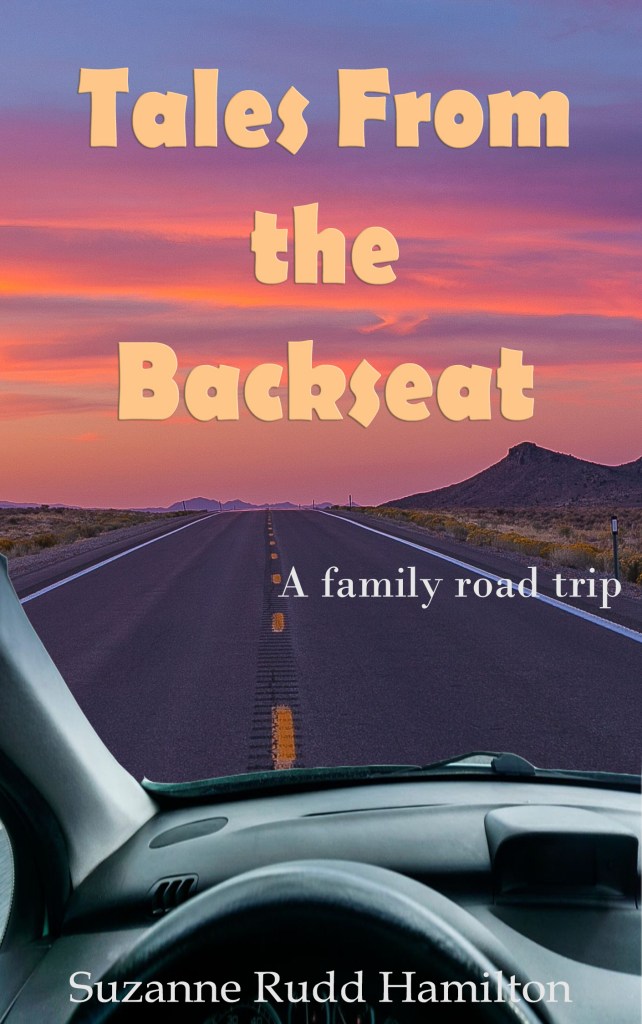
A Good Deed

It was a cold and icy winter day. There was no snow on the ground, but the temperatures plummeted below zero for the prior week. A perfect recipe for ground ice. 

17-year-old Greg woke early at 7am on Saturday morning and groggily bundled up to go to swimming practice. 

Mr. Herbert, Greg’s swim coach, insisted they practice every single day after school and two hours first thing Saturday morning to maintain their level of competition. The previous year, the team missed winning the state championship by only a few points and Mr. Herbert vowed that would never happen again. 

The light was just coming up over the horizon, but it was still very dark out, which made it difficult to see any black ice on the road. 

When he turned onto a road, Greg hit a small patch of ice and began to skid. His first instinct was turn the wheel, but he  remembered his father told him not to fight ice, so he loosened his grip on the wheel and let the car skid a bit. In a minute, he took a deep sigh of relief, the car was back on track. He got through it. 

Although, up ahead he saw someone else was not so fortunate. In the deep gully next to the road the car in front of him careened off leaving the car teetering in the ditch. 

Greg was sympathetic to the driver and as a good Eagle Scout wanted to offer his assistance. He had a rope in the back of his Jeep SUV and a trailer hitch, so he thought he could pull the car out of the gully. 

He gently depressed the brake to stop and hit a large piece of black ice. His car suddenly spun around and around like a top without control. A wild ride he didn’t care to be on. 

Remembering what his father told him again he loosened up a little on the wheel and took his foot off the brake, hoping the car would once again recover. But this time, Greg wouldn’t get that lucky. The spin thrust the car into the ditch and flipped it over. 

Shaken and somewhat terrified, Greg took a deep breath and took account of himself. 

He didn’t see any blood or feel any broken bones and the airbags didn’t deploy. He was physically fine, but mentally apprehensive from the accident. But the biggest problem… he was upside down. 

Since the car seemed level, he figured the best course was to get out of the car. Greg tried to unbuckle his seatbelt, but the force of gravity locked the seatbelt in a tight position and he couldn’t remove it. No matter how many times he pulled and clicked, it wouldn’t come undone. He was left hanging there. 

His cell phone was in his bag on the passenger seat, but when he reached for it, he found it gone, probably flung somewhere in the other parts of the car. He was stranded with nowhere to go. It seemed like his good deed would not go unpunished.

But then, there was a rap on the window. Greg looked up and saw an older gentleman staring at him. 

“Are you Ok?” He said. 

Greg nodded. 

“I called a tow truck a few minutes ago to pull my car out of the ditch. Maybe they can help you too. Did you want to use my phone to call anyone?”

Greg nodded in appreciation, but when he tried to lower the window, it was stuck. The flipped vehicle probably bent the door frame, pinning the window. So he took off his gloves and wrote his home phone number in the foggy mist on the window. 

The man put the number in his phone and called. 

“Hello?” Said Greg‘s half asleep mother.

“Hi my name is Martin. I’m on Bruce Road and your son is here. There’s been an accident. He’s fine but looks a bit scared. He hit some black ice and he’s upside diwnin the ditch. I called for a tow truck.”

Greg’s mother Shelia gasped. “Oh my goodness, I’ll be right there.”

Still in her pajamas, Sheila ran downstairs put on her coat, boots, gloves, and a hat, racing out the door as fast as she could. 

A few minutes later, she arrived on the scene to find a fire truck and tow truck. The firefighters were using a crowbar to open the door and release Greg.

Sheila ran up to the car yelling Greg‘s name. 

After the firefighters cut his seatbelt, Greg was finally free. As soon as he saw her, Greg burst into tears and ran to her. 

“Mom, mom!”

He held onto her crying, his body shaking from fear and fright. 

She comforted her son and a few minutes later they both stood there, looking at the car. 

“I’m really sorry mom. I tried to stop to help this man whose car went off the road and then I hit the black ice,” Greg explained, wiping away his tears. 

She lovingly gazed at her son and kissed him on the forehead. 

“Don’t worry about the car. I’m just glad you’re OK. It’s really kind of a miracle. You know they say no good deed goes unpunished. Maybe next time, just call for help. But I’m proud of you for thinking of others in need.”

As they hugged, the tow truck driver approached them, shaking his head. 

“The car is probably totaled ma’am. I can get it out of the ditch and flip it over, but where would you like me to tow it?”

“We live about a mile away. I guess tow it back to our house,” Shelia said. 

Then the older man extended his hand to Greg. 

“Young man, I hear you got into this pickle because you tried to help me.”

He turned to Shelia. 

“You’ve got a good one here.” Then he walked back to his car being pulled from the ditch. 

Shelia hugged Greg again. 

“There. Maybe that is reward for your good deed after all. You’re safe. That’s enough.”

(C) Suzanne Rudd Hamilton 2025

Note: This was a prompt from my writing group to write about sayings. And, yes, this is a true story of one of my children.

Grand Gemstone Hunt

Martha and her family were all gathered in the library of Grand Manor to read the will of their dear departed Uncle Frederick, who died just short of his 99th birthday. 

In attendance were her brother Freddie, her young cousin Tiffany, Tiffany’s much older half-sister Agatha, and Uncle Fredrick’s not so grieving window Twinkie, the latest in a series of strippers the old man married. 

Agatha was a spinster school teacher with a somewhat unfavorable disposition. She was affectionately known as Miss Grouch by her many students.

Her half-sister, Tiffany, a mere 30 years younger, resembled her mother’s beauty and free will spirit from head to toe. Tiffany was a budding artist with Bohemian proclivities and a kind and wholesome heart. 

Growing up on the farm portion of the estate, Martha and Freddie were as different as siblings could be. Freddie was immensely spoiled by their parents, living the life of a Playboy off his allowance. 

Martha on the other hand was the true salt of the Earth. At 18 she pledged to the convent. But years later, after her parents passed, she returned to the small farm, cultivating it into a proper business. 

Only Uncle Fredrick lived in the house for decades, as no one could stand the deplorable site of this vagrant voyeur who cycled through a different stripper each year, just so he could have personal lap dances. After he got tired with them, he would buy them off and divorce them.

Although Martha did look in on him and stop by for visits, when he was between wives, no one was really close to Uncle Fredrick. 

Old Frederick outlived his parents and siblings, leaving only a rag tag band of relatives who barely knew uncle Frederick.

The Grand family was old money crafted from the robber barons of the earliest part of the 20th century. In accordance with the will of the head of the Grand family, the Colonel, each heir would be provided a living sum each year, but the eldest male would inherit the bulk of the fortune and manage the estate. 

Naturally, Martha’s brother Freddie thought this privilege would go to him as the only male heir. Her parents even made him Uncle Frederick’s namesake in an attempt to influence the will, just in case. 

Uncle Frederick was by all means,  unconventional in every manner of his life and the will of several generations before with The Colonel would not guarantee his wishes were granted. 

The five sat in the library, staring at each other, wondering who Uncle Frederick favored with his fortune. 

Holding their breath in anticipation, they waited in silence as the attorney read the will. 

“I, Frederick Grand, being of sound mind, most of the time, do hereby bequeath my inherited estate as follows:

To my latest wife Twinkie I offer you a lump sum of $250,000 and wish you well on your way. You may keep all personal possessions and gifts I bestowed on you during our relationship, but you are given 30 days to move out of the mansion. 

Each of my four remaining nieces and nephew will inherit equal portions of the estate in the amount of $2.5 million each. The farm and all its lands and appurtenances is hereby willed to Martha Grand, provided she continue to farm it for a period of no less than 10 years. 

As to the ancestral Grand Manor, and the balance of the $10 million fortune, that will go to one of the four of you exclusively the winner of the grand gemstone hunt. 

There are 50 raw gemstones of varying types, sizes, and weights with differing values hidden in the mansion. Whoever finds gemstones of the most value will exclusively win the mansion and the balance of my wealth.”

Twinkie giggled at the rest of them and left the room quickly. “Good luck y’all.”

Still in shock, the four glared at each other trying to comprehend what they heard. 

“I protest. According to the Colonel‘s will, I am to inherit everything,” Freddie boasted. 

The attorney sook his head in disagreement. 

“Freddie, it was up to your uncle Frederick to decide how to distribute his own wealth, regardless of the Colonel’s will,” the attorney corrected him. 

Agatha‘s face turned an eggplant shade of purple as she tussled herself into a frenzy. 

“Am I to understand that I must compete in some type of winner takes all game of chance?”

“Well, yes Miss Agatha however, you do keep any gemstones you find, whether or not you win the grand prize,” the attorney explained. 

She huffed with displeasure and they all glared at each other, suspiciously wondering who had the advantage for victory. 

The attorney glanced at his watch and raised his hand. 

“You have 5 hours at which point we will reconvene here with a gemologist. You may begin now!” 

He lowered his hand and they immediately staggered out of the room, scrambling in different directions. 

Agatha took a methodical approach, entering each room to scout where the gems could be hidden to create a plan of attack. 

Freddie stomped like a child into the drawing room, whining at the unfairness and poured himself a drink while dragging his feet around the room touching books and opening cabinets. 

Tiffany pranced around the upstairs bedrooms singing and laughing as she gleefully searched. 

But Martha sat in the library still as a glass pond. 

The attorney gathered his papers and  noticed she hadn’t moved. 

“Sister, you understand you have only five hours.”

Martha grinned and nodded without moving, as the attorney shook his head and left the room. 

Hours ticked away and clatter from each end of the house roared, as each room was upended. Yet Martha remained silent and still. 

With only one hour remaining, Martha heard the grandfather clock in the foyer chime the fifth hour, but she did not rise. Finally with 30 minutes left, the attorney returned to the library with a befuddled look of shock on his face and the gemologist in tow. 

“Sister, don’t you want to look for the gems? The others are tearing the place apart. But it’s strange, this room is untouched.”

Martha arose and steadily walked over to library shelf and removed a volume of Benjamin Franklin’s Poor Richard’s Almanac and took her seat, placing the book on her lap. 

“Fifteen minutes left,” the attorney yelled to the others and shot a confused look at Martha. 

In the next minutes, the other three raced into the library, panting in exhaustion. 

Agatha put a box on the desk with 20 gems.  Freddie emptied his pockets to count 15 gems and Tiffany dug into her sack purse of to reveal the 10 gems she found. 

As the gemologist examined the stones, the trio wriggled on the edge of their seats waiting for the verdict. Again, Martha sat steadfast on her chair. 

“Miss Agatha had a fine collection. Many stones but nothing superlative. I estimate the total value at $50,000,” the gemologist determined. 

“Mr. Freddie’s modest lot had several outstanding stones. I would value his collection at $65,000,” he said. 

“And Miss Tiffany’s grouping had one superlative gem and several other unremarkable stones. The value of hers is $45,000.”

Freddie jumped out of his chair in delight. 

“I win I win.” He said. 

Martha rose and walked to the desk with her book. 

“Just a minute Freddie, I found one stone.”

The other scoffed at her for thinking one stone could make a difference. But Martha carefully opened the book to expose a false section cut out with a very large sky blue stone concealed within. 

Everyone gasped as they saw the beautiful stone sparkling in the light as Martha held it up. 

The gemologist’s eyes nearly popped out of his sockets as he smiled and gently took the stone from her hand. 

“Now this is something. I’ve never seen such a perfect specimen of a blue diamond.”

He took out his jeweler’s loop and thoroughly examined the gem with a big grin on his face.

“This is truly superlative. I would value this gem at $1 million dollars.”

The others sat plastered like statues in momentary shock, until Freddie spoke up. 

“I don’t understand. How did you know about this?”

Martha smiled with a Cheshire grin. 

“I knew it because Uncle Frederick told me his favorite book was Poor Richard’s Almanac. He said it contained a valuable truth and knowledge beyond fortune. I knew that’s where he would hide a priceless gemstone.”

Freddie sunk and his chair defeat as Agatha huffed and stuck her head up in the air, and Tiffany squeaked a soft sigh. 

“You are all welcome to live in the manor as long as you’d like,” Martha announced as the three gleeful faces lit up in excitement. 

“Of course you’d have to share it with the orphans and the other sisters. I intend to turn the manor into an orphanage to house abandoned children and teach them how to farm and other useful lessons. The other sisters from my convent will help me.”

Suddenly, the others’ joy turned into disappointment as one by one they lowered their heads and left the library in defeat. 

The attorney chuckled after they left the room. 

“I don’t understand these people. They were all granted plenty of money to live on and you even offered to let them stay in the house for free. Yet they walk out as if they were given nothing.”

Martha smiled. 

“In this book, Benjamin Franklin wrote, ‘Get what you can, and what you get hold; ‘Tis the stone that will turn all your lead into gold.’ I’m afraid these three never learned the true value of gold, so it will always be lead to them.”

(C) copyright 2025, Suzanne Rudd Hamilton

Labor Day

Every Labor Day, I can’t help thinking of the best and worst 24 hours of my life. The day my sweet angel was born and the worst pain I’ve ever experienced. 

My baby was scheduled to be born August 1, but the baby didn’t get the memo. Every week in August, I went to the doctor hoping she’d say it’s time and leaving disappointed when she said… not yet. 

I felt like a beached whale. There was no comfortable position I could sit or sleep in and walking was like lugging the weight of a car on my back. I never wanted to move.

By the end of August, the doctor was concerned the baby was growing too big for me to deliver naturally so she set up an appointment for me to be induced on Labor Day. 

The night before I couldn’t sleep. I was a ball of nerves with my mind racing, imagining the unexpected. 

I was really afraid it was gonna be very painful. But in the many minutes of my sleepless hours, as my husband sawed logs next to me, I rationalized that many women do this and do it more than once so it couldn’t be that bad right? 

At 5am the next morning the doctor broke my water and shot my arm with an IV full of miracle drugs to induce labor and make my baby pop out like a turkey thermometer on Thanksgiving day. 

For about an hour I was lulled into a false sense of security. Maybe it wouldn’t be that bad. Wrong! What they don’t tell me is the the drugs make contractions 110 times worse. And no stupid Lamaze breathing could ever prepare me for the pain. 

I felt like I was being cut in half, like a balloon that kept inflating and never popped. 

This went on repeat hour after hour. For some reason this baby did not want to come out.  I’d have ten minutes of intense pain followed by fifty minutes of absolute boredom, fear and anticipation of what was coming next.  

My husband plastered himself to the television in the room. When I asked for more ice chips, he actually asked me to wait for a commercial. Can you believe that I’m going through all this to give him a child and he can’t even give me some frozen water? 

After the first nurse shift change, I was getting anxious and hungry. You’re not allowed to eat for eight hours before you go in. And you’re not allowed to eat until you give birth. 

When she came to introduce herself, I asked for something to eat.

“Sorry, I can only give you clear liquids,” she said with a practiced sympathetic expression. 

When she left, my husband turned to me and asked. 

“I’m kinda hungry too. Do you mind if I go to McDonald’s?”

I secretly wished he would suffer along with me, but simply nodded to be nice. 

The nurse returned with a tray of chicken broth, a glob of no sugar gelatin and a dusty can of Shasta soda without sugar that they must have retrieved from the basement, it looked so old. 

“Wow, I didn’t think they sold Shasta anymore,” I kidded and she shot me an obligatory smile, probably missing my joke. 

I slurped down the clear tasteless liquid meal when my husband comes back sporting the mouth-watering aroma of a Big Mac and fries. 

I was appalled. “Are you going to eat that in front of me?”

He shrugged innocently. “Well, I don’t want to miss anything.”

By the next nurse shift change, with now 16 hours of labor under my belt, I was getting worried. 

When they broke my water, they said I had to deliver within 24 hours or they’d have to do a C section. I was on a clock and it kept ticking away like a haunting reminder of a schedule I had no control over. 

“Hi I’m Sandy. How are we doing?” The new nurse grinned while adding her name to the whiteboard in my room. 

I smiled back but what I really wanted to say was We are not doing anything? 

With nine hours to go, the contractions were harder but still only every hour on the hour, like the chime of a grandfather clock counting down the hours to the knife. 

Sympathetic, Sandy offered to talk to the doctor. 

She came back quickly and adjusted the iv. 

“Doctor said we can turn up the medicine to hopefully move things along. But the  contractions may be a little stronger,” she warned in an optimistic Mary Poppins tone. 

But all I heard was the word stronger, like it was covered in bright lights on a billboard. 

And she wasn’t kidding; stronger was an understatement. I went from intense pain every hour to now longer and more intense pain every half hour to the point where I was screaming in pain. 

“Screaming won’t do any good. You have to focus your energy,” Sandy advised. 

But I really wanted to scream. It was my only outlet so it did do something for me. 

Unfortunately the pain ratcheted up, accompanied by backaches, neck aches and new pains every time. 

Not knowing what to do, my concerned husband talked to Sandy. “Isn’t there anything you can give her for the pain?”

Sandy left again and came back with another addition to the IV. 

“This should help take the edge off,” she smiled. 

I don’t know what it was, but I have a low tolerance for pain and a high tolerance for pain medication. A little does nothing. 

But around midnight, I can still remember jumping on the bed screaming “Get out. Get out.” Was it a drug induced hallucination or real? I’ll never know, but the clock was ticking down and I was running out of time. 

A c section was surgery. A longer recovery and then any children after would result in the same surgery. I wasn’t a fan. 

When the doctor came to check again at 2am, I was still only up to 5 centimeters. 20 hours and only halfway to our goal. We were at our wits end. 

“She can’t go on like this,” my husband told the doctor. 

“OK, I’ll come back in an hour, if she’s not ready, we will do a c section,” the doctor agreed. 

Well, the baby must have heard that. Within a half hour I was at 10 centimeters and by 3am with one push my angel arrived and I realized why so many women do this multiple times. You may not forget the pain, but the reward is well worth it. 

(c) Suzanne Rudd Hamilton 2025

Song Sung Blue

Brandy was enthused at her first visit to the renaissance fair with her longtime boyfriend Dale.

She embraced the merriment by meticulously making period wench and farmer costumes for them. But Brandy was especially excited for another reason. After 10 years together she wondered if Dale was ready to take their relationship to the next level.

For the past few weeks, she noticed him leaving little hints that he was going to propose. She noticed he bought flowers without occasion and a friend said they saw him coming out from a jewelry store. He also suggested they go to the Renaissance Fair, the most romantic place to propose.

Before they left, he gave her the flowers to make a wreath for her hair. She was appreciative, but slightly confused as she thought this would be part of the proposal.

Then as they were watching a minstrel show she heard the ABBA song Say I do… I do, I do, I do played beautifully on the violin. She held her breath and closed her eyes, waiting for her special moment. After a minute, she exhaled and opened her eyes to find another man on his knee’s proposing to another girl.

Glancing to her left she found her boyfriend grimacing at him. “Yikes. He’s screwed.” He said laughing.

Her heart sunk to the ground and the next 10 years flashed like a movie playing in her head. Everything was the same.

The rest of the day all she heard was that I do song on replay, taunting her with each step.

Inside she wrestled with her feelings, debating whether she could wait for him. Or if he loved her. Or even if she could overcome his obvious distaste for commitment.

As they got in the car, he rattled a new keychain in her face. “I forgot to show you. Do you like my new keychain. It has my name. I got it at a jewelry store.”

Exasperated, she fiddled with the radio trying to drown out the sore feelings and the brain worm song that got into her head. Then she heard the soulful song by Bonnie Raitt. I can’t make you love me if you don’t, you cant make your heart feel something it won’t.

Listening to the lyrics, it felt like the soundtrack to her own life. But she wasn’t ready to hear it, so she shook her head side to side and quickly changed the channel.

But the next choice by Toni Braxton wasn’t any better. Unbreak my heart, say you’ll love me again.

“Oh my God. Not again. There’s gotta be something else out there.” She thought and pressed the Sirius radio scrolling for anything else. “Here is an oldies station this should be fine.”

But then she heard Neil Sedaka singing They say that Breaking up is hard to do.

“No!” She looked over at Dale. He was completely unaffected. She wondered if he heard this string of songs almost like the universe was telling her what to do?

“Maybe he even didn’t care enough to know what was going on,” she said to herself.

Scrolling again, she selected a love songs station to try and get her out of the funk and into the right mood.

She listened for a moment in anticipation and heard Lewis Capaldi. I was getting kinda used to being someone you loved.

Frustrated, she scrolled some more and found a pop station. “Here this will be good upbeat song will make me feel better.” She thought, but heard the announcer say… “Tune in for the Taylor swift marathon.”

“Oh no!” she thought. “That’s the last straw. All she sings about is love loss and breaking up. This has to be a sign there’s no other way to think of it. OK, if the next song is about love lost or break ups, I’m definitely breaking up with him. If not, I’ll stay.” She thought to herself.

She closed her eyes and scrolled, picking any station at random and heard The Temptations croon a familiar tune. It was just my imagination, running away with me. That was it. She unceremoniously turned off the radio and looked at Dale.

“I’m sorry, but I have to break up with you. You’re never gonna wanna move past this point and I can’t wait any longer.”

He turned to her, confused. What brought this on all of a sudden?

She turned off the radio. “Let’s call it a brain worm.”

Rewrite

It was a dark and stormy night… 

No that’s stupid. Every damn dumb novel starts that way. It’s gotta be better than that.

Suddenly, the lights went out. 

Great, now I’m starting in the middle of the action. There’s no backstory. It makes no sense. The reader can’t follow it.

The opening line is the most important thing. Everything flows from that. 

I know I’ll look it up. Opening lines… opening lines for stories. Here it is. 150 opening lines for stories. 

Let’s see. Nah. Too cliche. Trite. Duh? None of these work!

Rrr. Why can’t I do this anymore? I know it’s been a while, but my books have been very successful. I think lost my mojo. Or maybe I’ve been lying to myself the whole time.  Maybe before, I just got lucky. Think harder!

It was a terrible day…

And thus starts the beginning of a terrible story. 

Old Typewriter Keyboard

Cursed computers! At least when I could wad up a piece of paper and throw it on the ground, it was cathartic. Now all I do is gently push the backspace button. 

But then again, at least that’s better than using a gallon of Liquid Paper. 

OK, resolved, computers are better. Now back to the story. No distractions. Here we go. Nothing. 

I know, I’ll skip ahead to the end and come back to the rest. 

How many murders will there be?  Six? No, too many. Three? I’ll figure that out later too. Maybe skip to the end. 

They just stood there, staring at each other. 

No! I need something before that. Think! I know. 

They were trapped. Stuck in the house with windows that don’t open and doors that lead back to the same room. Terrified, they stood there frozen, staring at each other, wondering who would be the next victim or worse, which one of them was the killer. 

Yeah….that’s good. OK, I’m on a roll. 

Blake picked up the murder weapon… a dagger… No… a revolver… No… a candlestick.  

Yikes, what am I doing, playing Clue?

Enraged, Blake picked up the dagger, still dripping with the maid’s blood, raised it above his head and charged at his wife’s liver…. Oops typo, lover, screaming… 

“You’ll never touch her again.”

Note to self, remember to write love scene where Hernando, the sexy Latin gardener and Blake’s wife Chloe, the rich and flirtatious seductress have sex.

Now, what to do Blake? Aha! 

In a moment of sheer devotion, Chloe threw herself in front of Hernando and the dagger pierced her heart…

No, she can’t die now. I need her later. Ummm…

The dagger pierced her arm. The rest of the guests glared at Blake as if he was insane. 

Holding Chloe in his strong muscular arms, Hernando gave Blake a steely gaze. 

“You never loved her! She is a beautiful women who craves tenderness! How could you hurt her again?”

Realizing what he’d done, Blake dropped the dagger and cried out. 

“You’re right. I’m a monster.” 

And he ran through the Tiffany plate glass window, falling three stories to his death. 

The remaining guests rushed to the window to find Blake’s mangled body strewn over his prized classic Doosenberg, while being pelted with raindrops. 

Chloe sighed and cracked a satisfied grin. 

“Well at least his car will go out with him. He loved it more than me anyway.”

But when they turned around, the image of Blake was right behind them. 

Sister Agatha screamed and Chloe fainted at the site of her seemingly resurrected husband. 

No! Duh? Sister Agatha is killed off first. 

Chloe fainted and Daphne screamed. 

Yes. That will work. 

“But Blake, you’re dead!”

Seen by the glimmer of light in the cracks of lightening, the image brandished the revolver that was left in the dining room after Sister Agatha was shot. 

Holding Chloe with one arm, Hernando pointed his other hand and stared petrified, as if he saw a ghost. 

“How did you get that gun! We threw it out the window.” 

Thunder rumbled louder and louder as he drew nearer to them, terrorized with fear. 

“I’ve been watching you the whole time through the labyrinth of secret passageways in this house. Blake and I wanted revenge against everyone who wronged us over the years. He chickened out, so I’ll finish it.”

Trembling, James the Butler yelled with rancor in his voice. 

“Who are you?”

With a menacing maniacal laugh, he opened fire, mowing them down one by one until they all lay dead on the ground. 

“I’m Burton, Blake’s twin brother. And now my job is done.”

He drops the gun on the floor and exits, a shadow into the dark and stormy night. 

Wait… the gun would have his fingerprints. Twins don’t have the same fingerprints. I need to add gloves. 

Dark and stormy night? Should I use it front and back like bookends? Well, why not, now it’s symmetry. 

It was a dark and stormy night. 

Oh well, good enough. The next sentence will be better. 

Ooo. I need a title… umm. That’s going to require candy. I will definitely need candy to finish this. 

(C) 2025 Suzanne Rudd Hamilton

Sweet Little Lies

“Mirror mirror on the wall… who doesn’t want to look in this mirror at all,” Grace said as she looked at herself in the dressing room mirror, disgusted. 

“Come on, Mom. How long does it take to try on a bathing suit. Let’s see,” her daughter Ashley yelled from outside the dressing room. 

Grace froze at the idea of going out where people could see all the bits she hides from even herself. 

There she was in a cute one piece suit that exposed too much of her back, thighs and cleavage, along with everything else she wanted to conceal. 

Is this some kind of fun house mirror? You’d think a mirror in a dressing room would make everything look good so people would buy things, she thought. 

But glaring into the mirror, she knew it was her true reflection. 

Maybe it’s OK, she stared again, lying to herself. 

“Come on mom,” Ashley urged in a bored tone. 

“Oh well, reality bites,” Grace said, frustrated. “Here goes.”

As soon as she walked out of the dressing room, her daughters Ashley, 15 and Kaylee, 10 stared at her for a pause that seemed to last for hours, but lasted only a minute. 

Sweet little liar Kaylee was first out of the gate. 

“It has a pretty bow on it, Mommy.”

But from the look on Ashley’s face, Grace knew she would not be seen on the cover of Sports Illustrated. 

“It’s nice mom, but I don’t think this one’s for you. Let’s try another one,” she said with a sweet little lie. 

With each fitting, Grace became more and more frustrated. Nothing fit. She didn’t want to settle for a big granny bathing suit with a puffy skirt on the bottom that look like a dress. But she didn’t want to be an overexposed sausage either. 

She knew she no longer had a bikini bod, but was starting to believe she no longer had a bathing suit bod. 

Staring at the mirror, she lamented the past.  I used to have such great legs, she thought.  

“Now I have thunder thighs and my boobs sag. Ugh! Gravity bites,” she said out loud, thinking it was her internal voice. 

Finally, fed up Grace put on her regular clothes and left the fitting room. 

“OK, now it’s your turn, girls.”

Armed with several suits each, they went behind the curtain.

Kaylee came out a few minutes later in a cute pink polkadotted two-piece with little white bows on it. She twirled and admired herself in the dressing room. It was adorable.

Then Ashley came out out of the adjoining dressing room with a plunging two-piece neckline that barely had enough material to cover her blossoming bosum. And when she turned around, Grace saw most of her backside. 

“Try again,” Grace said with a disapproving mom face. “We don’t need to show all of our goods on the beach. Leave something to the imagination.”

Ashley sighed in anger and returned to the dressing room as Kaylee happily strutted around like a runway model in another adorable two-piece that made her look like The Little Mermaid. 

Grace smiled and Kaylee went in for another fitting as Ashley appeared in something a little more appropriate. 

“I feel like I’m wearing a dress. Everything’s covered,” she said, rolling her eyes.

Grace smiled. “Exactly.”

This suit had a low neckline, but didn’t expose half of her breasts and the bottom just showed a hint of cheek on each side.

Admiring herself in the mirror, Ashley cracked a grin. 

“But I do like the iridescent metallic material. it’s like rockstar. I guess it’s ok. But we still need something for you, Mom. You can’t sit on the beaches of Waikiki with shorts and a T-shirt.”

For a moment, shorts and a T-shirt sounded like a good idea for to Grace. 

“Mommy we need to get a suit to swim with the dolphins, remember?” Kaylee protested. Grace grimaced realizing she needed a swimsuit. 

Then she heard the sympathetic voice of the shop lady who was about her age, shape and size. 

“Believe me, I get it. Trying on bathing suits is the worst. Every year I’d rather walk on a hot coals then try a swimming suit on. But I found this one works for me. I think it might help you.”

Reluctantly Grace went into the dressing room once more. This was an attractive two piece that completely covered what she didn’t want to see. The bottom was a skirt, so it didn’t show too much of her hips from bearing children and what she called her thunder thighs, but the skirt was fitted. And the top was light, like a shirt. It had a little plunge but helped cover her back fat and had a built-in bra.

Grace looked in mirror and found herself smiling a little bit. Suddenly the mirror didn’t seem like distorted doom and gloom. Her gaze was interrupted by her daughter’s plea. 

“Come on, lets ‘s see,” Ashley said. 

This time when she walked out of the dressing room, she stood up straight and felt more confident. Ashley, Kaylee, and the shop lady were all smiling and nodding their heads. 

“This looks nice mommy ?Kali said nodding her head. 

“Yeah. This one does work,” Ashley nodded. 

Grace mouthed thank you to the shop lady and she smiled in acknowledgment. 

It’s kind of like Goldilocks, Grace thought. That one didn’t work. The other one didn’t work. This one fit just right.

(C) Suzanne Rudd Hamilton 2025