Mocking Words

PLAYWRIGHT and AUTHOR of Fiction Books

Gail’s favorite pastime is browsing through to estate sales. Each sale afforded an adventure into another time.
Besides the good deals on antiques, there was something insatiably exciting about exploring a stranger’s past. The anticipation of a new sale never waned for her. Strolling amid tables of jewelry, books, old toys, record collections, little figurines, racks of clothing and furniture, she believed you never know what you’re going to find.
Even on vacation in England, she looked online for local estate sales. Knowing she couldn’t purchase anything big, she can’t resist the temptation when she sees a sale listed in a castle. But Gail’s husband Dean is tiring of her obsession.
“You want to go to an estate sale on vacation? Never mind the money you spend and the storage it takes, this quirky little interest of yours has gone too far,” he angrily accused.
“It’s not an obsession,” Gail insists. “Didn’t I find that great deal on those golf clubs you love so much from that one estate sale? And where else would I have found that perfectly working 8 track player so you can listen to those old 8 tracks from high school?
Dean sighs, exasperated.
“OK, I’ll admit sometimes you find something useful. But we’re gonna have to move into a bigger house to keep all the stuff you get. And how are we gonna get anything home in our luggage?”
Gail grins, victorious. He’s caving.
“I probably won’t get anything. And aren’t you curious what an English castle looks like from the inside? Think of it as a free full access tour. Maybe we leave in find hidden rooms behind strange bookcases.”
Dean smiles and nods in agreement.
The estate is out in the countryside, but luckily there’s a train closeby. And when they arrive at the train station, Gail is able to get a ride on her Uber app to the castle in the middle of miles of rolling hills of English countryside.
The castle was built sometime in the 1500s, but it wasn’t a castle like they’d seen in movies. There’s no drawbridge or moat and the stone walls on the outside changed to plastered walled rooms with spectacular decor inside. With wood panel walls and soaring ceilings, it’s like nothing they’d ever seen before.
Gail is giddy in expectation. She can’t believe that she can take something home that could be hundreds of years old.
Unlike the American estate sales she frequented, there are no tables or racks. Everything is pristinely kept just as it was left by the last owner.
Her eyes expand to saucers as they travel from room to room looking at everything from old leather-bound books and jewelry to crystal, china, silver sets and swords. She looks over at Dean, expecting the face concern at the shopping bonanza, but instead, his eyes dance like a kid in a candy store.
“This place is amazing. Did you see the swords?” he gushes.
At that moment, she knows there will be no problem from him.
“Go ahead and explore. I’m gonna look upstairs,” she says.
In the main bedroom, she finds a giant mahogany canopy bed surrounded by open dresser drawers and wardrobes. But as she browses through the clothing, everything seemed pretty contemporary—nothing she hasn’t seen before. And the jewelry, while nice, only appears to be about 50 or 60 years old.
Exploring the other bedrooms, she’s slightly disappointed to find the same. Sluffing down the winding wood staircase, she feels a little melancholy. Her expectations were so great and now they’re dashed aside.
Then she sees Dean running at her with a look of glee on his face.
“Come, quick,” he whispers. “You can’t believe what I found.”
He quickly escorts her into a library, which housed wall-to-wall bookcases with leather-bound volumes, as far as I could see.
He pulls her to a corner bookcase.
“Remember when you said there could be secret passages behind these bookcases?”
Gail holds her breath with anticipation.
“You found a secret passage?” She asks.
“No.” He shakes his head, nearly busting with urgency.
“I was looking all around pulling books everywhere to see if I could find a trigger to open a bookcase and look what I found hidden behind these books.”
He stands with his back blocking the view of other patrons and carefully pulls two books from the bookcase, reaches in and grabbed some ancient-looking papers, rumpled and yellowed by age with tattered corners.
Seeing he was extremely excited; Gail tempers her enthusiasm recognizing an obvious rookie mistake.
“These look really old. And the writing even appears as though it was drawn with an ink quill. But they’re probably just old letters or papers from one of the owners. I guess we could frame them, but they don’t have any value.”
Dean thrust the papers in her hand, quietly urging her to look closer.
“You don’t understand. Look at the name on this.”
Gail takes the papers and peers at them. The name reads “William Shakespeare.”
She gasps and stares at him in shock.
“You don’t think?”
Dean smiles with a Cheshire grin.
“I don’t know what do you think? Should we ask someone?”
Gail immediately nodded no.
“The first rule of estate sales is never let on that you know something may be more valuable. Then the price goes up. They probably don’t even know this exists.”
She carefully examines the papers, trying to read the words.
“It’s like poetry, I guess. I don’t understand most of the words. Didn’t Shakespeare write a lot of sonnets?”
“Yes, I think so. And I remember studying it in college English. You had to have a dictionary just to know what all the Elizabethan words meant. What if this is an unpublished sonnet? It could be worth millions!” Dean whispers quietly but could barely contain his exhilaration.
Gail shook her head again.
“There’s no way this could be an unpublished Shakespeare sonnet. I think we’re getting carried away. It’s a common mistake with estate sales. I’ve seen it a lot of times. Let’s get a grip.”
Dean looks as though he’s going to explode.
“OK, what do we do now?”
Gail looked around and thought about it for a few minutes.
“OK, let me go find the agent and ask them the price for the old papers? I’ll feign mild interest and tell him I like the parchments. I won’t show them the writing or the name. A lot of times they’re so busy with people they just don’t realize.
Dean follows her to the cashier station. As Gail predicted, the agents are very busy and distracted dealing with multiple people at a time.
“How much for these old papers? I really like the old parchment.” Gail calmly asks.
Barely acknowledging her, the estate agent abruptly says.
“Give me ten quid.”
Trying to keep her cool, Gail smiles and hands her a ten-pound note and quickly puts the papers in her bag and they leave the castle like Bonnie and Clyde robbing a bank.
Recognizing the value of their prize, they reluctantly remain silent on the Uber ride and the train back to their hotel, fearing someone will overhear and rob them of their precious cargo.
With pent up anticipation, they spread the pages out on their hotel bed and Gail looks Shakespeare’s sonnets on her computer.
“It says he wrote over 154 sonnets and it shows a couple of samples. They look like the same kind of writing and the words seem similar too. But I still can’t believe we found something so valuable.”
“Me either,” Dean says, practically jumping up and down on the bed.
Then Dean pauses pensively and picks up the page with the name on it.
“Just out of curiosity, how does it say you spell Shakespeare?”
Gail glared at him with confusion and anxiety.
“S-h-a-k-e-s-p-e-a-r-e.” She slowly spelled out the letters.
Dean’s face instantly droops.
“Are you sure there’s an E at the end?”
An overwhelming sense of panic engulfs Gail.
“Yes, there’s definitely an E at the end. Is there not an E at the end on the page? I thought I saw an E.”
She runs over to the bed and closely inspects the document.
“I thought it looked like an E, but now it looks like a swoosh. Oh no!” Gail lifts her hands up and places them on head.
“And there’s no S either! This says William Shakepeer. The flowery writing and ink has so many swooshes. I think we just assumed. It’s a joke!”
She plops down on the chair.
“It’s worthless. How could we have made such a mistake?”
Dean chuckles and pats her on the back to comfort her.
“It’s not worthless, honey. We had a great adventure and we can frame it on the wall and see how many of our friends figure out the puzzle. 10 pounds is worth a great story.”

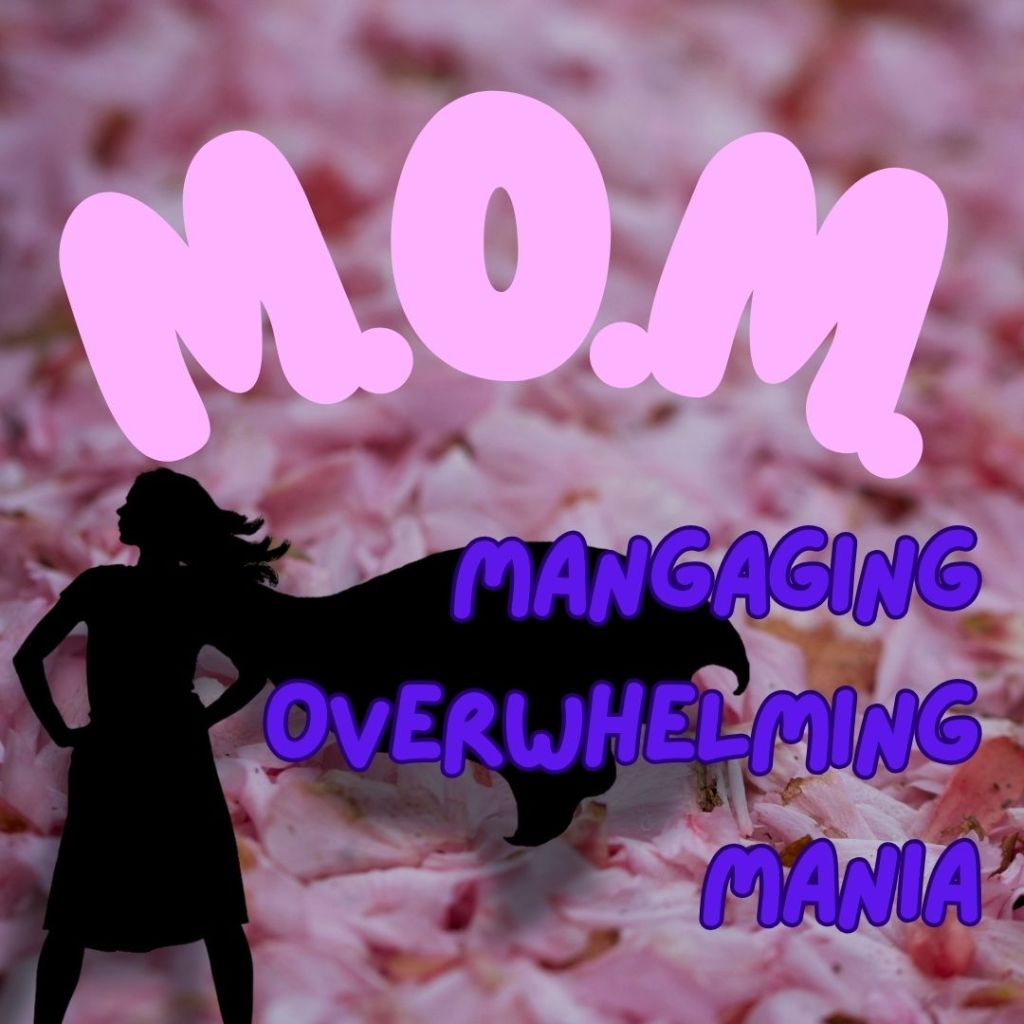
Recently we celebrated Mother’s Day with various trappings of appreciation. Flowers, candy, dinner or some bonding event are annual events spotlighting gratitude with a 24 hour expiration. And yet it’s nice to take a breath and reflect on what it means to be a mother.
Perspective is often more illuminating about love than any gift.
Young mothers often feel overwhelmed by the job of motherhood, juggling numerous tasks, needs and personalities with little time and waning patience.
When I was a young mother in the thick of raising two boys and working full time, 18-hour days were not uncommon. I often would think of it as a treadmill where everything passed by you on all sides and you just needed to keep moving and grab whatever you could along the way.
I imagined M.O.M. as job description with taunting acronyms like “managing overwhelming mania,” “maneuvering and overcoming mayhem or sometimes “manipulating overstimulated mongrels”
The times my husband would take the boys on an outing, even for a couple hours, I’d joyously dance around the living room doing what I called “the alone dance” for a few minutes and then make a list of all the things I could accomplish without interruption.
And yet as the mother of adult children, you’re grateful for a call, picture or message about their lives, always lamenting being benched in the motherhood game. On occasion, you’re put in for relief with a request for sage advice and wisdom from the oracle of MOM, but most of the time, you sit on the sidelines looking on.
Grandmotherhood offers a new opportunity to revel in the old days of being needed and wanted and sometimes adored in real time and then gratefully soaking up the peace and quiet along with your feet and back when they go home.
And for some, Mother’s Day can be painful memories of what could have been. People who have lost their mothers posthumously now realizing their value post pictures with loving tributes on Facebook to display a Cats in the Cradle type echo of things left undone or unsaid and regrets that will never be fulfilled.
And for those who never had children, the day can be a painful reminder of the path untaken, by choice or circumstance.
But its also an opportunity to recognize and appreciate all the people who mentor, guide and direct someone to help them achieve their best life. Biology doesn’t have an exclusive lock on maternity.
So it’s a wonder why this lovefest is relegated to only one day a year. In our hearts and souls is nice, but frequent remembrance of those who are important and recognition of their unique contribution can reap a new view of our own lives with regular outward expressions, instead of a sentiment on a mug.
Author’s Note: Here is a mini sneak peek at a beginning scene from upcoming book 4 in the Timeless American Historical Romance series of books, scheduled to release May 30th. Click cover for preorder discount pricing.
Running around the house at lightning speed, Jackie searched every nook and cranny, but couldn’t find her homework. And she was late for school. When she reached the living room, she saw looks of terror on her grandparents’ faces.
“What’s going on?” she asked anxiously.
Her grandfather William stood up and ushered her to the couch.
“Something horrible happened, honey. A plane hit the north tower of the World Trade Center and it’s on fire. They’re trying to evacuate people in both towers now, but it’s pretty bad.”
Jackie felt numb all over. “Will my parents be able to get out?”
She gulped for breath not knowing what to believe. Every bad thought she could think of was racing through her mind.
Her grandparents grabbed her hands and squeezed tightly.
“The North Tower was hit, so they should be able to evacuate from the South Tower. All we can do is wait,” her grandmother Peggy said.
Jackie looked at the screen and saw dark black smoke billowing out of the building.
Then suddenly, the TV announcer screamed, “There’s a plane headed for the other tower.”
Right before their eyes, a flash of light filled the TV and they saw the South Tower explode with flames shooting from every angle.
“Oh my God!” William shouted and Peggy gasped, clutching him.
Jackie sat there paralyzed, staring at the TV without blinking or veering her gaze as the announcer spoke.
“NYPD and firefighters are trying to evacuate people down the stairs of the towers but have very little ability at this height to fight this kind of jet fuel explosion. Only God can help these people now.”
Sirens saturated the TV speakers as they watched firefighters, police and paramedics race to the scene as the blinding black smoke emanating like a geyser from the buildings turned to gray and then white.
Suddenly, the show whisked back to the announcer raising his voice in panic.
“We’ve just been informed that New York is not the only victim of this surgical attack on the United States. Flight 77 from Washington Dulles airport has crashed into the Pentagon.”
The television showed an aerial view of the collapsed section of the oddly shaped Pentagon smoking, on fire.
Her eyes fixated on the TV, Jackie was captive the announcer’s every word.
“We’re seeing more and more of the evacuees from the towers pouring out, but still so many are yelling out the windows begging to be rescued,” he said as the screen showed people wrapped in wool blankets stagger from the building covered in white dust.
But then they heard a loud startling sound, like the roar of a freight train. Dense white smoke surged from one tower as it plummeted to the ground as fast as an elevator plunging to zero.
They all jumped to their feet and exclaimed, “Oh, no!”
The TV announcer shouted with emotion. “The 110-story south tower has just collapsed to the ground. It’s mayhem. People on the street are running for their lives in horror. It’s absolutely incomprehensible!”
With the South Tower in ruins, they all knew chances were bleak.
“How can this be happening?” Peggy cried in disbelief.
She hugged Jackie and saw a single tear fall from her granddaughter’s eye.“They’ll never get out now,” Jackie said somberly.
But before they could catch their breath, the screen returned to the announcer.We’re getting breaking news that Flight 93 from Newark airport crashed into a field in Shanksville, Pennsylvania. Our affiliate is reporting that one of the passengers called his wife from the plane and told her that they were overtaking the hijackers and would crash the plane if they had to, so it didn’t hit the White House and kill the president. I’m stunned viewers. This is the worst assault on our country since Pearl Harbor.”
The smoldering ruins of the plane on the TV brought tears to each of them, holding each other close. But then the announcer abruptly yelled.
“Oh no! The North Tower has just collapsed. This is just horrendous. I have no words.”
Staring at the television in silence, hearing only the screams coming from the site, time stopped for Jackie.
For hours, they sat with their eyes locked on the screen, willing the phone to ring with news, but it didn’t. Then the fire chief appeared on the TV.
“Rescue workers are speaking via cell phone and radio to people trapped in the rubble.”
William perked up. “See, there are people still alive. They can get them out now. Have faith.”
But Jackie didn’t respond. All she could do was gaze intently at the TV.
Hours later, as darkness blanketed the windows, more news trickled from the TV with government updates, scattered stories of escape, and endless experts doing their best to make sense of the senseless tragedy. But practically no stories of those who escaped the rubble as a reporter on TV stood in darkness.
“The scene is eerie in lower Manhattan tonight. The normal blare of city noise is strangely silent. Traffic and other lights are dim. All you can see is the beams of light from the thousands of emergency vehicles all looking for signs of life,” the reporter said.
The trio remained cemented in their positions with their eyes locked on the disturbing TV images. The search continued, but it was a race against time. They all knew the longer they didn’t hear anything, the worse the outcome would be.
As the morning light peeked through the tall linen living room curtains, the sunbeams shined on the three sleeping on the couch, their heads resting atop each other like dominos until the ring the phone jolted them from their slumber. Barely awake, Peggy fumbled to answer.
“Hello?” she said. After a few seconds, she nodded as she listened. “I understand. That sounds horrible.”
Jackie hung on every word, her eyes getting bigger and bigger wondering who was on the phone. Watching her grandmother’s concerned face, she could barely allow herself to hope.
“I’m so glad you got out,” she continued. “Thank you for letting me know”.”
As Peggy hung up the phone, it was obvious from her expression, the news was not good.
Jackie held her breath, trying not to cry. “That wasn’t Mom, was it?” she said.
Peggy took Jackie’s hands, trying to stifle the tsunami of tears in her own eyes. “That was Linda from your mother’s office, dear. She got out with some others, but they can’t find either of your parents.”
Jackie collapsed onto Peggy’s shoulder and tears rolled down her face.
William swept his arms around both and embraced them.
“We don’t know anything for sure yet. I’m sure it’s chaos down there. We need to have hope,” he said.
Jackie lifted her head and squeezed their hands. “You’re both so wonderful to reassure me, but somehow I know in my heart. They’re gone.”
(c) 2024 Suzanne Rudd Hamilton
It’s a busy night. The Stage Door Canteen is packed with sailors, soldiers, Marines and airmen from nearby training bases. And in a big city like New York, there are an ample supply of young women, called junior hostesses, who are there to talk to and dance with the servicemen.
The USO service offered young women an opportunity to do their part for the war effort and volunteer to spend time with the men in uniform at the canteen, so they can forget about the war for a few hours and stay out of trouble. Between the free food, entertainment and the girls to dance with, the Canteen always had a long line right from the 5pm opening.
But my friends Janie, Kate and I are singers in the USO show. We have a trio and sing onstage.
Janie likes the boys in uniform and loves to dance, so when we’re not on stage, she dances the night away with the best in the room.
People often part the crowd to see Janie and her better partners cut a rug on the dance floor. After our set, Kate and I are happy to dance with the men too.
But tonight for the first time, the band gave me a solo. Standing backstage, I nervously wring my handkerchief in my hands. I’m terrified. My mouth is dry, I can’t remember any of the words to the song and I think I’m going to throw up.
“I know you’re nervous, but don’t worry about it. Just find a guy at a table and sing to him,” our manager Eddie says, putting his hand on my shoulders to reassure me.
The music begins and the spotlight shines on the microphone. It’s time to sing. As I walk to the mic, I scan the tables up and down to find someone, anyone looking up at me.
In an instant I lock eyes with a sailor in the middle of the room. He was looking at me, really looking. So I shoot him a quick smile and taking Eddie’s advice, I sing my song directly to the sailor. It starts.. “You’ll Never Know…”
The song fades into the back of my mind as I sing to him. It’s working. My nervous energy dispells and I keep singing without thinking, as if I’m on autopilot.
I find myself staring at him too. He had a wave of bright auburn red hair and a cute almost sideways grin. I’m so intrigued by him, I don’t even realize I finished the song until the uproarious audience applause instantly snaps me back to reality.
I take my bow, and everyone backstage congratulates me. I’m happy the song was good, but I can’t take my mind off the red-headed sailor. Why was he staring at me so intently? Did I remind him of someone, maybe a girlfriend? Maybe he just liked the way I sang?
I have to know why, so I step down onto the dance floor but it was so crowded, I can’t find him.
My eyes quickly wander around the room darting back and forth several times, trying to find him through the wall of dancing couples, but he’s no longer there.
I start to wonder if he was real or just in my imagination. Maybe I dreamed the whole encounter?
Suddenly, there’s an opening in the dancers and see him slowing walking to me. His emerald eyes sparkle. They’re the kind of eyes that mesmerize you and in an instant I’m lost, adrift in their endless fields of green.
I can’t avert his gaze, but truthfully, I don’t think I want to.
Everything seems to stop around us. The dancers, musicians, everyone disappears from consciousness. It’s as if we’re all alone.
“Excuse me,” he says. “I really liked your song. It felt like you were singing only to me. But I guess that’s the idea.”
Suddenly the band plays a slow song and the dance floor is so packed; we’re pushed together.
“Guess this means we should dance.”
He laughs and puts his hand out for me to take. And I did.
The moment he put his hand around my waist, I feel a rush of warmth engulf me. It’s like a warm fire, a cup of hot cocoa and a cozy blanket, all at the same time.
One song turned into three, then four, then eight. As the band plays, we’re frozen in each other’s arms, linked in a rhythmic pattern, neither able to let go.
As the room began to slowly empty, we’re oblivious to the time and our surroundings until the band stops playing and we realize we really are nearly alone.
We both stand there not knowing what to say. I can’t stand the silence; I have to say something.
“Thank you for the dances,” I say earnestly.
“No, thank you, pretty lady,” he says and gently kisses my hand. “My name is Red.”
And then he’s ushered out the door with the rest of the men. I wonder if I’ll ever see him again. You never know.
(c) Suzanne Rudd Hamilton 2021,2024
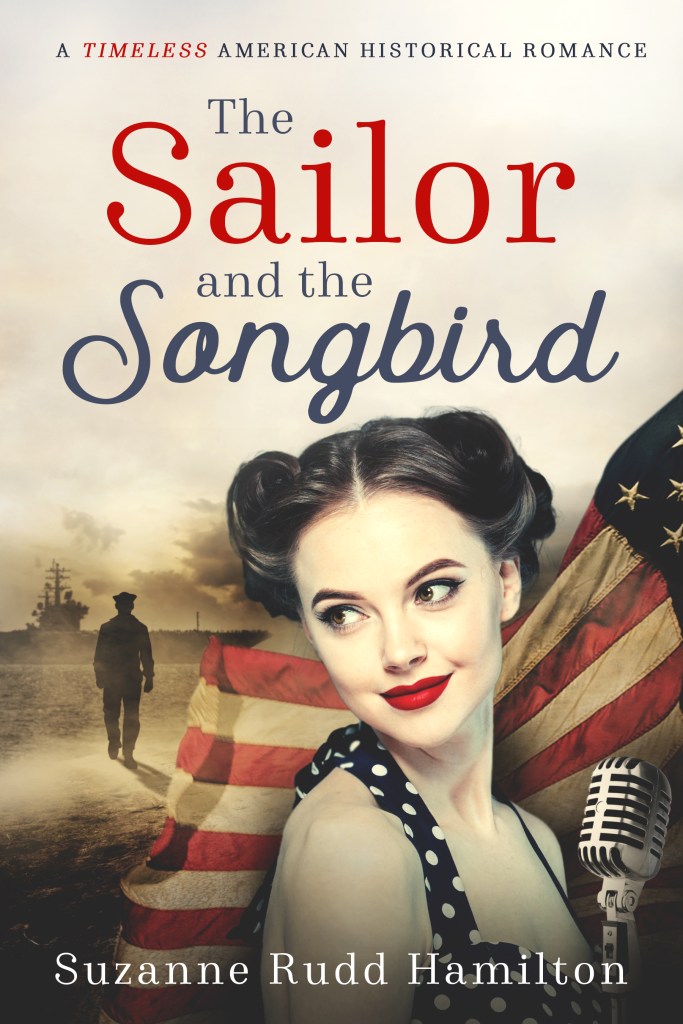
Author’s Note: Sometimes the prompts in my writer’s club remind me of things I wrote before. Coincidentally, the prompt was You’ll Never Know, a popular song from the 1940s and the original title for this book. So I had to take my favorite excerpt from this book and make it into a short story for this prompt. Does she ever see him again? Spoiler alert… yes. But to see what happens to them, read the first chapter of this book by clicking the above cover image.

I keep having this reoccurring dream that I’m running down an empty street. It’s darker than a midnight where the dim shadow of a sliver blue moon and the intermittent blink of a couple faulty streetlights cast cruel lonely silhouettes.
All I can hear is the haunting echo of my kitten-heeled slingbacks against the pavement and the heaving sighs of my own breathless lungs trying to gasp for air. Then I wake up… every time.
For most people, it would be a terrifying nightmare that abruptly wakes you on a restless night covered in sweat from the frightening images playing like a movie right in your head. But not me.
As a newspaper reporter, curiosity is my bread and butter. If I wasn’t blindly intrigued by nearly everything, I’d be covering dog shows and penning obituaries. The newspaper game isn’t friendly to dames.
But I’m not scared. Beck’s Rule #35, If you’re chicken, you better stay on the farm. Fear is a commodity you can’t afford in my business. But the dream tells me two things. I will not live to a ripe old age. I must die young or I wouldn’t be able to run in heels. And I likely make someone so mad, they want to off me. Good. That means I’m doing my job.
Still, I have a clock on me. Beck’s Rule #42, Time is something you can’t control and can’t worry about. So I don’t worry. I just move forward.
I often feel time running out. But then, I just turn the hourglass over and cheat a few more hours, days, weeks, minutes, years… whatever I need.
Maybe Carrington is feeling the squeeze too. At least I hope so. Even though he’s a few steps ahead of me, I’m catching up. I trust my infallible instincts. I always get my story, no matter what.
My article on counterfeit money definitely ruffled his overstuffed feathers and a few others. I’ve always suspected Carrington’s deep pockets lined some corrupt police wallets and now I know it’s true.
When I reach down for another smoke from my desk drawer, I look over the paper in my faithful Smith-Corona typewriter and see blue wool and gold buttons. Only one organization is old and stale enough to sport that same combination since there was a beat to walk.
“Hello officers, how’s tricks?” I light my cigarette and relax back in my chair, showing little disregard for their imposing presence.
“May, we want to know what evidence you have to prove your counterfeit ring,” Officer Brown orders.
Brown thinks and acts like a hardass, but I know he’s really a stoolie for the Chief, who’s a flunky for the police commissioner, who’s in the mayor’s back pocket. He even looks like someone who’s dumped on. His head is flat and his nose is pushed in like it’s pressed against too many things.
“Now Officer Brown, you know the rules. My sources are none of your business, until you read them in The News Bugle,” I say coyly. I like to play with him.
He huffs and puffs like the proverbial wolf at my house door.
“If that’s the way you want it, I’ll go talk to your editor.”
“Go ahead. You’ll find him less helpful than I am. Puff, Puff Brownie,” I chuckle and he stomps away to my bosses hovel on the other side of the newsroom.
My friend, Officer Ernie, stays behind. He’s a sweet, but a very young rookie with a boyish face and red cheeks when he’s upset, like now.
“May, you shouldn’t talk to him like that. Why make enemies?” Ernie urges.
“Ernie. Trust me. I made enemies with the police in this town the minute I inked my first byline. You’re a good egg, but that guy stinks of payoff and Carrington is footing the bill,” I say.
“You need to be careful. Carrington is a powerful man,” Ernie warns.
“Yeah. They all are. Until they’re not. But Ernie, meet me tonight at the laundry on Jefferson Street and I’ll clue you in on my scheme. But don’t bring that wet blanket and don’t mention it to anyone. Stick with me and you’ll make detective before your pimples dry up,” I tease.
I make Ernie nervous. He takes off his hat to cover his flushed cheeks and walks over to the editor’s office.
Carrington would never send his goons after me, so he sent in the stooge squad to intimidate me? He obviously doesn’t know me. But he will.
Ernie will meet me. I have faith in him. I’m just not sure he’s ready to trust himself.
That night, amid a deep mist reveled by the lone bulb in back of the laundry, Erie’s waiting for me, as directed. Dressed in my sneaking-around outfit, black ballet flats and black pants and coat, I sneak up from behind and scare him.
“Stick ‘em up.” I poke him in the back and he jumps three feet in the air.
“May, cut out the clowning. What are we doing here, anyway?” Ernie uncomfortably asked.
“Carrington is using the back of this room for his illegal printing presses. I saw it myself a few days ago,” I explain and take out my lock picking set.
“Turn around so you don’t see a crime being committed,” I order and he turns his back with a disagreeable sigh.
Then I go to work on the lock. It was a one pin tumbler, easy as pie. I’ve become as adept as a locksmith at getting into places no one wants me in.
I carefully push open the door and motion Ernie to follow.
“Come on, Ernie.”
He looks around, shrugs and follows me. If I could see his face, I’d bet it was red and pink all over.
But when I turn my flashlight on, all I see is steamers and wash machines. The area in the back is vacant. The presses are gone.
“May, there’s nothing here,” Ernie says, wondering why I led him on this goose chase.
“Darn that Carrington. He’s two steps ahead of me, alright.”
I wander around the blank space in frustration, wildly moving my flashlight around, hoping for a clue, anything.
“Come on May. We need to leave. I could get busted down to meter maid for this.” Ernie edges toward the door, nervously.
I turn toward him and my light hits a glimmer of something in the corner.
“Wait a second.” I move toward the object and motion him to join me.
Leaning down, I pick up a ball of white paper. It was a partial print of a $10 bill. Then I see a splotch of hunter green ink smeared on the floor.
“See, Ernie, check this out,” I show him the paper and the ink.
He takes the paper from my hand and gazes at it suspiciously.
“I was right. They were printing phony baloney money, here. I got under their skin and tipped their hand,” I say with a satisfactory grin.
Ernie quietly examined the paper and the ink-stained floor.
“Ok. You’re on to something here. But now they know you know, so you better watch your six. I’ll make some discreet inquiries on the street. Don’t do anything else,” Ernie warns.
Grabbing the paper from his hands, I stuff it in my pocket.
“I think you know me better than that. I’ll let you know when I find our next clue. Stick with me, kid. This will be the first big arrest of your career,” I smile.
“Yeah, either that or we’ll both end up six feet under. Just be careful,” Ernie says as we exit the room.
“Careful and curious are two opposite directions, Ernie. I’ll be in touch,” I say and disappear into the midst of the dark night.
(c) Suzanne Rudd Hamilton, 2024
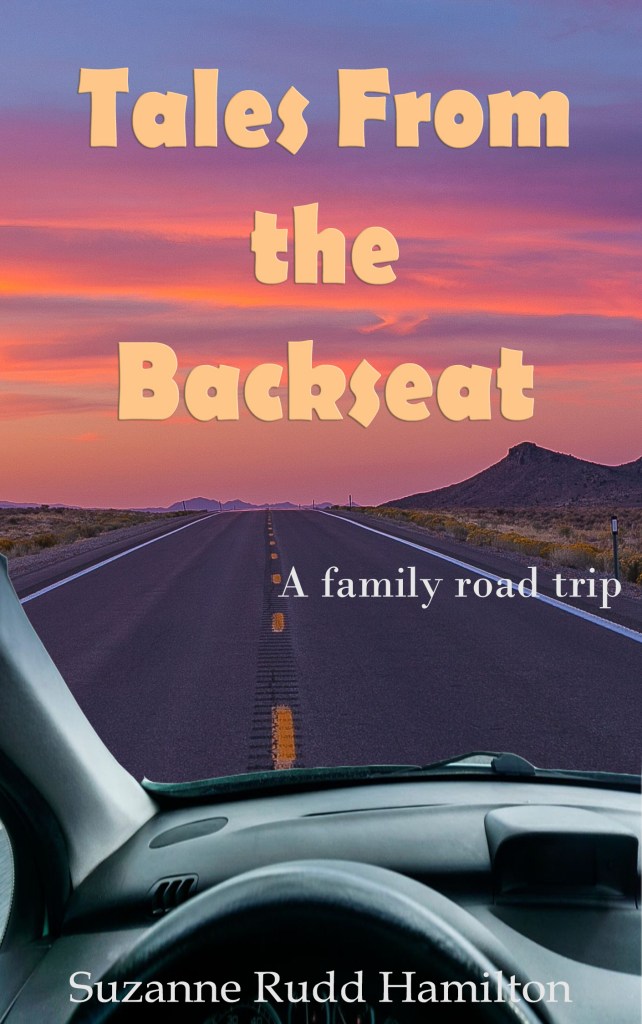
Episode 5: Tales from the Backseat

On my family’s continuing journey to map the United States with our brown Oldsmobile station wagon, I learned many things. It was more than just the names and places, but outside of the confines of our hometown, I realized lessons of life, people and my parents that echo through my daily life even today.
In the dry dusty desert of Arizona, we ventured to the legendary town of Tombstone, depicted in many movies and television shows as the heart of the old west and the site of an epic gunfight between the lawful Earp brothers and the criminal Clanton clan.
A child of cowboy movies and serials in the 1950s, my dad was especially anxious to step back in time into a real 1880s western town, preserved for tourism. One of his favorites was Gunfight at the OK Corral with Burt Lancaster and Kirk Douglas. As we strolled through the dirt main street, he gave us a guided tour of the town, just as he remembered in the movie.
“Wow, look at this kids. It’s just like in the movies. You can even smell the atmosphere. Here’s the General Store and Doc Holliday’s dental office, the Sheriff’s office, that’s where Wyatt Earp worked, the Oriental Saloon and the Bird Cage Theater, that’s where the ladies danced for the cowboys and… “
“And nothing else,” my mother interrupted. “Ok, let’s go inside a building to get away from this horse stench out here.”
We walked along the railed wooden planks next to the storefronts and my dad’s eyes lit up like a kid in a candy store with every building.
“And here’s where the cowboys would park their horses and put their reins over the railing,” he said and demonstrated in pantomime how it would be done.
In the general store window, he saw some hats and excitedly smiled and rushed to the door.
“That’s what we need to get us all in the mood. Let’s get some cowboy hats.”
We all picked out different hats. My dad’s was a black cowboy hat with a braided leather brim and my brother and sister and I picked from the more colorful red and blue kids’ hats.
“Dad, I want the red one,” I smiled.
“Me too,” my little sister mimicked me. I rolled my eyes and sighed, tired of being copied by a little girl all the time.
“Why don’t you all get red, that way you’ll look like a cowboy gang,” my dad smiled and we walked out of the store with red hats and cap guns, ready for action.
Across from the General Store, there was a white building that stood out among the rest. It was the saloon. The sign in the window caught my dad’s eye. It read Real Sarsaparilla.
Again his eyes ignited with delight and he grabbed my little sister’s hand and led us into the saloon. The small space sported an ornately decorated mahogany-colored wooden bar with shiny brass rail and liquor bottles in all shapes and sizes gleaming against the mirrored back. In front was a man with a white shirt, red vest and a big curly mustache.
“What’s your pleasure, partner,” he said in a western accent.
Proudly my father stuck out his chest and leaned his arm against the bar, beaming at us as if he was being photographed.
“Five sarsaparillas, partner,” he said in a simulated western accent and laughed.
A few minutes later we were sitting at an old wooden table with glass mugs in front of us. The reddish brown liquid inside looked familiar, like Coca-Cola, so we eagerly drank up. But the taste inside was definitely different.
My brother and I were the first to stare at each other with squished disapproving faces. It tasted like the strongest Dr. Pepper ever made. You could almost taste the pepper as if it were shaken into the cup. We didn’t like it.
I watched my father’s face. He winced a little but glued on a smile to cover. I don’t think he liked it either, but he wanted to put on a good front.
“Aaaah,” he put down his mug. “Tastes like the old west.”
Forever shadowing my father, my brother drank up some more, but I shook my head and sat back in my seat. I was done.
Old buildings, with their musky mix of old wood and aged interior were difficult for my mother’s allergies and sensitive nose. So, she began to hold a Kleenex over her nose, which was a sign we needed to move on. Seeing her signal, my dad rolled his eyes at her.
“Let’s get some fresh air, partners,” he told us in his pretend western swagger.
We walked along the dusty dirt and gravel street again until we reached tall wooden fence that said “O.K. Corral.”
My dad was almost giddy.
“This is it, kids. The very place where The Earp Brothers gunned down those Clantons nearly 100 years ago. It was one of the most famous old west gun battles in history. Are you ready?”
Then we saw another sign. To see the site of the greatest gun battle in history, there was a steep tourism fee. In that instant, I saw my father’s excitement swiftly transform to unbridled indignation and disgust.
“What? They have got to be kidding. I’m not going to pay that to see a patch of dirt and a fence that’s 100 years old. That’s ridiculous! How do they think they can get away with that?”
And in that moment, our trip into yesterday, reveling in the days of my dad’s youthful wonder hit smack up against rabid commercialism and my dad’s biggest pet peeve…
“Do they think I was born yesterday? I’m not their sucker.” He ranted but then glanced down at the little band of red hat and holster-clad kids with their cap guns at the ready, looking up at him with their big brown puppy eyes in confusion.
Then his eyes grew big and he crept toward a knothole in the fence.
“Kids. Let’s play I spy and peep through the secret hole.”
One at a time, he lifted us up to see through the hole, narrating the tale of the gunfight as though he were there with all the detail and drama, even providing the sound effects of the bullets and the victims falling to the ground.
When I stared through the hole, all I saw was a big empty open dirt space, but it was his storytelling that made it interesting.
Shortly afterward we piled into the brown Oldsmobile station wagon and made our way west.
Of all the tourist traps we visited on this trip and others; I’ll especially remember this one as our peek into my dad’s little boy cowboy fantasies coming to life and then meeting head on with his adult reality.
Author’s Note: Tales from the Backseat is a continuing serial of a a typical family American vacation.
(c) Suzanne Rudd Hamilton 2024
Rachel felt as though she were living in a sinkhole of absurdity, delving deeper and deeper into the ridiculous with every passing day. The problem was her husband Hal, but really what he morphed into… a giant ogre of idiosyncratic annoyance.
Trapped somewhere between the twilight zone and the worst fraternity house on campus, she was stuck in a time loop of constant frustration. In short, his personal conduct and habits were becoming infuriating.
Every morning he woke up and plopped himself in front of the TV snacking and munching all day, while watching nothing. He had to hold the record for the most clicks on the remote in a minute not viewing anything while audibly complaining how there was nothing good on TV anymore and at the same time turning it up to maximum volume so he could hear it. And when she complained that either her ears or the glassware were going to shatter from the volume, he turned on the closed caption.
“Please get a hearing aid,” she’d utter at regular frequency. But the irony is, he couldn’t hear it.
That’s even if she could stay in the room with the never ending flatulence assaulting her senses, leaving her running out of the room on many occasions. Yet seemingly providing a source of humor to him as he mindlessly giggled at the smells and sounds.
Sometimes she wondered if an alien replaced her husband with the most comedicly vile form of human imaginable to study her resolve or her breakdown into insanity.
Each night she began dreaming that she’d be driven to the edge of reason and kill him.
But instead of villainous murder, her fantasies were humorous, and innocent cartoonlike romps, like lighting a match near his flatulent posterior and poof he would be gone. Or shoving the TV remote in his mouth and smashing the TV over his head so drawings of stars would appear over his head with the letter x over his eyes.
In the morning she’d wake up and shake her head back to reality, somewhat amushed, but mostly frightened about what her subconscious mind concocted in her sleep.
is that really the way I feel?
No, she reasoned. But each day brought new struggles, like the Week he wore the same tv shirt and sweatpants every day.
“they’re comfortable and not even dirty,” he replied to her objections.
but the final straw was when he sat outside, watching TV and smoking his cigar while loudly laughing at the three stooges while her friends were visiting for a girls afternoon in the pool. it was two obnoxious offenses all in one.
“Please go inside you’re embarrassing me,” she begged.
“ok. Sure. after I finish this stogie it’s a Cuban and you won’t let me smoke inside. Can’t waste it.”
Soon after her fun afternoon ended abruptly with her friends pity as they all gladly left early, not being able to stand anymore.
with a full steam of anger, she went to confront him, but he got the first word in.
“oh, the girls left early what a shame,” he said nonchalantly.
She couldn’t believe it. He didn’t even realize that he drove them off.
Frustrated, she stomped into the house, and made a pot of coffee infused with a little Baileys to calm her down when he yelled from the patio.
“Hey, I smell the coffee. Could you bring me a cup? And don’t forget the sugar.”
as if she transformed into a cartoon drawing of her own, she could feel the steam coming out of her ears like blowing a factory whistle when the workday was over.
The next few minutes were a complete blur as she begrudgingly delivered his coffee and then retreated back to the kitchen to find two boxes sitting right next to each other. the sugar and rat poison.
“How did that get there?” She said in a panic. “oh my God, did I put the rat poison in his coffee? Could I have done that? I don’t even remember bringing it out.”
Slowly, she tiptoe toward the patio, watching and listening for any signs of her murderous intent, but there was nothing. There he was still laughing and puffing away.
“Whew she said in relief, but does that mean my dreams are coming to life? Do I really want this to happen? Am I innocent or guilty?”
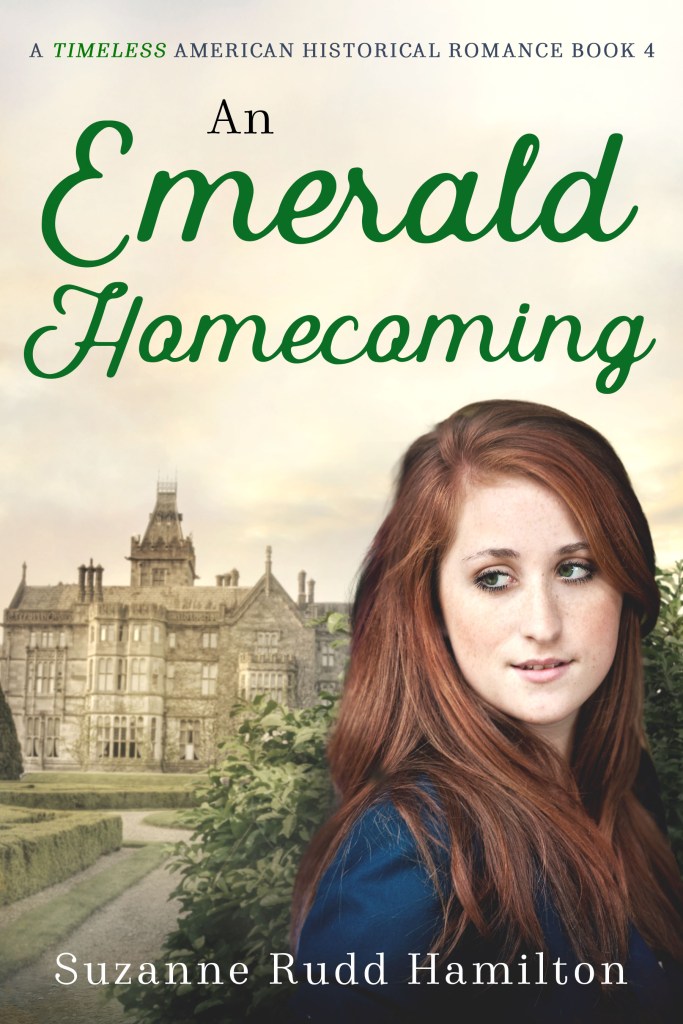
Author’s Note: This is an exerpt from An Emerald Homecoming, an upcoming novel from A Timeless American Historical Romance Series.
Each day Jackie biked to the beach alone. She sat on the sand, gazing into the infinite golden horizon, searching for the meaning of what happened with her parents’ death by looking into the clouds for answers or solace, she didn’t know which. The trip to Ireland offered a welcome distraction, but the gloom and ache in her gut remained.
As a kid, I had a very strict rule. I didn’t eat anything green. I was a finicky eater at best, but I just hated the awful taste in my mouth. And to make matters worse, my mother wasn’t a cook. She put everything on the table as best as she could, unfortunately, that meant canned, frozen, or pre-prepared packaged foods.
We ate oddly molded lunch meat, fish that only came in breaded stick form and two vegetables, green beans or spinach served from a can.
The green beans were French cut and limp with a taste somewhere between shoe sole and drowned pasta. The spinach was, to my chagrin, not Popeye’s strength food, but this congealed blob of green guck, with a hard boiled egg in it. Why she added a hard boiled egg, I had no idea, but I knew it was the spinach that turned the egg green. I often wondered if that’s where green eggs and ham in the book came from.
The nightly ritual of eating my vegetables was a tense standoff. I didn’t want to eat them. My parents tried to force me too.
So, my father made me to sit at the table until I finished them. But since the TV was in full view of the table, that wasn’t much of an incentive or punishment. I sat there for hours in a battle of wills.
One point I thought I’d get a little cleaver and strew the vegetables around my plate and not in a bunch, so it looked like I had eaten some, when I hadn’t.
Being less than successful, I upped the ante a bit. I loved mashed potatoes, but in a devious rouse, I’d leave a clump of mashed potatoes on my plate, feigning lack of hunger, and hide the green beans or spinach under my potatoes. That actually worked for a while. But one day, my mother caught me hiding green beans under my mashed potatoes and the jig was up.
So at the table I sat in a perpetual tug of war. And quite frankly, if my parents hadn’t given up… I’d probably still be sitting there.
(C) Copyright 2024 Suzanne Rudd Hamilton