The Gamble

It was as if they were statues all standing still… no one talking or laughing, just holding up their cards and sizing each other up.

It was the tensest poker game of her life. Inside she was sweating bullets. For most of the game, luck was not her lady and the cards favored others.

Staring at her minimal pot, she knew this would be her last hand and the only chance to recoup losses.

Tense all over, she took one card at a time, holding her breath with each deal.

She glanced at the others looking for some semblance of inflection in their voice or facial expression, even a twitch to indicate their hand. But these were seasoned professionals and they never made mistakes.

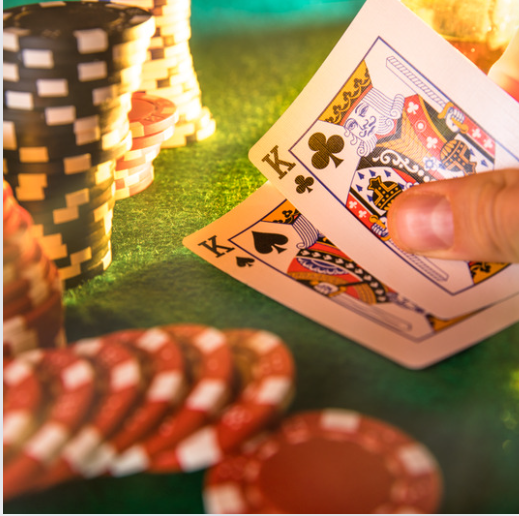
The first card she received was a two of clubs, then a three of clubs. Her hopes began to sink.

She turned over the next card, a six of clubs and felt her heart beat a little faster, but she dare not even breathe heavier or her opponents would surely pick up the tell.

Focusing on their stolid masks, she Internally panicked. Is it possible? Could she be dealt into a straight flush?

Just then she heard thunder bound outside their little room. She nearly jumped out of her seat, but recognized anything could tip off these hardened card sharks. No one else flinched. So, she swallowed her nerves and played on.
Next…
the two of diamonds. Cassie felt a pit in her stomach.

At least I have a pair, she thought. But knew she was just compensating.

Louder and louder, the thunder and lightning
boomed outside like a war zone, echoing the tension inside. It was a battle,
one she feared she would lose.

The last card was dealt. For a moment, she just
stared at it, dreading what it is, but excited at what it may be.

She reached out and turned it over. It was an
ace of spades.

Somewhat defeated, she cheered herself up; she
could still draw. But what to do?

Did she dare go for the golden straight flush or
get rid of the maximum three cards in an attempt for another two to give her
three of a kind. It was like picking the lady or the tiger. Which door would be
the right choice?

She momentarily held her breath and closed her eyes. She would go for it.

But while contemplating her fate, she didn’t
realize all the players were gazing directly at her.

“Cards?” The dealer snapped in annoyance,
glaring at her.

“Two,” she said with as much confidence as she
could muster.

But the minute she placed her two of diamonds
and ace of spades on the table, she had second thoughts.

Too late to look back. She was going for the straight…
all in.

Slowly, she turned over the first part and
placed it in her hand. It was the five of clubs. Giddy, she sat up in her
chair. Dare she believe she could pull off this coup? She understood the odds,
but enthusiasm got the best of her. She’s gazed at the next card, chanting to
herself, willing it to be the four of clubs.

She turned up the corner and saw a black three.
Excited, she wanted to shout it from the rooftops, but must keep her concrete
façade.

Swiftly flipping the four over and placing it in
her hand, as if on cue she heard another clap of thunder with a chaser of
lightning.

And then she noticed… it was the four of spades.
Her stomach dropped like an elevator perilously plummeting to the ground. But
then she remembered it’s still a straight. That’s a decent hand.

And now the games began.

The first player bet a typical opener. But then a raise and another and another. Everyone obviously had a good hand or an equally potential bluff.

Cassie looked at the pittance in front of her doing the sum in her head. It would take everything she had to stay in. It was an all or nothing proposition.

Suddenly, she remembered the song by Kenny Rogers, The Gambler. He sang you got to no one to hold them, when to fold them, when to walk away or when to run.

She called and pushed everything she had in the pot. It was time to take a stand.

One by one the other players put their cards down. Three of a kind, no challenge. She began to hope.

Pair of kings. It was happening.

Nothing, a bluff.

She stared at the pot in elation. Could it be hers?

Just one more and it was all over. In that moment she believed she could win it all.

She put her cards down grinning.

“Straight,” she boasted, daring the last player. It was a standoff.

The last player smiled with a Cheshire grin.

“Four of a kind, Ace high,” the player said and Cassie felt herself slunk in her chair.

Rain began to pour outside mirroring her sorrow. It was over.

As she left the room in devastating defeat, she grabbed her umbrella and walked outside.

Grimacing at her loss, she chastised herself with each soggy step.

Then she looked up and saw a rainbow in the midst of the rain.

“I guess a $20 loss was worth a couple hours entertainment. But just in case, I may stay away from the card room at the senior center from now on.”

(c) 2024 Suzanne Rudd Hamilton


I Left A Lot in San Francisco: Tales from the Backseat Episode 7

xr:d:DAFMCWykCMw:4,j:35139615596,t:22091217

The difference between being a preteen and a child on a family vacation is like the comparing Mount Everest to the dirt hill kids jump their bikes over. It’s a continental divide.

During my preteen years, I wanted to be cool and strived to seem grown-up. And I definitely did not want to act like a little kid. Unfortunately, touring around any city like the Von Traps with parents and little siblings in tow is the antithesis of all I held dear. 

On our month-long family trek across the country, embarrassment was as common as fast food and motels, making me want to distance myself to closely remain outside their bubble and keep my percieved coolness intact. But my family had their own agenda. 

My mom always wanted to keep us together and make sure everyone wiped their hands before and after they touched anything and ate. My dad often made inappropriate and all the time goofy jokes, while my brother tried to remain invisible and my little sister enthusiastically garnered attention. 

But our trip to San Francisco showed me a humility that I would never forget, no matter how hard I tried. 

As usual, plans for the day included tourist traps on our never ending quest to find any and every offbeat, strange and odd site that no one has ever seen. 

Case in point, a little known and nearly forgotten historical remnant called Fort Point, lying in the darkness beneath the Golden Gate bridge. 

And no one did know about it, as evidenced by the lack of any tourists. 

The National Park Service man, dressed in Civil War Union garb seemed elated to see us, making me wonder if we were the only ones he had seen that day, that week, or maybe even that month. 

He gave us a brief tour of the very small encampment and described its intended but never consummated use to guard the west coast. Then we all received a little certificate of our visit. As usual, bored and mortified, I watched the rest of my family seemingly enjoy what I considered torture. 

Not to be undone, we then visited the mysterious Winchester House. I didn’t know much about it, but standing in the gift shop listening to teasers of its eclectic owner Sarah Winchester and the tales of her curious house, I was intrigued. An avid, Nancy Drew reader, I was ready for something interesting to see and hear. 

But, while popular, the Winchester house was what my father considered a tourist ripoff, that charged exorbitant fees for a tour. A sentiment he loudly expressed in the gift shop.

“Can you believe what they’re charging. Do they want us to pay for a new addition to this place?”

Instead, we bought slides of the home and a book chronicling the mystery. Once again, I was annoyed that the one thing that interested me blew out in a puff of smoke. 

My mother sympathized and to placate my angst decided to buy us our favorite candy at a nearby store. Both notorious chocolate lovers, my parents rarely passed up a candy store. Unlike the rest of my family, chocolate was not my delicacy. Strawberry Twizzlers were my confection of choice. 

So as my father hilariously negotiated the treacherous ups and downs of the streets of San Francisco like a Hollywood stunt driver, I snuffed out my annoyance by rolling my eyes and chewing on licorice ropes. 

Finally, we arrived at Fisherman’s Wharf and its iconic ship’s wheel sign. My dad was charged in anticipation. It culminated many of his favorite things, boats, the open water and eating fish. 

All day he gushed about walking around the marina, seeing the boats and picking out his own fish to eat at the restaurant. 

Unfortunately, no one else shared his affinity for boats or fish. But as veterans of many boat shows, we knew we just had to find a perch or bench nearby and let him enjoy it. My brother always dutifully accompanied my father without complaint. The reward and burden of the only boy.

But as both my mother and I have bloodhound noses and are extremely sensitive to smells, very soon the pungent odors of the raw fish buffet on ice began to take effect. But oddly, it was my little sister who chimed in first.

“Mommy, this place is stinky,” she whined. 

Covering her mouth and nose with a scarf from her purse, my mother nodded in agreement and gave my sister, some crayons and a coloring book to distract her. 

However, despite holding my nose and trying to read from the Winchester book, I was lightheaded and my stomach felt queasy. 

“Mom, I don’t feel good,” I said. 

In a typical mother move, she placed her hands on my forehead. 

“You’re not hot. I’m sure it’s just the fishy smell. I know, it’s disgusting. Hopefully your father will be back soon and we will go into the restaurant. It shouldn’t smell bad in there.”

I learned a long time before that, waiting for my dad was an inevitable pastime. 

Yet try as I might to occupy my brain with the strange history of the Winchester Mansion, my stomach had different ideas. The combination of nearly an entire bag of licorice and the affrunting fish aroma was too much. I began to swoon and sweat. 

“I think it’s getting worse.” I told my mother. 

“You do look pale. Let’s find your father and get out of here,” my mother said and grabbed my sister’s hand as we scurried down the pier and quickly met my father and brother coming toward the restaurant. 

“Susie doesn’t feel well. I think we need to skip the restaurant and get back to the hotel,” she told him. 

I saw my father’s joyous demeanor instantly deflate. He’d been salivating over this fish all day only to be denied, but he didn’t even argue. He couldn’t miss my pale and perspiring face. 

“OK. But we need to take the trolley car to the hotel as we parked the car in an overnight parking area. I’ll get you guys settled and go back for the luggage.”

He kindly put his arm around me to prop me up as we walked past the ships wheel and left Fisherman‘s Wharf. 

The further we got from the smelly fish, I began to feel slightly better. And sitting at the window seat of the open trolley with the wind in my face, at first I was relieved, but it’s jolting movements made my stomach turn somersaults and it wasn’t long before I literally left my mark on the streets of San Francisco. 

No matter what my family did to embarrass me on this trip, it never reached the heights of my own gastrointestinal acrobatics. I was thoroughly embarrassed, but this time, at my own hand. 

Remarkably, my family didn’t say anything. They didn’t tease or cast any aspersions my way. We just moved on with the trip as though it didn’t happen. A hard but good lesson for an anxious teen. Families can be goofy, but they can also have your back in time of need. 

(c) Suzanne Rudd Hamilton 2024

Never Have I Ever

It was a cool and somewhat snowy Chicago weekend in early April. The point in winter when everybody felt listless and annoyed with one more month of gray days, cool temperatures, and intermittent snow that was supposed to be gone in March. So five friends decided to embark on a long weekend to sunny warm Jamaica.

Proudly wheeling one carry-on bag each they gleefully arrived in Montego Bay ready for some fun in the sun, an endless pool bar and good 5-star cuisine, all included.

Removing sweaters, jackets and anything else they could on the way to the bus, they inhale the sticky humidity and baking sun rays they desperately missed for the last seven months.

“Can you feel the warmth of the sun? It’s like a shot of vitamin D,” Anne said raising her hands to the sky.

“I am ready to get my margarita on. Let’s go,” Carl agreed.

An hour later the quintet was waist deep in chlorinated water within arms reach of the pool bar, toasting their weekend.

“Hey, check out the young skinny pale guy at the bar. He’s got no game,” Greg chuckled.

The others turned their heads to find the young man trying to strike up a conversation with a woman at the bar.

“Are from out of town? Rrr i’m from New York. Where are you from?” Carl mimicked, trying to simulate the out of earshot conversation.

“Oh, I’m from California,” Cindy laughed, anticipating the flippant non-engaging reply from the girl.

Then Greg began to give the play-by-play. “Never dissapointed, he goes in for another.”

“Um. I’m a graphic designer,” Carl continued, pretending to be a little too proud.

“That’s nice,” Ann imitated cooley.

“It’s a swing and a miss,” Greg chuckled. “And as soon as he goes up to the plate again…”

“Oh no, she’s getting up. Not good pale guy,” Cindy closed her eyes to avoid seeing the conclusion.

They all uttered a unanimous grown as the girl left the bar.

“Too bad pale guy. Crash and burn,” Greg laughed.

A little annoyed at the mocking play, Tanya eagerly changed topic.

“Now that that’s over, let’s play a drinking game. I saw it on television, it’s called. Never have I ever. Somebody says something and if you’ve done it, you drink, if you haven’t, you don’t,” Tanya suggested.

“OK, I’ll start. Never have I ever smoked a marijuana joint,” Cindy said, waiting for the others to reply.

“Just so everybody knows, I may drink whether I did it or not. I came here to drink and these margaritas are good,” Carl asserted while sipping his drink.

The four gazed at each other cautiously, like a high noon standoff wondering who would sip first.

Carl took a drink any others stared at him and surprise.

“It’s medicinal,” he yelled. “Why not?”

They all burst into laughter, while Tanya loudly announced to the pool goers

“Anyone selling any ganja? We got to taker here.”

“Or a toker,” Greg laughed and they all followed.

“Hey, what happens in the pool stays in the pool,” Cindy jokingly admonished her.

“OK, here’s one. Never have I ever had sex on the first date,” Tanya snapped with a satisfied grin.

Everyone looked at each other again, no one wanting to show their hand first. But this time nobody said anything.

Tanya became increasingly annoyed and then she drank from her cup.

Everyone dropped their jaws in shock and Tanya laughed.

“At least I’m honest,” she said.

The next day, they decided to move the party to the resort clothing-optional beach. Something foreign and in varying degrees of discomfort to most Americans.

Walking amid the partially clothed, Ann shielded her face.

“I didn’t think this would bother me, but I don’t know where to look,” Ann admitted.

“Well, I’m looking,” Carl smiled.

“You would,” Cindy chuckled.

“I’m intrigued, but personally I like my boobs in melon shapes not cucumbers,” Tanya said.

Everyone laughed and they found someplace to sit down when Ann noticed the armed guards with automatic rifles positioned on either end of the beach.

“I don’t know about you guys, but I’m a little uneasy with the heavy duty hardware all around us,” Ann said.

“What? Guns are more frightening than a fruit salad variety of naked breasts,” Greg kidded.

“I know they’re here for our protection, but I agree. It freaks me out a little bit,” Cindy added.

For the next two days they ate, they drink a lot and were merry with each other’s company.

Then on day three, they were all sitting in restaurant having breakfast when the manager came flanked by two armed guards, alarming everyone.

“Ladies and gentlemen, I am sorry but you must extend your stay a little longer. We just got word that a band of armed rebels have taken over the airport and no one can leave the island. We are doubling our security to keep you safe. There is no need to panic.”

The five friends glared at each other stunned into silence.

“I don’t like this at all,” Cindy said with concern.

“Don’t worry the airport is more than a half an hour away. They’re not gonna come over here. They’re just trying to make a point with the government.” Tanya tried to ease her fears.

“I hope so. That’s what I’m going to believe,” Ann said.

“As long as the food and drinks hold out, I’m OK.” Carl said jokingly, but his eyes defied him, revealing his worry.

For the first time in the weekend, Greg took a serious pose.

“Look guys. Let’s just promise to stick together and we’ll get out of this OK.”

They all shook their heads in agreement.

Four days later, the government took back the airport and the relieved five musketeers traveled back to Chicago vowing never to don Jamaica’s island again. But as time passed, they regaled many with their tale of the long, long Jamaican weekend. Something they would never do again.

Work To Live

Work was frantic in Stephanie’s real estate office. On one line she was talking a buyer with cold feet off the edge while on the other lines she had an attorney and another agent on the phone about problems with other pending deals. And in front of her, an assistant holding bunches of files trying to get up to speed before Stephanie could leave on her vacation.

After finally resolving all the calls, she looked at her assistant, Laura and sighed with exhaustion.

“Sometimes I wonder if it’s worth going on vacation. It seems like you have to work harder beforehand just so you can leave.”

Laura nodded while staring anxiously at Stephanie like a deer in the headlights, terrified to be left alone with mountains of work.

“But you’ll have your phone on, right? And you’ll be checking emails… daily? More than daily?”

Stephanie smiled and took the files out of Laura’s hands.

“Take a breath. You’ll be fine, but I’m not gonna leave you in the lurch. You’ll be able to reach me when you need to.”

With that, Stephanie grabbed her bag and exited the office getting into her car. On the way home, Laura only called her two times.

At the airport, she called her three times. And sitting on the tarmac, she was talking to Laura until the flight attendant made Stephanie turn off her phone.

Unplugged with nearly 7 hours time difference between her and the office, Stephanie caught up with emails on the way to the hotel, much to the irritation of her husband, Bruce.

“Steph, we’re on vacation. The world will not come to an end if somebody’s appraisal doesn’t come in on time.”

Deep down, Stephanie knew he was right, and she wanted to let go, but as someone who worked on commissions, she worried if deals didn’t go through and clients weren’t satisfied, she wouldn’t get paid.

“It’s easy for you to say. Somebody takes over for you when you leave. I own my own business. I’m all I’ve got.

Bruce shook his head and threw up his hands in frustration.

The next day on the tour bus to a 1000 year-old Spanish vineyard, Stephanie received two calls from Laura, trying to talk quietly as the tour guide explained about the region and the history of the vineyard that shockingly remained in one family handed down from parent to child for a millennium.

Sitting next to her at the window seat, Bruce’s annoyance was bubbling over.

“Steph, you’re not seeing any of this. Look at these olive trees? They’re amazing. Get off the phone. We’re on vacation.”

Smiling and holding up her finger at Bruce, indicating she’d be off in a minute, Stephanie wasn’t paying attention to anything outside of her phone.

As the bus drove deeper and deeper into the wine region, Bruce shook his head at her again and gazed out his window, marveling at the beautiful untouched scenery in his view.

An hour later, the bus stopped at the vineyard and everyone was greeted by the current owner, Carla, a bohemian looking Spanish lady with her somewhat graying hair pulled back in a ponytail and flowy clothing billowing in the warm soft breeze.

“Welcome to Serenity Vineyards. Please join me on the veranda for some wine and tapas.”

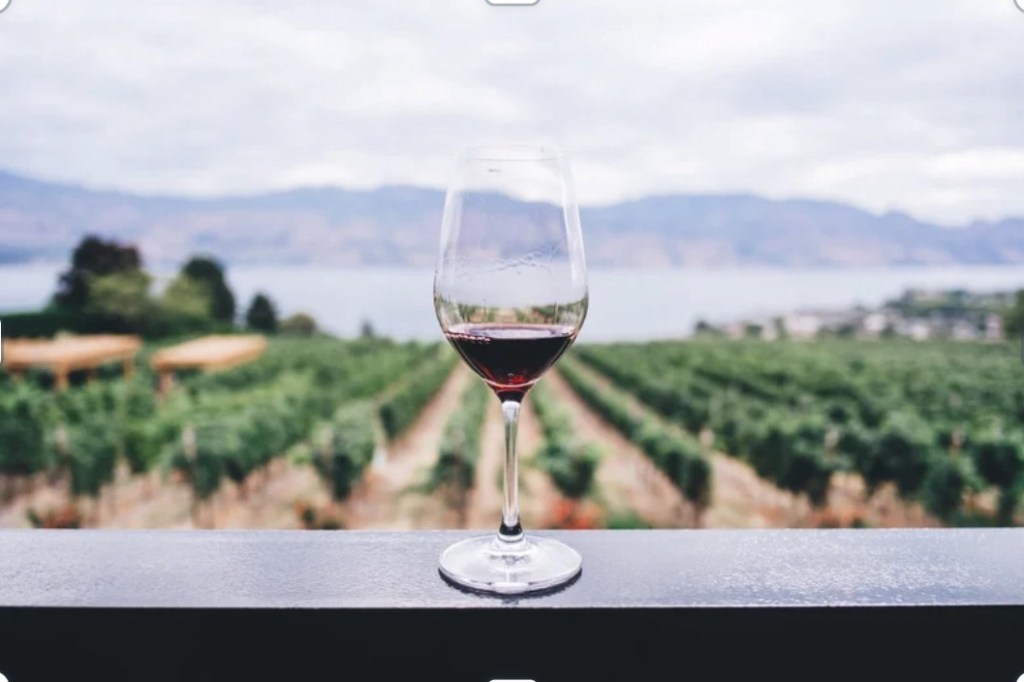
Stephanie, Bruce and the other eight people in their small tour group sat on the open veranda with views of grapevines as far as the eye could see. In front of them was a table full of wine, grapes, olives, bread, cheese and small cups of terra cotta colored soup called Gazpacho.

As the other eight drank and asked Carla questions, Stephanie kept looking at her phone. There was no service.

Carla smiled at Stephanie noticing her anxious reaction to the lack of bars on her phone.

“I’m sorry, but we get no cell service out here.”

Embarrassed, Stephanie quickly put her phone in her bag, but then stared at Carla, puzzled.

“How can you run a business if you have no service?” Stephanie asked.

Carla chuckled and sipped her glass of wine.

“I have a fax machine and of course a computer with email. And in a necessity, I have a landline.”

Stephanie smiled but shook her head in gentle defiance.

“I couldn’t do that. I’d be out of business in two minutes without my phone.”

Carla handed her another glass of wine and smirked.

“I was once like you. I didn’t think I could ever get by without my cell phone implanted into my ear. I was a successful financial planner when my brother asked me to come and help with the family business. And I never looked back. Looking around and breathing this fresh air every day. This is true peace, serenity.”

Stephanie gazed at her in surprise, then looked out at the vast landscape all around her, grinning.

“It really is astonishing here. I just don’t know how you can unplug like that.”

Carla poured her some more wine.

“I understand. But then someone told me something that I couldn’t shake. He told me I was living to work and that I should consider working to live. That one statement changed my life.”

Carla poured wine for her other guests, leaving Stephanie sitting drinking the wine and wondering.

Was she right? Had work taken over her entire life? Bruce thought so, anyway.

She glanced over at Bruce laughing and talking to the other group members. Maybe he’s right, she thought.

For the rest of the tour, Carla’s words haunted Stephanie… work to live or live to work. And for the first time on the tour she gazed out the window and saw olive trees, grapevines and a picturesque land that enveloped her senses.

Then her phone rang. Both she and Bruce glared at her bag and then each other. But Stephanie turned off her phone and smiled at Bruce.

“We’re on vacation. It can wait.”

A Dream is a Wish your Heart Makes

Episode 6 – Tales from the Backseat

xr:d:DAFMCWykCMw:4,j:35139615596,t:22091217

California here we are. After three weeks navigating most of the lower half of the US and a bit of Mexico, we finally made it to the golden west coast. And as any red-blooded American family, the first place we went was DISNEYLAND. 

It was the mecca of small children and parents wanting to please their small children. I’m not saying we were raised in a “Disney” world, but their universe was hard to avoid. We saw their movies, The Apple Dumpling Gang and Herbie, the Love Bug in their mostly live-action era. And we were veterans of two trips to Walt Disney World since its 1971 opening. So, we were interested to see what differences the original 1955 flagship Disneyland had to offer. 

At first glance, MainStreet USA was a carbon copy of the Florida version. And at the end of the turn of the century replica town, there was a castle. This one was a gleaming white Sleeping Beauty castle instead of the pale blue Cinderella version. 

Initially, there were a few different rides, a bumper boat ride in a big pond and some place called New Orleans Square where the haunted mansion was a white southern plantation. Those I liked. 

In this mansion, you walked the hallways and the paintings changed. My kid sister was scared and clung to my mom for dear life, but to me, finally there was some excitement. Although beyond that, it was another duplication. 

Needless to say, I was unimpressed. Ride after ride, I audibly sighed, rolled my eyes and folded my arms across my chest while trudging through the lines with as much pre-teenage angst as I could muster. 

I got the feeling my parents ignored a lot of my outward and annoying less than silent protests at being dragged through“kiddie world.” Finally, my dad had enough and gently redirected me to the side, while my brother and sister shopped for Mickey Mouse-eared hats.

“What’s the problem? Aren’t you having a good time?” He asked me with some frustration.

“It’s all kiddie stuff. I want exciting thrill rides. And it’s like we’ve been here before. Why did we come all the way to California for this?”  

My dad paused for a moment and momentarily looked around. In that moment, I think he saw what I saw. 

“OK. I get it.”

No more was said, but I appreciated that he understood my position.

When my mom, brother and sister came back from the store clad in Mickey Mouse ears, I rolled my eyes.

“We didn’t get you anything,” my little sister snidely remarked, as if verbally sticking her tongue out at me. 

But my Dad was on my side. 

“Let’s find a roller coaster. Didn’t the brochure say there was a roller coaster around here?”

My mom pulled out the guidebook and flipped through the pages. 

“Yes. The Matterhorn,” she said, pointing to the imitation snow-covered mountain in the distance. 

“Why don’t I take the older kids on that and you can go on the carousel?”

It was the perfect solution. Fun roller coaster for the pre-teens and mind-numbing horses turning to repetitively maddening calliope music for the little one. 

As we approached the coaster, it became larger and larger in our scope. According to the guidebook, the Matterhorn was fifteen stories high where you and your careening bobsled experienced a series of fast-speed hairpin turns to eventually splash into a stream water at the end. 

I could barely contain my excitement. Finally, a real ride. 

Waiting in line, we were joking and having a good time. I was amazed at how enthused my dad was to ride this roller coaster. Through the long serpentine cue, he raved about all the fun times he had as a kid on the thrill rides in this amusement park near where he grew up in Chicago called Riverview. 

My dad was a born storyteller. When he was enthusiastic about something, he’d weave interesting tales that would vie the movies Walt Disney made. While many times we were uncertain of his relationship with the truth, he’d spin tales and laugh at them, drawing us into his narrative. In the end, we didn’t care if they were true or false. They were stories, after all. 

The closer we got to the front of the line, the screams from the riders and anticipation of the sheer thrill enhanced. And at the moment, I glimpsed a bit of the coaster track, I climbed up on the railing and wriggled to get a better view. I could see the bobsleds twisting and turning at such a high pace, I thought I could hear a whooshing sound as they went by. I couldn’t wait.

But when I tried to get down, I found my knee was stuck in the railing. I wiggled and pulled while huffing and puffing in distress with my already heightened adrenaline level off the chart. 

“I’m stuck!” I shouted to my Dad in perilous panic. 

Confused at first, he came over and tried to lift me up and pull me out of the railing. But nothing worked. 

By now, quite a commotion developed among those in line, rubber-necking and gawking at the white-knee sock wearingyoung girl who was stuck like Winnie-the-Pooh in the honeypot. 

Someone told the ride operators who called the Disney cops. Soon they ran through the line to my aid as a fervor raised to the level of high interest with bystanders, much to my horror and embarrassment.

The Disney cops were perplexed, as they stood there whispering to themselves about how to proceed. 

My Dad, who was never at a loss for words, decided to lighten the mood with a joke. 

“Well, officers, we could always cut it off,” he laughed.

My eyes nearly popped out of their sockets. I knew he was kidding, but when the gathering crowd laughed too, I was mortified… and scared. How were they going to get me free?

By now, I was sweating bullets everywhere from fatigue and fright, as my other leg was still straddling the narrow rail. 

“I’m sure her leg swelled a little from trying to get it out.” One officer, I’d say, Captain Obvious stated as if he were giving the Gettysburg address, but saying nothing helpful. 

Then the other officer had an epiphany. 

“Do you think we could pull her knee sock up over her knee enough to ease the friction and she could slide out?”

Smiling and nodding at the brilliant idea, the officers and my dad got to work. My Dad held me up on his shoulder while the two officers shimmied and yanked on my cotton knee sock to get it up. Finally, eureka! I was free. 

Everyone cheered and applauded as my misshapen knee sockrevealed my redened knee, a little worse for the wear, but finally unshackled. 

Still heaving my breath from the stress and pain, my dad, ever the salesman, asked the officers. 

“What do you think fellas? Has she earned a trip to the head of the line?”

The officers smiled and escorted us through the line to the front where the ride operators ushered us into our own bobsled. 

The ride was fantastic, just as advertised. Our heads bobbed as the force of speed shifted us up, down and side to side with the movement of the coaster to the end, when we plunged into the water rooster tailing on either side of us. 

Laughing as we walked down the ramp at the ride’s exit, I saw my mother and sister waiting for us and a feeling of panic filled my body. My mother would be likely be mad and maybe never let me out of her sight again. Something a preteen did not relish. 

“How was the ride kids?” my mother innocently asked. 

But before we could answer, my Dad interjected. 

“It was a fun ride. Like the ones we used to go on in Riverview. Right kids?”

My brother and I mindlessly nodded our heads quickly like bobbleheads and I pulled up both of my knee socks to hide the stretchiness of the one and cover my knee until the redness subsided. 

And for the rest of our day in the park, I patiently waited in lines and rode the endless theme rides without the hint of complaint. Truth be told, it was a nice break… I’d had enough excitement for one day.

The Solution

Walking always clears my head. Maybe it’s something about the fresh air or the freedom of moving in any direction I want. I love the dense warm summer air as a myriad of sensations hang in the thick atmosphere. 

The city has its own rhythm. The melody of sounds is deafening and chaotic, but when I’m walking, I hear an orchestra of car horns, people talking and laughing, clinking glasses and plates. Even the cadence of many diverse footsteps on the pavement is a synchronized symphony making music to my ears. No matter what time of day or night, it’s so alive. 

I watch a couple walking down the street holding hands and yet spy another fighting with pointed fingers, glaring fire in each other’s direction.

Someone on a park bench reading gives me wonder what they’re thinking. Are they reading for pleasure, school or maybe just intellectual curiosity.

Even the smells of the different restaurants capture my senses. Barbeque, Italian, Mexican, they all have such distinct and individual odors, yet they blend to create an enveloping nose bouquet. But just the aroma is making me hungry.

I need to focus. People think solving crimes is easy. It’s not. X never marks the spot. And no criminal voluntarily confesses, “It is I. I did it” That nonsense is for cheap movies, dumb plays and dime novels.

When my back is up against the wall, thinking through the case always helps me. My pop used to say I live inside my brain, like a think tank of experts debating everything. I guess that’s why walking clears my head. Even among the hectic city streets, it’s the calming background I need to center the disorder of my mind.

So Whodunnit? And how? Those words resonate with me, echoing in my head. 

Serves me right for my arrogance. I thought I wove such a masterful crime web of intricate clues and suspects, the solution would just come to me. But it has eluded me like a veiled mistress of the dark, keeping the key in the shadows, just beyond my reach.

I have to think. It is I? Could it be that simple? Or am I just looking for an easy answer.

I’ve got it! No that won’t work. What about? No, it’s trite. This is crazy, nothing’s working.

Maybe I need to go back to the drawing board. Or wait! That’s it. I’ll have a glass of wine. Sometimes that can clear the cobwebs.

And if that doesn’t work? I hear children’s books are fun to write.

Author’s Note: Sometimes writer’s block momentary raises its head. RRR. I’m working on the next installment in the Beck’s Mysteries Series. It will come to me.

Mocking Words

I love sitting out on my lanai writing. Something about the warm Florida air and picturesque green scenes of flora and fauna often inspires me. As I type away on a recent novel, I briefly note a bird sitting on my lanai screen. Barely paying attention I feverishly type away and then come to a pause. When writing mysteries, I frequently question myself in mock trial fashion to arrange the details of the case in my head. Somehow, hearing it out loud helps me work out the crime. “And then the killer confessed, I hid the knife,” I dramatically narrate, only to hear a strange echo in a soprano pitch. “Knife.” As I’m on a roll, I hardly pay attention to the resounding cry. “Yes, I killed my wife! I say softly, careful not to falsely alert the ears of my close neighbors. “Wife.” The high c tone continues, masked by my vigorous typing. I’m close to the big reveal. The killer confessed, but there was another twist. “No, you didn’t. She already died.” I say with melodramatic flare. “Died. Died.” The voice utters again. But this time, I stop and look around. Annoyed, I yell at my husband in the house. “Very funny. Cut it out. I’m working.” But looking into the sliding glass door, I realize it was dark. He’s not there. Confused, I turn around in a concentric search, but I’m alone. An occupational habit of mystery writers is too much curiosity. I couldn’t let it go. Where did the voice come from? When a more complete investigation of the whole house provides no clue, I go back to work. “I poisoned her.” I type audibly and stop to listen. Not a sound. Satisfied that whatever was mocking me was gone, I ramp up my rhetoric for the big conclusion. “You didn’t kill her. It was I.” “I I I I I I.” The voice is back. My head quickly spins around when I hear the repetitive ring. There it is. A black bird looking at me with the strangest glare, prompting the most absurd mocking tirade. “What, you don’t agree with my reveal? I suppose you can do better? No, you don’t have the ability to type, although you do have very long stringy talons which are actually perfect for it. The bird blank stared me straight in the face and raised its beak into the air as if to say… fine. I’m leaving. And it flies off. “I guess everybody’s a critic.” Authors’s Note: No, I don’t think birds are talking to me. This is fictional-something that just struck me as funny. Although I do often write outside and there are a number of flora and fauna in my scope. See my view below. And this is not from anything I’m writing…right now. But who knows?

The Find

Gail’s favorite pastime is browsing through to estate sales. Each sale afforded an adventure into another time.

Besides the good deals on antiques, there was something insatiably exciting about exploring a stranger’s past. The anticipation of a new sale never waned for her. Strolling amid tables of jewelry, books, old toys, record collections, little figurines, racks of clothing and furniture, she believed you never know what you’re going to find.

Even on vacation in England, she looked online for local estate sales. Knowing she couldn’t purchase anything big, she can’t resist the temptation when she sees a sale listed in a castle. But Gail’s husband Dean is tiring of her obsession.

“You want to go to an estate sale on vacation? Never mind the money you spend and the storage it takes, this quirky little interest of yours has gone too far,” he angrily accused.

“It’s not an obsession,” Gail insists. “Didn’t I find that great deal on those golf clubs you love so much from that one estate sale? And where else would I have found that perfectly working 8 track player so you can listen to those old 8 tracks from high school?

Dean sighs, exasperated.

“OK, I’ll admit sometimes you find something useful. But we’re gonna have to move into a bigger house to keep all the stuff you get. And how are we gonna get anything home in our luggage?”

Gail grins, victorious. He’s caving.

“I probably won’t get anything. And aren’t you curious what an English castle looks like from the inside? Think of it as a free full access tour. Maybe we leave in find hidden rooms behind strange bookcases.”

Dean smiles and nods in agreement.

The estate is out in the countryside, but luckily there’s a train closeby. And when they arrive at the train station, Gail is able to get a ride on her Uber app to the castle in the middle of miles of rolling hills of English countryside.

The castle was built sometime in the 1500s, but it wasn’t a castle like they’d seen in movies. There’s no drawbridge or moat and the stone walls on the outside changed to plastered walled rooms with spectacular decor inside. With wood panel walls and soaring ceilings, it’s like nothing they’d ever seen before.

Gail is giddy in expectation. She can’t believe that she can take something home that could be hundreds of years old.

Unlike the American estate sales she frequented, there are no tables or racks. Everything is pristinely kept just as it was left by the last owner.

Her eyes expand to saucers as they travel from room to room looking at everything from old leather-bound books and jewelry to crystal, china, silver sets and swords. She looks over at Dean, expecting the face concern at the shopping bonanza, but instead, his eyes dance like a kid in a candy store.

“This place is amazing. Did you see the swords?” he gushes.

At that moment, she knows there will be no problem from him.

“Go ahead and explore. I’m gonna look upstairs,” she says.

In the main bedroom, she finds a giant mahogany canopy bed surrounded by open dresser drawers and wardrobes. But as she browses through the clothing, everything seemed pretty contemporary—nothing she hasn’t seen before. And the jewelry, while nice, only appears to be about 50 or 60 years old.

Exploring the other bedrooms, she’s slightly disappointed to find the same. Sluffing down the winding wood staircase, she feels a little melancholy. Her expectations were so great and now they’re dashed aside.

Then she sees Dean running at her with a look of glee on his face.

“Come, quick,” he whispers. “You can’t believe what I found.”

He quickly escorts her into a library, which housed wall-to-wall bookcases with leather-bound volumes, as far as I could see.

He pulls her to a corner bookcase.

“Remember when you said there could be secret passages behind these bookcases?”

Gail holds her breath with anticipation.

“You found a secret passage?” She asks.

“No.” He shakes his head, nearly busting with urgency.

“I was looking all around pulling books everywhere to see if I could find a trigger to open a bookcase and look what I found hidden behind these books.”
He stands with his back blocking the view of other patrons and carefully pulls two books from the bookcase, reaches in and grabbed some ancient-looking papers, rumpled and yellowed by age with tattered corners.

Seeing he was extremely excited; Gail tempers her enthusiasm recognizing an obvious rookie mistake.

“These look really old. And the writing even appears as though it was drawn with an ink quill. But they’re probably just old letters or papers from one of the owners. I guess we could frame them, but they don’t have any value.”

Dean thrust the papers in her hand, quietly urging her to look closer.

“You don’t understand. Look at the name on this.”

Gail takes the papers and peers at them. The name reads “William Shakespeare.”

She gasps and stares at him in shock.

“You don’t think?”

Dean smiles with a Cheshire grin.

“I don’t know what do you think? Should we ask someone?”

Gail immediately nodded no.

“The first rule of estate sales is never let on that you know something may be more valuable. Then the price goes up. They probably don’t even know this exists.”

She carefully examines the papers, trying to read the words.

“It’s like poetry, I guess. I don’t understand most of the words. Didn’t Shakespeare write a lot of sonnets?”

“Yes, I think so. And I remember studying it in college English. You had to have a dictionary just to know what all the Elizabethan words meant. What if this is an unpublished sonnet? It could be worth millions!” Dean whispers quietly but could barely contain his exhilaration.

Gail shook her head again.

“There’s no way this could be an unpublished Shakespeare sonnet. I think we’re getting carried away. It’s a common mistake with estate sales. I’ve seen it a lot of times. Let’s get a grip.”

Dean looks as though he’s going to explode.

“OK, what do we do now?”

Gail looked around and thought about it for a few minutes.

“OK, let me go find the agent and ask them the price for the old papers? I’ll feign mild interest and tell him I like the parchments. I won’t show them the writing or the name. A lot of times they’re so busy with people they just don’t realize.

Dean follows her to the cashier station. As Gail predicted, the agents are very busy and distracted dealing with multiple people at a time.

“How much for these old papers? I really like the old parchment.” Gail calmly asks.

Barely acknowledging her, the estate agent abruptly says.

“Give me ten quid.”

Trying to keep her cool, Gail smiles and hands her a ten-pound note and quickly puts the papers in her bag and they leave the castle like Bonnie and Clyde robbing a bank.

Recognizing the value of their prize, they reluctantly remain silent on the Uber ride and the train back to their hotel, fearing someone will overhear and rob them of their precious cargo.

With pent up anticipation, they spread the pages out on their hotel bed and Gail looks Shakespeare’s sonnets on her computer.

“It says he wrote over 154 sonnets and it shows a couple of samples. They look like the same kind of writing and the words seem similar too. But I still can’t believe we found something so valuable.”

“Me either,” Dean says, practically jumping up and down on the bed.

Then Dean pauses pensively and picks up the page with the name on it.

“Just out of curiosity, how does it say you spell Shakespeare?”

Gail glared at him with confusion and anxiety.

“S-h-a-k-e-s-p-e-a-r-e.” She slowly spelled out the letters.

Dean’s face instantly droops.

“Are you sure there’s an E at the end?”
An overwhelming sense of panic engulfs Gail.

“Yes, there’s definitely an E at the end. Is there not an E at the end on the page? I thought I saw an E.”

She runs over to the bed and closely inspects the document.

“I thought it looked like an E, but now it looks like a swoosh. Oh no!” Gail lifts her hands up and places them on head.

“And there’s no S either! This says William Shakepeer. The flowery writing and ink has so many swooshes. I think we just assumed. It’s a joke!”

She plops down on the chair.

“It’s worthless. How could we have made such a mistake?”

Dean chuckles and pats her on the back to comfort her.

“It’s not worthless, honey. We had a great adventure and we can frame it on the wall and see how many of our friends figure out the puzzle. 10 pounds is worth a great story.”

A Mother’s Day Perspective

Recently we celebrated Mother’s Day with various trappings of appreciation. Flowers, candy, dinner or some bonding event are annual events spotlighting gratitude with a 24 hour expiration. And yet it’s nice to take a breath and reflect on what it means to be a mother.

Perspective is often more illuminating about love than any gift.

Young mothers often feel overwhelmed by the job of motherhood, juggling numerous tasks, needs and personalities with little time and waning patience.

When I was a young mother in the thick of raising two boys and working full time, 18-hour days were not uncommon. I often would think of it as a treadmill where everything passed by you on all sides and you just needed to keep moving and grab whatever you could along the way.

I imagined M.O.M. as job description with taunting acronyms like “managing overwhelming mania,” “maneuvering and overcoming mayhem or sometimes “manipulating overstimulated mongrels”

The times my husband would take the boys on an outing, even for a couple hours, I’d joyously dance around the living room doing what I called “the alone dance” for a few minutes and then make a list of all the things I could accomplish without interruption.

And yet as the mother of adult children, you’re grateful for a call, picture or message about their lives, always lamenting being benched in the motherhood game. On occasion, you’re put in for relief with a request for sage advice and wisdom from the oracle of MOM, but most of the time, you sit on the sidelines looking on.

Grandmotherhood offers a new opportunity to revel in the old days of being needed and wanted and sometimes adored in real time and then gratefully soaking up the peace and quiet along with your feet and back when they go home.

And for some, Mother’s Day can be painful memories of what could have been. People who have lost their mothers posthumously now realizing their value post pictures with loving tributes on Facebook to display a Cats in the Cradle type echo of things left undone or unsaid and regrets that will never be fulfilled.  

And for those who never had children, the day can be a painful reminder of the path untaken, by choice or circumstance. 

But its also an opportunity to recognize and appreciate all the people who mentor, guide and direct someone to help them achieve their best life. Biology doesn’t have an exclusive lock on maternity.

So it’s a wonder why this lovefest is relegated to only one day a year. In our hearts and souls is nice, but frequent remembrance of those who are important and recognition of their unique contribution can reap a new view of our own lives with regular outward expressions, instead of a sentiment on a mug.

Shockwave

Author’s Note: Here is a mini sneak peek at a beginning scene from upcoming book 4 in the Timeless American Historical Romance series of books, scheduled to release May 30th. Click cover for preorder discount pricing.

Running around the house at lightning speed, Jackie searched every nook and cranny, but couldn’t find her homework. And she was late for school. When she reached the living room, she saw looks of terror on her grandparents’ faces.

“What’s going on?” she asked anxiously.

Her grandfather William stood up and ushered her to the couch.

“Something horrible happened, honey. A plane hit the north tower of the World Trade Center and it’s on fire. They’re trying to evacuate people in both towers now, but it’s pretty bad.”

Jackie felt numb all over. “Will my parents be able to get out?”

She gulped for breath not knowing what to believe. Every bad thought she could think of was racing through her mind.

Her grandparents grabbed her hands and squeezed tightly.

“The North Tower was hit, so they should be able to evacuate from the South Tower. All we can do is wait,” her grandmother Peggy said.

Jackie looked at the screen and saw dark black smoke billowing out of the building.

Then suddenly, the TV announcer screamed, “There’s a plane headed for the other tower.”

Right before their eyes, a flash of light filled the TV and they saw the South Tower explode with flames shooting from every angle.

“Oh my God!” William shouted and Peggy gasped, clutching him.

Jackie sat there paralyzed, staring at the TV without blinking or veering her gaze as the announcer spoke.

“NYPD and firefighters are trying to evacuate people down the stairs of the towers but have very little ability at this height to fight this kind of jet fuel explosion. Only God can help these people now.”

Sirens saturated the TV speakers as they watched firefighters, police and paramedics race to the scene as the blinding black smoke emanating like a geyser from the buildings turned to gray and then white.

Suddenly, the show whisked back to the announcer raising his voice in panic.

“We’ve just been informed that New York is not the only victim of this surgical attack on the United States. Flight 77 from Washington Dulles airport has crashed into the Pentagon.”

The television showed an aerial view of the collapsed section of the oddly shaped Pentagon smoking, on fire.

Her eyes fixated on the TV, Jackie was captive the announcer’s every word.

“We’re seeing more and more of the evacuees from the towers pouring out, but still so many are yelling out the windows begging to be rescued,” he said as the screen showed people wrapped in wool blankets stagger from the building covered in white dust.

But then they heard a loud startling sound, like the roar of a freight train. Dense white smoke surged from one tower as it plummeted to the ground as fast as an elevator plunging to zero.

They all jumped to their feet and exclaimed, “Oh, no!”

The TV announcer shouted with emotion. “The 110-story south tower has just collapsed to the ground. It’s mayhem. People on the street are running for their lives in horror. It’s absolutely incomprehensible!”

With the South Tower in ruins, they all knew chances were bleak.

“How can this be happening?” Peggy cried in disbelief.

She hugged Jackie and saw a single tear fall from her granddaughter’s eye.“They’ll never get out now,” Jackie said somberly.

But before they could catch their breath, the screen returned to the announcer.We’re getting breaking news that Flight 93 from Newark airport crashed into a field in Shanksville, Pennsylvania. Our affiliate is reporting that one of the passengers called his wife from the plane and told her that they were overtaking the hijackers and would crash the plane if they had to, so it didn’t hit the White House and kill the president. I’m stunned viewers. This is the worst assault on our country since Pearl Harbor.”

The smoldering ruins of the plane on the TV brought tears to each of them, holding each other close. But then the announcer abruptly yelled.

“Oh no! The North Tower has just collapsed. This is just horrendous. I have no words.”

Staring at the television in silence, hearing only the screams coming from the site, time stopped for Jackie.

For hours, they sat with their eyes locked on the screen, willing the phone to ring with news, but it didn’t. Then the fire chief appeared on the TV.

“Rescue workers are speaking via cell phone and radio to people trapped in the rubble.”

William perked up. “See, there are people still alive. They can get them out now. Have faith.”

But Jackie didn’t respond. All she could do was gaze intently at the TV.  

Hours later, as darkness blanketed the windows, more news trickled from the TV with government updates, scattered stories of escape, and endless experts doing their best to make sense of the senseless tragedy. But practically no stories of those who escaped the rubble as a reporter on TV stood in darkness.

“The scene is eerie in lower Manhattan tonight. The normal blare of city noise is strangely silent. Traffic and other lights are dim. All you can see is the beams of light from the thousands of emergency vehicles all looking for signs of life,” the reporter said.

The trio remained cemented in their positions with their eyes locked on the disturbing TV images. The search continued, but it was a race against time. They all knew the longer they didn’t hear anything, the worse the outcome would be.

As the morning light peeked through the tall linen living room curtains, the sunbeams shined on the three sleeping on the couch, their heads resting atop each other like dominos until the ring the phone jolted them from their slumber. Barely awake, Peggy fumbled to answer.

“Hello?” she said. After a few seconds, she nodded as she listened. “I understand. That sounds horrible.”

Jackie hung on every word, her eyes getting bigger and bigger wondering who was on the phone. Watching her grandmother’s concerned face, she could barely allow herself to hope.

“I’m so glad you got out,” she continued. “Thank you for letting me know”.”

As Peggy hung up the phone, it was obvious from her expression, the news was not good.

Jackie held her breath, trying not to cry. “That wasn’t Mom, was it?” she said.

Peggy took Jackie’s hands, trying to stifle the tsunami of tears in her own eyes. “That was Linda from your mother’s office, dear. She got out with some others, but they can’t find either of your parents.”

Jackie collapsed onto Peggy’s shoulder and tears rolled down her face.

William swept his arms around both and embraced them.

“We don’t know anything for sure yet. I’m sure it’s chaos down there. We need to have hope,” he said.

Jackie lifted her head and squeezed their hands. “You’re both so wonderful to reassure me, but somehow I know in my heart. They’re gone.”

(c) 2024 Suzanne Rudd Hamilton